Compare Live Mortgage & Home Equity Rates
Compare current APRs, points, fees, and estimated monthly payments from participating lenders below.
Mortgage rates
Home equity rates
Why Are Mortgage Rates Higher Below 620?
Lower credit scores can feel like an uphill battle when it comes to mortgage rates, especially when mortgage rates are higher below 620. But understanding the why and the how can shift the power back into your hands. Let’s break it down and find your path to affordable rates—even below a credit score of 620.
The 620 Credit Score Divide
Quick Answer: Mortgage rates are higher for borrowers with credit scores below 620 because lenders view them as higher risk, leading to loan-level pricing adjustments (LLPAs) and higher default risk. Government-backed FHA loans offer a path for scores as low as 580, but rates still include a premium. Improving your credit score can help lower your rate.
Most lenders treat 620 as a make-or-break line for mortgage approval and competitive rates. This is particularly important because mortgage rates higher below 620 can significantly impact your overall loan costs.
| Credit Score Range | Lending Tier | Rate Impact |
|---|---|---|
| 621+ | Prime | Conventional loans, the best rates |
| 580–620 | Subprime/FHA loans | Higher rates due to increased risk |
Stuck below 620? Don’t stress. We’ll show you all your options, from government-backed FHA programs to strategies for boosting your score fast.
What Determines Mortgage Rates?
Risk-Based Pricing
Lenders analyze individual borrower stats, like credit score, and stack adjustments onto your rate.Factors that Drive Higher Rates for Below-620 Scores:
- Loan-Level Pricing Adjustments (LLPAs): Higher risks mean lenders use LLPAs to add more margin.
- Loan-to-Value Ratio: Big loans + little equity = higher risk.
- Default Risk: Historical data shows the higher the risk, the more likely borrowers default, which is why mortgage rates higher below 620 can be a concern:
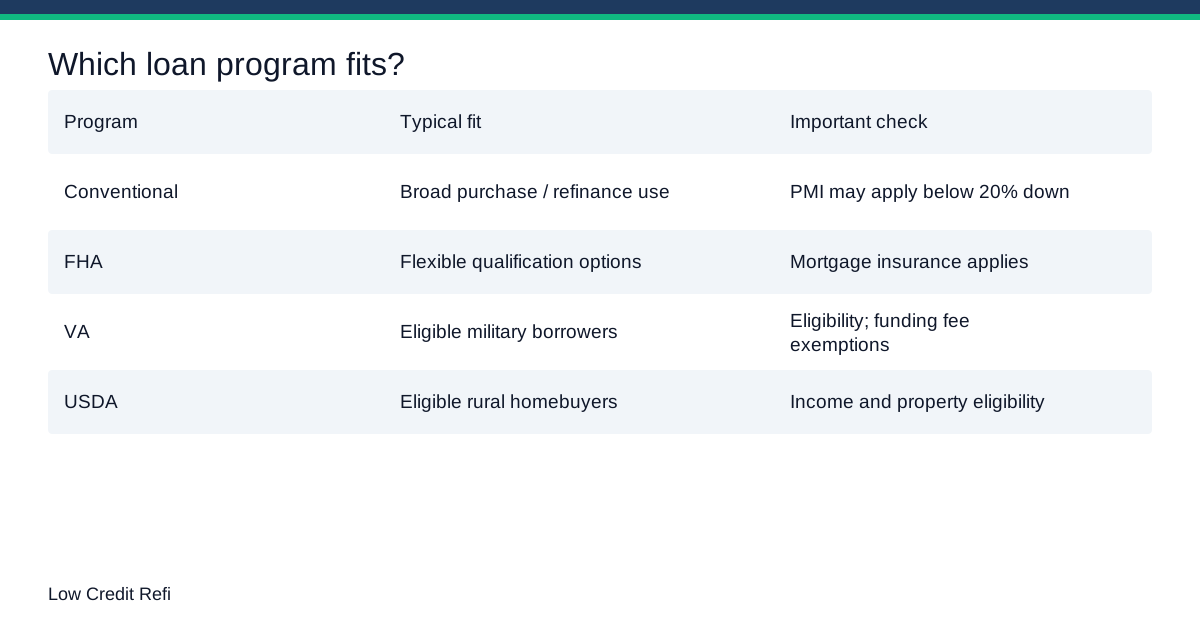
FHA vs. Conventional Mortgages
Why FHA Loans Can Be a Lifesaver:- Insured by the government to lower lender risk
- Easier approval for credit scores as low as 580
- Fewer and smaller adjustments to base rates
- Base FHA rate: 6.50%
- Credit Adjustment (Below 620): +0.5%–1.0%
- Your Rate: ~7.125%
Your Rate Formula Explained
Here’s how your final rate adds up if your score is at 600:
This is especially relevant for those interested in why higher rate low credit.
1 Market Base Rate: 6.50% 2 Credit Adjustment (Risk-Based): +0.50% 3 Other Adjustments (LTV, Margins): +0.125% 4 Your Final Rate: 7.125%
Quick Tips to Improve Credit (Fast!)
| Action | Potential Impact | Timeline |
|---|---|---|
| Pay off credit cards | +20 to +40 points | ~2 months |
| Dispute credit errors | +10 to +50 points | ~30-90 days |
| Keep balances under 10% | +15 to +30 points | 1–3 months |
| 6 months on-time payments | +20 to +50 points | 6 months |
When you jump from 600 to 640, you could save up to 0.50%+ on mortgage rates, which is crucial since mortgage rates higher below 620 can be a significant financial burden.
Pro Tip: Use free tools like Credit Karma or your lender’s recommendations to monitor progress.
Watch and Learn: How to Get a Better Mortgage with Low Credit

When Refinancing Still Makes Sense
Even with higher-than-average rates, refinancing might still be the right choice if:Expert Tip
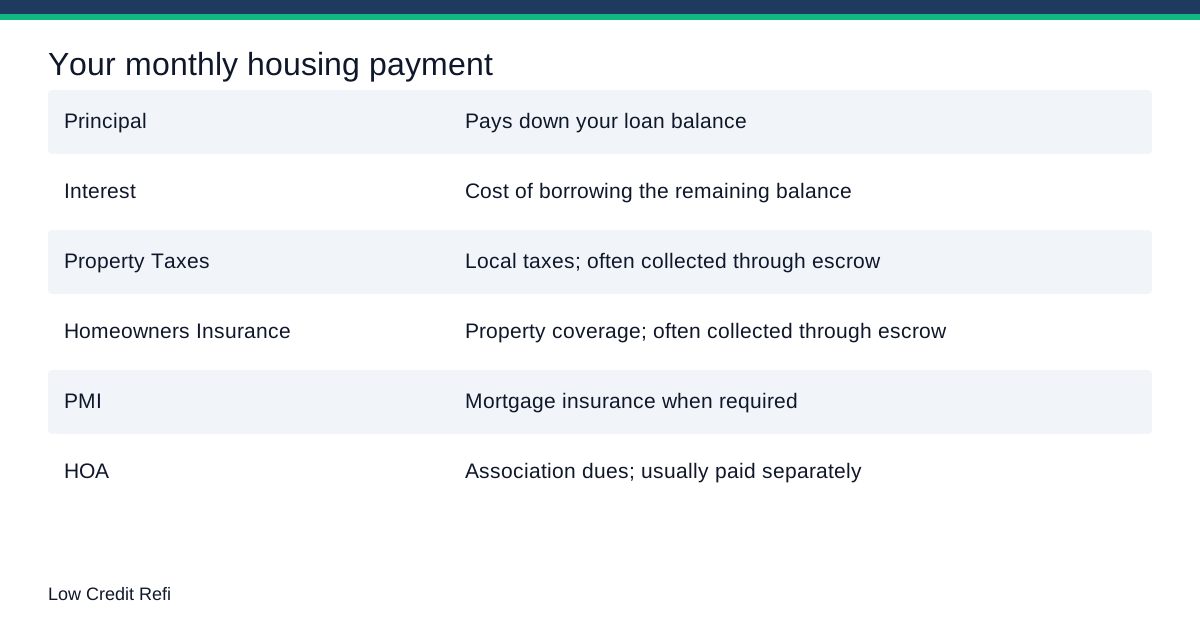
Compare Loan Estimates for the same loan type and term. Include closing costs when calculating whether refinancing saves money.
- Your current rate is significantly higher
- You need extra funds via home equity.
- You’re switching from adjustable to fixed-rate.
Boost Your Knowledge on Mortgage Refinancing:

Ready to Get Started?
Get your free, no-obligation quote in minutes.
Frequently Asked Questions
Why do mortgage rates increase when my credit score is below 620?
Lenders use risk-based pricing, meaning they charge higher rates to borrowers with lower credit scores to offset the increased likelihood of default. This is reflected in loan-level pricing adjustments (LLPAs) and higher margins, especially for conventional loans.
Can I get a mortgage with a credit score of 580?
Yes, you can qualify for an FHA loan with a credit score as low as 580. FHA loans are government-insured, which reduces lender risk and allows for more lenient credit requirements. However, expect higher rates compared to borrowers with scores above 620.
How much higher are mortgage rates for scores below 620?
The exact increase varies by lender and market conditions, but borrowers below 620 typically see rate premiums of 0.5% to 1.0% or more above the base rate. This is due to credit adjustments and other risk factors like loan-to-value ratio.
What can I do to lower my mortgage rate if my credit score is below 620?
Improving your credit score is the most effective way. Paying down credit card balances, disputing errors on your credit report, and making on-time payments can boost your score over time. Even a 20-point increase may qualify you for better rates.
Key Takeaways
- Understanding your options for mortgage rates higher below 620 is the first step
- Explore related options like why higher rate low credit
- Explore related options like credit score rate impact
- Getting pre-qualified helps you understand your real options