Compare Live Mortgage & Home Equity Rates
Compare current APRs, points, fees, and estimated monthly payments from participating lenders below.
Mortgage rates
Refinancing Your Mortgage with Confidence Starts Here!
Imagine turning the dream of refinancing your home into a reality—even with a lower credit score. The Debt-to-Income Ratio (DTI) is your secret weapon! Let’s dive in and explore how mastering this vital metric, the debt to income ratio DTI, can guide you to better loans and brighter financial opportunities.
What is DTI, and Why is It a Big Deal?
Quick Answer: Debt-to-income ratio (DTI) compares your monthly debt payments to your gross monthly income. Lenders use it to assess your ability to manage new loan payments. For borrowers with credit scores between 580 and 620, a lower DTI improves refinancing chances, especially with FHA loans, which allow higher DTI limits.
DTI Demystified: Your DTI shows how much of your income goes toward monthly debt payments. Here's the magical formula:
markdown DTI = (Monthly Debt Payments ÷ Gross Monthly Income) × 100
Why You Should Care About This Metric: A low debt to income ratio DTI opens doors to better loan options, lower interest rates, and faster approvals.
1 Front-End DTI: The Housing Ratio
This focuses solely on housing-related expenses:- Includes: Principal, interest, property taxes, insurance, and HOA dues
- Sweet Spot: Stay below 31% for the best loan options.
2 Back-End DTI: The Total Picture
This includes ALL recurring debts:- Housing costs, car loans, credit cards, student loans, child support, and more.
- Most lenders use this number to assess your capacity to handle new loans.
| Loan Type | Max Back-End DTI Allowed |
|---|---|
| Conventional | 43%-45% |
| FHA | Up to 57% (most flexible!) |
| VA | Typically ~60% |
Calculate Your DTI
Step 1: Add Monthly Debts
Total your:- Mortgage payment
- Minimum credit card payments
- Car and student loans
- Alimony or child support (if applicable)
Step 2: Determine Your Gross Monthly Income
Add up all pre-tax earnings:- Wages
- Side hustle income
- Bonuses or commissions
- Rental earnings (if any)
Step 3: Plug It Into the Formula
(Total Debt ÷ Gross Income) × 100 = DTI %
This is especially relevant for those interested in dti calculation.
Example Calculation:
- Total Debts: $2,400
- Gross Income: $6,000
($2,400 ÷ $6,000) × 100 = 40%
Result: A strong debt to income ratio DTI for various refinancing options!
Tips for Improving Your DTI
Expert Tip
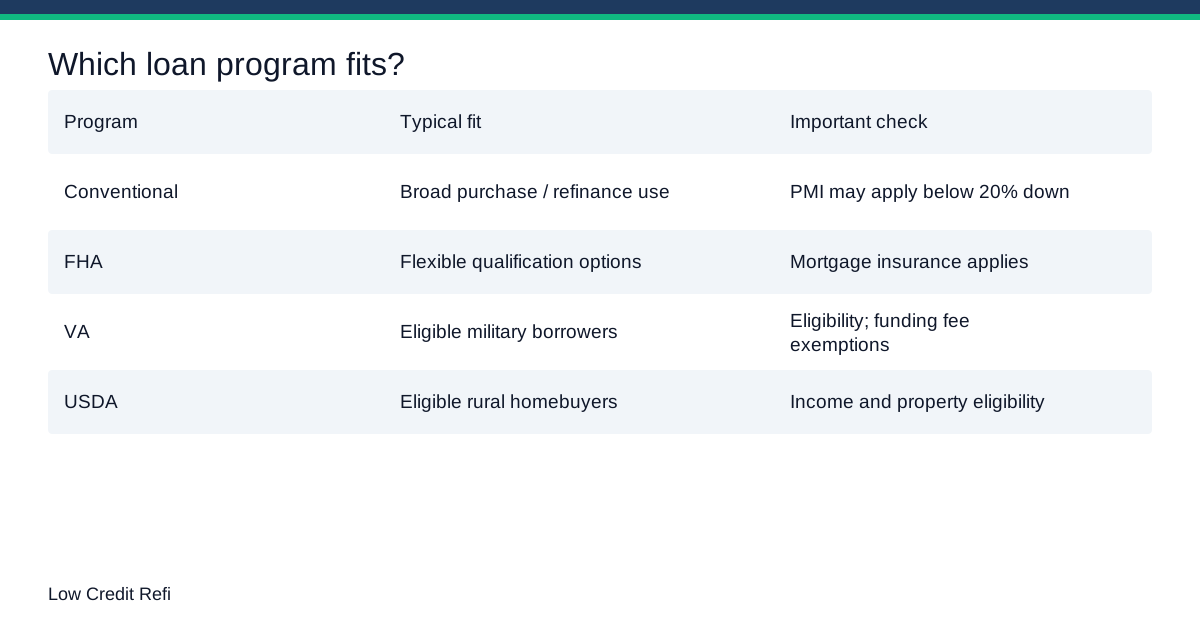
Compare Loan Estimates for the same loan type and term. Include closing costs when calculating whether refinancing saves money.
Slash Debt:
- Pay off smaller loans first to reduce monthly obligations.
- Consider refinancing to lower your car or student loan payments.
- Consolidate high-interest credit card debt.
- Hustle for that promotion or raise.
- Explore freelance or part-time opportunities that suit your lifestyle.
- Negotiate more favorable loan terms.
- Stretch out repayment periods for a lower monthly burden, if feasible.
Borrowers with Credit Scores Under 620: Game-Changing Secrets
Your Best Bet: FHA Loans For borrowers with less-than-stellar credit, FHA refinancing programs are incredibly forgiving. Strengthen your application with "compensating factors":
- Steady employment history
- Cash reserves for emergencies
- Minimal rise in housing expenses
Expert Insight: Even if your debt to income ratio DTI feels like an uphill climb, strategic planning can elevate you above approval thresholds. Remember, lenders also value stability and forward planning.
Key Takeaways
- Lower your debt to income ratio DTI to boost refinancing options
- FHA loans shine for credit scores under 620
- Small debt adjustments can lead to big approval wins
Frequently Asked Questions
How is debt-to-income ratio calculated?
DTI is calculated by dividing your total monthly debt payments by your gross monthly income, then multiplying by 100. For example, if your monthly debts are $2,000 and gross income is $6,000, your DTI is 33%. Include housing costs, credit cards, car loans, and other recurring debts.
What is a good DTI for mortgage refinancing?
For conventional loans, lenders prefer a back-end DTI below 43-45%. FHA loans are more flexible, allowing up to 57% DTI. Borrowers with credit scores of 580-620 may qualify for FHA refinancing with a higher DTI, especially if they have compensating factors like steady employment or cash reserves.
What is the difference between front-end and back-end DTI?
Front-end DTI, or housing ratio, includes only housing expenses like mortgage principal, interest, taxes, and insurance. Back-end DTI includes all monthly debt obligations, such as car loans, credit cards, and student loans. Lenders typically focus on back-end DTI to assess overall debt burden.
How can I lower my DTI to qualify for refinancing?
To lower your DTI, reduce monthly debt payments by paying off smaller loans or consolidating high-interest debt. Increasing your income through a side job or overtime also helps. For borrowers with credit scores under 620, FHA loans offer more lenient DTI requirements, making refinancing more accessible.
Key Takeaways
- Understanding your options for debt to income ratio dti is the first step
- Explore related options like dti calculation
- Explore related options like dti requirements refinance
- Getting pre-qualified helps you understand your real options