Compare Live Mortgage & Home Equity Rates
Compare current APRs, points, fees, and estimated monthly payments from participating lenders below.
Mortgage rates
Refinancing Magic: Save Big Every Month
Quick Answer: Refinancing monthly savings depend on your new interest rate, loan amount, and remaining term. For borrowers with credit scores 580-620, even a small rate drop can reduce your monthly payment. Use a refinance calculator with your specific loan details to estimate potential savings—no two situations are alike.
Imagine slashing hundreds off your monthly mortgage bill. Refinancing can be a powerful tool to reduce your monthly payments, improve your financial stability, and even help build equity faster. For borrowers with credit scores in the 580-620 range, refinancing offers a fresh start, financial relief, and long-term refinancing monthly savings. Let’s dive into how refinancing can transform your monthly budget and how much you can save through refinancing monthly savings.
Key Factors Driving Your Savings
1 Rate Reduction: The Game Changer
The interest rate on your mortgage is a key factor in determining your monthly payment. Lowering your interest rate—even by a fraction—can result in significant refinancing monthly savings:- 0.50% drop: A modest reduction in your payment, but every dollar saved adds up over time.
- 1.00% drop: A noticeable improvement that will free up cash flow monthly.
- 1.50%+ drop: A transformative change that can drastically reduce your financial burden and enhance your refinancing monthly savings.
2 Loan Amount: Bigger Loans, Bigger Wins
The size of your loan directly impacts how much you save when refinancing. Larger loans tend to yield greater refinancing monthly savings with even small rate reductions:- $200,000 loan with a 1% rate drop: Save ~$110/month.
- $300,000 loan with a 1% rate drop: Save ~$165/month.
- $400,000 loan with a 1% rate drop: Save ~$220/month.
3 Remaining Term: Time Is Money
Your mortgage term also plays a critical role in determining your monthly payment reduction and long-term savings:- Extending to a new 30-year loan: Reduces immediate monthly payments but increases total interest paid over time.
- Switching to 15 years: Results in higher monthly payments but drastically lowers interest paid over the life of the loan.
- Keeping your current term: Provides the cleanest option for reducing monthly payments without extending your loan period.
Real-Life Savings: See It to Believe It
Example 1: Strong Candidate
- Current loan: $350,000 at 7.5% (27 years left)
- New loan: $350,000 at 6.5% (30 years)
- Monthly savings: _$234_ – That’s over $2,800/year and significant financial relief!
Example 2: Moderate Candidate
- Current loan: $280,000 at 6.75% (25 years left)
- New loan: $280,000 at 6.25% (30 years)
- Monthly savings: _$142_ – A solid reduction that adds up to $1,700/year.
Example 3: Marginal Candidate
- Current loan: $220,000 at 6.5% (28 years left)
- New loan: $220,000 at 6.25% (30 years)
- Monthly savings: Just _$35_ – While small, this can still bring meaningful change over time.
Savings Breakdown Chart: Your Snapshot
See how much you can save based on your loan amount and rate reduction:| Loan Amount | 0.50% Rate Drop | 0.75% Rate Drop | 1.00% Rate Drop |
|---|---|---|---|
| $200,000 | $55/month | $83/month | $110/month |
| $250,000 | $69/month | $103/month | $138/month |
| $300,000 | $83/month | $124/month | $165/month |
| $350,000 | $97/month | $145/month | $193/month |
| $400,000 | $110/month | $166/month | $220/month |
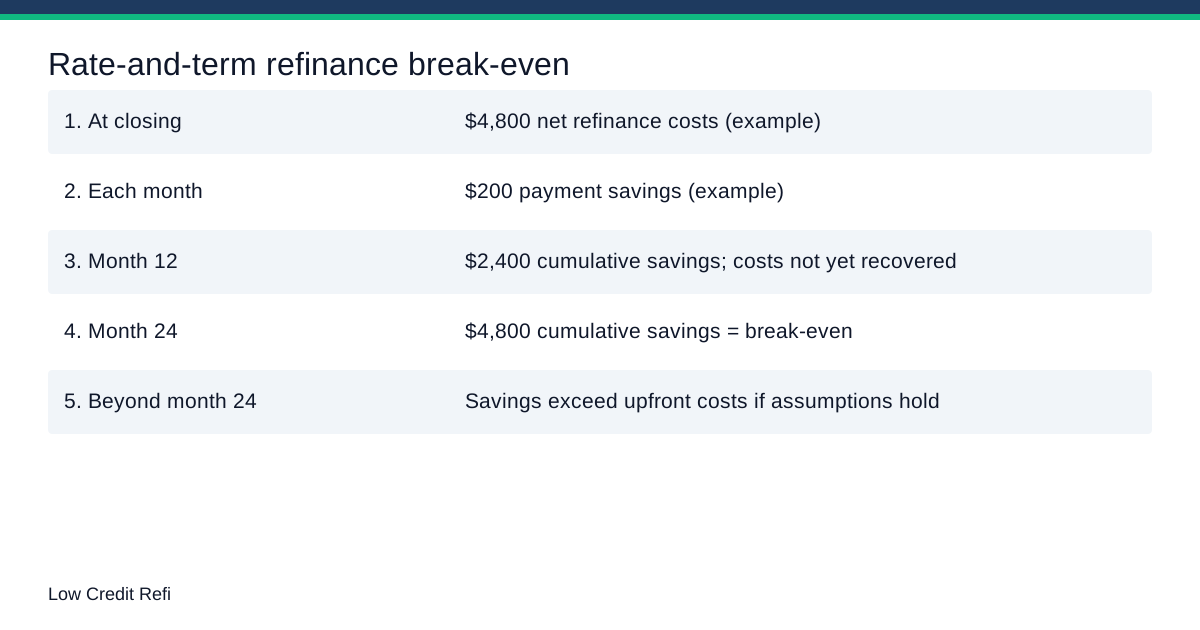
Reminder: Closing costs may temporarily offset your savings—but refinancing remains a smart move if the break-even period is reasonable and can lead to substantial refinancing monthly savings.
Win With 15-Year Refinancing
Trading a 30-year mortgage for a 15-year loan offers unique advantages:
- Faster equity building for long-term financial security.
- Save thousands in interest over the life of the loan, contributing to your refinancing monthly savings.
Example:
- $300,000 @ 6.5% for 30 years: $1,896/month
- $300,000 @ 6.0% for 15 years: $2,532/month
- Savings: ~$230,000 total interest – worth the higher monthly payment for those who can manage it!
When Refinancing May Not Work
While refinancing often results in monthly payment reduction, it’s not always the right decision. Be cautious in these scenarios:
- Savings are under $100/month: Your break-even period may be too long to justify the effort.
- Break-even exceeds 5 years: If you plan to sell your home or refinance again soon, the savings may not outweigh the upfront costs.
- High closing costs: If closing costs are steep, they may negate the benefits of refinancing and impact your refinancing monthly savings.
Additional Resources
Want to learn more about maximizing your refinance savings? Check these resources:
Conclusion: Your Savings Start NOW
Refinancing can unlock powerful monthly savings and long-term financial benefits, especially for borrowers with less-than-perfect credit. Whether you’re looking for immediate relief or aiming to save tens of thousands in interest, understanding the factors that drive refinancing monthly savings is key. Be informed, compare options, and take action to enjoy the peace of mind that comes with a lower monthly payment. Ready to take the first step toward financial freedom and substantial refinancing monthly savings? Let’s make it happen today!
Frequently Asked Questions
How much can I save per month by refinancing my mortgage?
Monthly savings vary based on your loan size, rate reduction, and term. For example, a 1% rate drop on a $200,000 loan could save around $110 per month. Use a refinance calculator with your current loan details for a personalized estimate.
What factors affect refinancing monthly savings the most?
The key factors are the reduction in your interest rate, your loan amount, and whether you extend or shorten your loan term. A larger rate drop and higher loan balance typically yield greater monthly savings.
Can I refinance with a credit score between 580 and 620?
Yes, some lenders offer refinancing options for borrowers with credit scores in the 580-620 range, though terms may be less favorable. Improving your credit score before applying can help you secure a lower rate and increase monthly savings.
Is it better to refinance to a 15-year or 30-year term for monthly savings?
Refinancing to a new 30-year term usually lowers your monthly payment the most because you spread the balance over a longer period. A 15-year term typically increases monthly payments but saves on total interest. Choose based on your cash flow and long-term goals.
Key Takeaways
- Understanding your options for refinancing monthly savings is the first step
- Explore related options like refinance savings calculator
- Explore related options like how much save refinancing
- Getting pre-qualified helps you understand your real options