Compare Live Mortgage & Home Equity Rates
Compare current APRs, points, fees, and estimated monthly payments from participating lenders below.
Mortgage rates
Unlock FHA Refinancing Even With Collections
Quick Answer: Yes, you can refinance with an FHA loan even if you have collections on your credit report. FHA guidelines are more lenient: medical collections under $2,000 are ignored, and non-medical collections under $2,000 per account may not require action. However, cumulative non-medical collections over $2,000 or court judgments typically need to be addressed through payment plans or settlements before approval.
Navigating the refinancing world feels daunting, but let us reassure you: collections on your credit report don’t have to be a dealbreaker. With a little insight, strategy, and support—FHA refinancing with collections can restore hope in your financial journey. Let’s break it down together…
Medical Collections: Breathe Easy
- Total Under $2,000: No sweat—these are ignored entirely. FHA won’t even blink.
- Total Over $2,000: You may need to arrange a payment plan or settle the debt.
Non-Medical Collections: Know the Limits
- Under $2,000 per account: Generally acceptable without action.
- Cumulative Total Over $2,000: This is where lenders may ask for explanations or actions regarding your FHA refinance with collections.
- Court Judgments: Must typically be paid or under a structured payment plan before FHA approval.
Want clarity FAST? Here’s a quick explainer video (2 min watch):
> This video is perfect to demystify FHA collection policies. Don’t miss out if you’re new to this topic!
When Do Collections Need Action?
If your non-medical collections total over $2,000, here’s how to get back in control for your FHA refinance with collections:
- Pay It Off Completely: End of story—and the issue disappears.
- Start a Payment Plan: Show lenders you’re proactive. Document it properly.
- Dispute Inaccurate Charges: Check carefully—errors happen. Dispute through credit bureaus .
- Federal Tax Liens & Judgments: Must be paid or in a structured payment agreement with proof.
When Can Collections Be Ignored?
Here’s some good news . Skip these steps if:
This is especially relevant for those interested in collections on credit report refinance.
- Medical collections are under $2,000
- Individual non-medical accounts are <$500
- 7+ Years Old Collections are about to fall off your report
- Debts in Dispute are ongoing—lenders will wait for resolution
Collections and Your DTI: Know the Math
If not handled, lenders might apply 5% of collection balances to your monthly debt-to-income (DTI).
- Example: $3,000 in collections adds $150/month to your DTI. Ouch.
- Example: $3,000 with a payment plan at $75/month adds just $75.
Winning Strategies for Handling Collections
1 Pay for Delete (Game-Changer Tip!)
Negotiate with collecting agencies to REMOVE the collection entirely:- Offer a settlement payment (even less than full).
- Get the agreement in writing before paying a dime.
- Success Rate: Varies, but worth the shot. Some consumers swear by it.
2 Payment Plans: Reliable & Respected
- Document it ALL: Written agreements, payment schedules, and 3+ months of consistent history score big approval points for your FHA refinance with collections.
3 Dispute Errors: Never Pay What You Don’t Owe
- Use credit bureau platforms to contest inaccuracies.
- Demand proof via debt validation requests.
- Stay organized—log every correspondence & update.
4 Play the Waiting Game (Only If Close)
Collections vanish after 7 years. If your timeline aligns, patience can save you big stress and resources.> Did You Know? 76% of credit reports contain some error. Leveraging disputes strategically makes a surprising difference.
Watch this quick breakdown on negotiation tips! (Highly useful!)
Key Documents You’ll Need for Approval
- Letter of Explanation: A short, honest account of why collections occurred.
- Payment Plan Agreements: Lenders love setup proof.
- Payment Receipts or Proof for any “paid in full” or ongoing plans.
- Dispute Corroboration Documents (if applicable): Reinforce your position.
Choose Lenders Who Are FHA-Flexible
Expert Tip
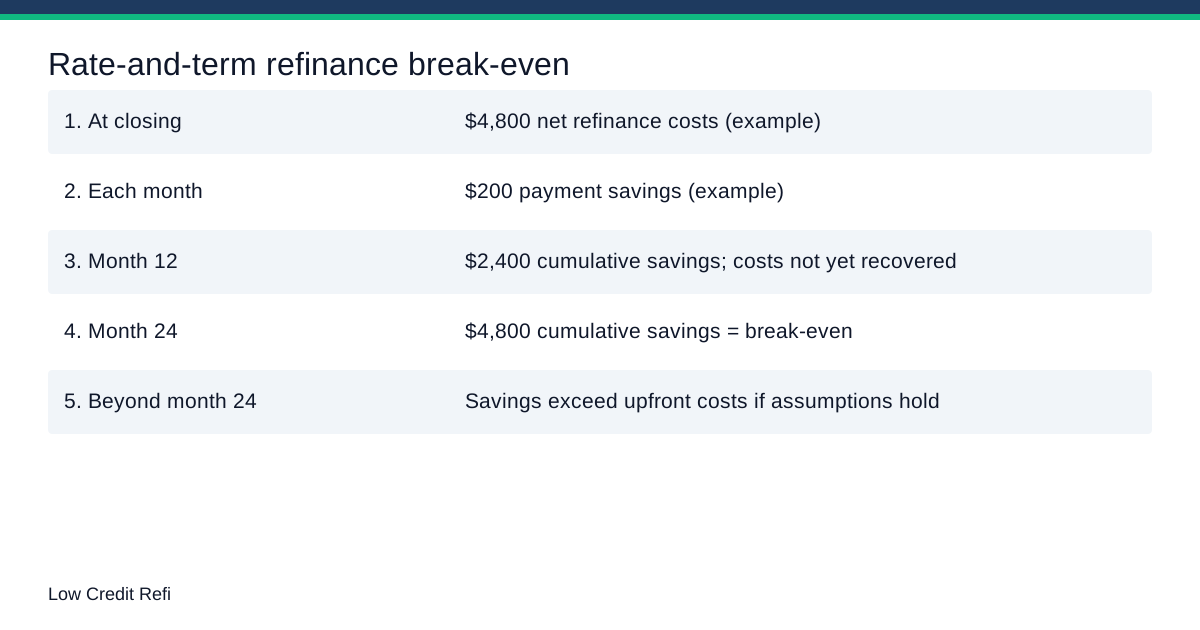
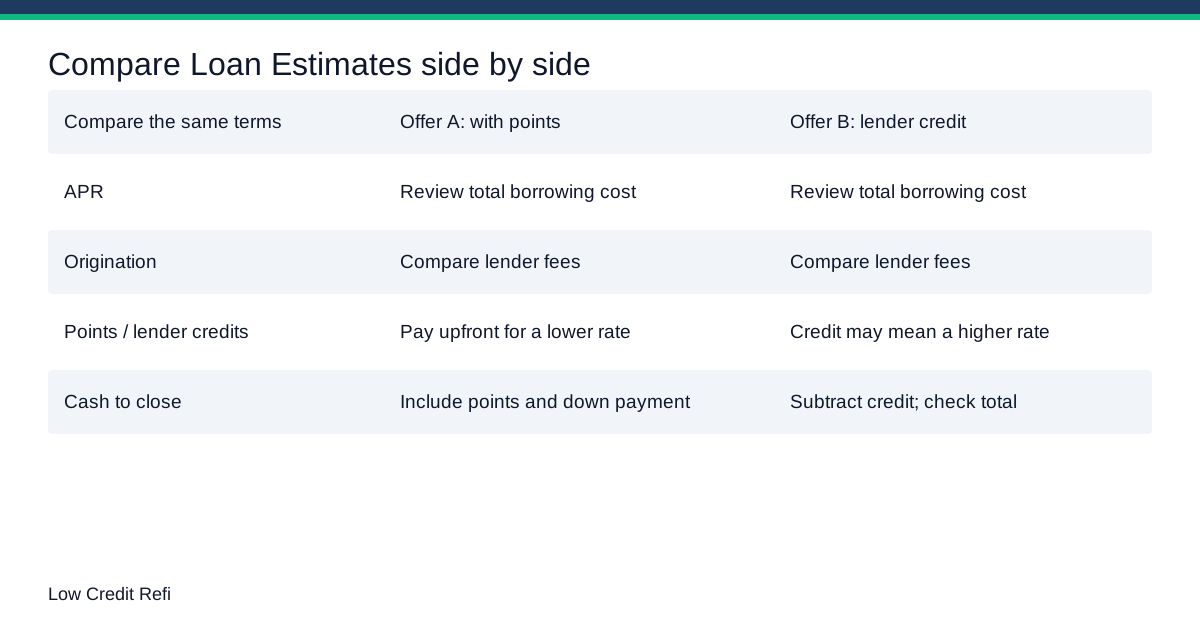
Compare Loan Estimates for the same loan type and term. Include closing costs when calculating whether refinancing saves money.
People looking into fha loan with collections will find this information valuable.
Lenders vary in policies—here’s what you need to know upfront:
- More Flexible Lenders:
- Stricter Lenders:
> Shopping around smarter saves significant rejections & time.
Steps to FHA Refinancing with Collections
- Assess and organize ALL collection balances.
- Address what’s absolutely necessary: Pay, plan, or dispute.
- Document EVERYTHING. The more transparent, the better.
- Submit a concise, polite explanation letter regarding your FHA refinance with collections.
- Research collection-friendly FHA lenders near you.
- Highlight income, equity, or compensating financial strengths to favor approval.
Final Thoughts on Collections Even with collections, FHA refinancing can work beautifully when approached with strategy. Arm yourself with knowledge, act decisively, and align with lenders who believe in second chances. Here’s to unlocking financial freedom—one step at a time.
Frequently Asked Questions
How do FHA lenders treat medical collections vs. non-medical collections?
FHA treats medical collections more leniently. Medical collections under $2,000 total are ignored entirely. If over $2,000, you may need a payment plan or settlement. Non-medical collections under $2,000 per account are generally acceptable, but if the cumulative total exceeds $2,000, lenders may require action such as paying off, setting up a payment plan, or disputing errors.
What happens to my debt-to-income ratio if I have collections?
If collections are not addressed, lenders may add 5% of the total collection balance to your monthly debt-to-income (DTI) calculation. For example, $3,000 in collections adds $150 per month. If you have a payment plan, only the actual monthly payment counts, which can lower your DTI and improve approval chances.
Can I get an FHA refinance if I have a court judgment or tax lien?
Court judgments and federal tax liens must typically be paid in full or under a structured payment plan with documented proof before FHA approval. Lenders want to see that these debts are being resolved. A payment plan with consistent payments can satisfy FHA requirements.
What is a 'pay for delete' strategy and does it help with FHA refinancing?
Pay for delete is a negotiation where you offer to pay a collection agency in exchange for removing the collection from your credit report entirely. This can improve your credit score and make FHA refinancing easier. Always get the agreement in writing before paying. Success varies, but it's worth attempting.
Key Takeaways
- Understanding your options for fha refinance with collections is the first step
- Explore related options like collections on credit report refinance
- Explore related options like fha loan with collections
- Getting pre-qualified helps you understand your real options


