Compare Live Mortgage & Home Equity Rates
Compare current APRs, points, fees, and estimated monthly payments from participating lenders below.
Mortgage rates
Quick Answer: The refinancing break even point is the time it takes for your monthly savings to cover the upfront closing costs. For borrowers with credit scores between 580 and 620, typical closing costs may be higher due to FHA or subprime loans, extending the break-even period. Calculate it by dividing total closing costs by monthly savings to see if refinancing makes sense for your situation.
Refinancing: The Power Move That Saves You Money
Refinancing isn't just a financial step; it’s the ultimate strategy to take control of your budget and future. But here’s the deal: timing is EVERYTHING. You need to uncover your refinancing break even point to decide if refinancing is your golden ticket.What’s a Break-Even Point? Your refinancing break even point tells you the exact moment your savings eclipse the upfront costs of refinancing. From that point on, it’s all about profit. Let’s dive into this game-changing equation.
The Irresistible Formula to Calculate Your Break-Even
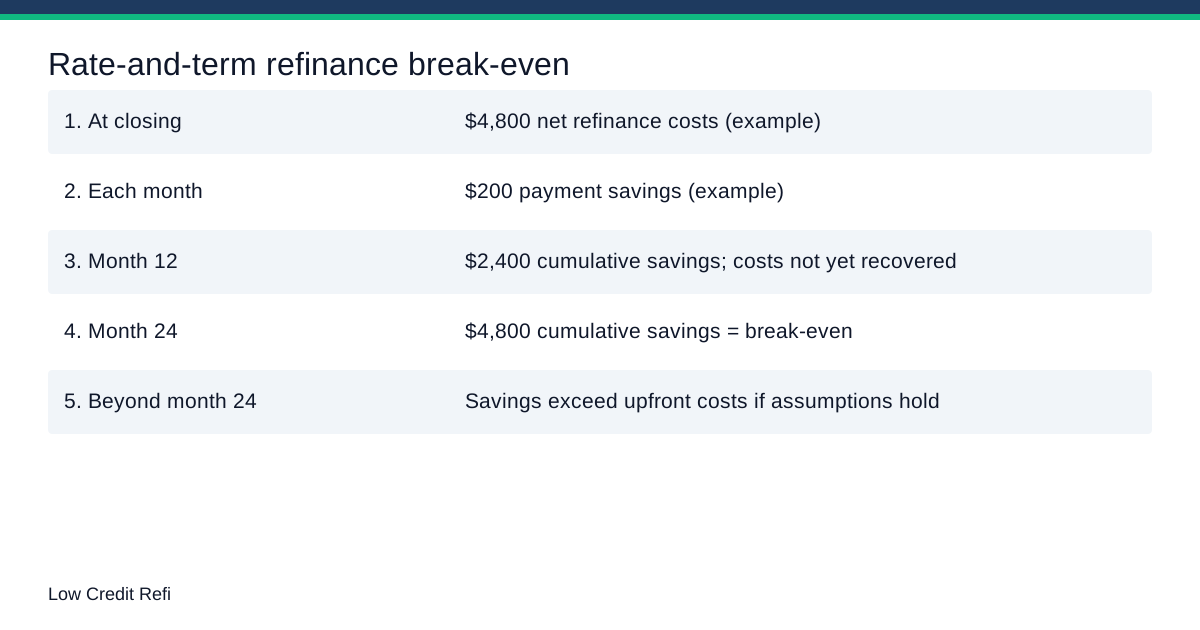
Break-Even (months) = Total Closing Costs ÷ Monthly SavingsLet’s visualize:
Example:
| Closing Costs | Monthly Savings | Break-Even |
|---|---|---|
| $6,000 | $150 | 40 months (3.3 years) |
In just 40 months, you’re reaping sweet, pure savings. Every month after? It’s all yours!
Pro Tip: Use our free break-even calculator to crunch the numbers instantly! Try it now!
Steps to Your Break-Even Jackpot
This is especially relevant for those interested in break even refinance calculator.
Step 1: Find Your Total Closing Costs
This includes everything:- Origination fees
- Appraisal costs
- Title insurance
- FHA upfront MIP (if applicable)
Step 2: Calculate Monthly Savings (a.k.a money in your pocket!)
Compare your old and new payments:- Current payment: $2,100
- New payment: $1,950
- Savings: $150 per month
Step 3: Divide and Conquer
Now get calculating: $8,500 ÷ $150 = 56.7 months (~4.7 years)Visual Guide: Watch this quick, expert video breakdown to master break-even math in 3 minutes!
What’s a Good Break-Even Point?
| Break-Even Point | Our Recommendation |
|---|---|
| Under 2 years | Excellent – Time to refinance! |
| 2–3 years | Good – Make the move if staying 4+ years. |
| 3–5 years | Fair – Think about your long-term plans carefully. |
| 5–7 years | Marginal – Only OK if you’re sticking around 7+ years. |
| Over 7 years | Poor – Likely not worth it. |
Secrets to Shortening Your Break-Even Time
Cut Down Closing Costs
- Negotiate them! Most fees are flexible.
- Consider "no-closing-cost" refinancing but be aware of hidden rate increases.
Increase Monthly Savings
- A larger rate drop saves big.
- Remove PMI: It’s a HUGE boost to your wallet.
Match Your Move Timeline
- Staying long-term? Aim for peace of mind with lower payments—even with a higher closing cost.
- Moving in a few years? Look for a short break-even timeframe.
Real-Life Break-Even Examples for Different Credit Scores
600 Credit Score Scenario
- Current loan: $280,000 @ 8%
- New loan: $280,000 @ 7% (FHA)
- Monthly savings: $175
- Closing costs: $10,000
- Break-even: 57 months (~4.75 years)
620 Credit Score Scenario
- Current loan: $280,000 @ 7.5%
- New loan: $280,000 @ 6.75%
- Monthly savings: $130
- Closing costs: $9,500
- Break-even: 73 months (6 years)
Beyond the Numbers: Considering the Bigger Picture
Maximize Opportunity with Your Closing Costs
Instead of shelling out $8,000 without a second thought, think of the opportunity:- Could that money grow if invested?
- Tip: If your refinancing break even point is long, factor in what you might be giving up.
Tax Perks
Higher mortgage interest can mean bigger tax deductions. Speak to a CPA to see if this applies to your case.Rate Risk
- Rates falling? Waiting could make sense.
- Rates rising? Lock that win in NOW.
Special Scenarios Where Break-Even May Not Fully Apply
Cash-Out Refinance
Love turning your equity into cash? The idea of traditional break-even may lose relevance since you’re cashing in and saving elsewhere.Locking in Stability
Refinance to escape the turmoil of adjustable rates: it’s not all about savings—it’s about peace of mind.Your Powerful Decision-Making Checklist
Break-even is shorter than your estimated stay. Your savings will make a real difference in your monthly life. You’re comfortable with the upfront costs.Wait if: Your refinancing break even point is long, and a move is on the horizon. Rates are projected to decline further. Your credit score is improving rapidly.
Still not sure? Watch a licensed financial expert break this down in 5 mins!
Quick Key Takeaway Box Refinancing can save thousands—but only if the math works for you. The refinancing break even point is your ultimate north star. Crunch the numbers, factor in your goals, and unlock financial freedom with confidence.
Expert Tip
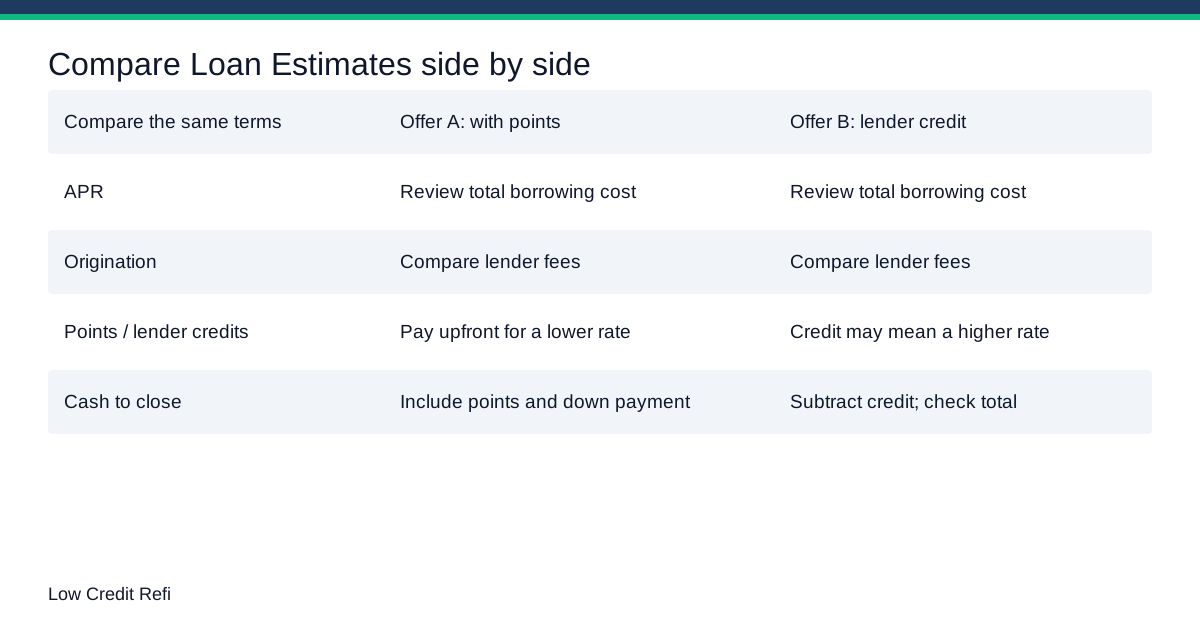
Compare Loan Estimates for the same loan type and term. Include closing costs when calculating whether refinancing saves money.
Ready to Get Started?
Get your free, no-obligation quote in minutes.
Frequently Asked Questions
How do I calculate the refinancing break even point?
Divide your total closing costs by your monthly savings from the new loan. For example, if closing costs are $6,000 and you save $150 per month, your break-even point is 40 months. This tells you how long it takes to recoup costs.
What is a good break-even point for refinancing?
A break-even point under 2 years is excellent, 2–3 years is good, and 3–5 years is fair. If you plan to stay in the home longer than the break-even period, refinancing may be worthwhile. For borrowers with lower credit scores, break-even points may be longer due to higher costs.
Can I refinance with a credit score of 580?
Yes, borrowers with credit scores as low as 580 may qualify for FHA loans, which often have lower rates than subprime options. However, closing costs and mortgage insurance can be higher, so calculate your break-even point carefully to ensure long-term savings.
How can I shorten my refinancing break-even time?
Negotiate lower closing costs, choose a no-closing-cost refinance (though rates may be higher), or aim for a larger rate drop to increase monthly savings. Removing private mortgage insurance (PMI) can also boost savings and reduce the break-even period.
Key Takeaways
- Understanding your options for refinancing break even point is the first step
- Explore related options like break even refinance calculator
- Explore related options like when does refinance pay off
- Getting pre-qualified helps you understand your real options