Compare Live Mortgage & Home Equity Rates
Compare current APRs, points, fees, and estimated monthly payments from participating lenders below.
Mortgage rates
Tackle the Tough: Mortgage Refinancing with Low Credit and High Debt-to-Income Ratio
Quick Answer: Yes, you can refinance with low credit and high DTI. FHA loans allow DTI up to 57% and credit scores as low as 580. Highlight compensating factors like cash reserves or stable employment to improve approval odds.
Refinancing your home when burdened by low credit and a high debt-to-income (DTI) ratio can feel overwhelming. But here's the good news—it’s challenging, NOT impossible. Let’s map out your route to success with a focus on how to refinance low credit high DTI situations effectively.
Understanding DTI: What’s Your Score?
Your Debt-to-Income (DTI) Ratio is a critical metric for lenders assessing your financial health. Simply put:
> DTI Formula: Monthly Debts ÷ Gross Monthly Income
A lower DTI shows lenders that you have sufficient income to manage debts, while a higher DTI signals risk. Understanding your ratio is the first step toward navigating refinancing challenges, especially when looking to refinance low credit high DTI scenarios.
DTI Limits by Loan Type
| Loan Type | Max Front-End DTI | Max Back-End DTI |
|---|---|---|
| Conventional | 28% | 36-45% |
| FHA | 31% | 43-57% |
| VA | 41% | 60% |
| Non-QM | Varies | 50%+ possible |
Front-End DTI = Housing costs only. Back-End DTI = All monthly debts combined.
This is especially relevant for those interested in high debt to income refinance.
If your DTI is too high for conventional loans, options like FHA or Non-QM loans may be your best bet when trying to refinance low credit high DTI situations.
Why FHA Loans Shine Bright
When your credit is below average and your DTI is higher than lenders prefer, FHA loans provide unmatched flexibility for refinancing. FHA loans are designed specifically to help borrowers who face challenges like high debt-to-income ratios or low credit scores, making them ideal for those looking to refinance low credit high DTI.
Benefits of FHA Loans:
- Maximum DTI Limits: Up to 57%—one of the highest allowances in the industry.
- Minimum Credit Requirements: As low as 580 (even 500 in specific cases with larger down payments).
- Compensating Factors: Lenders consider additional strengths, such as:
Watch this quick breakdown of FHA loans and their perks:
Compensating Factors: Prove You’re Rock Solid
Expert Tip
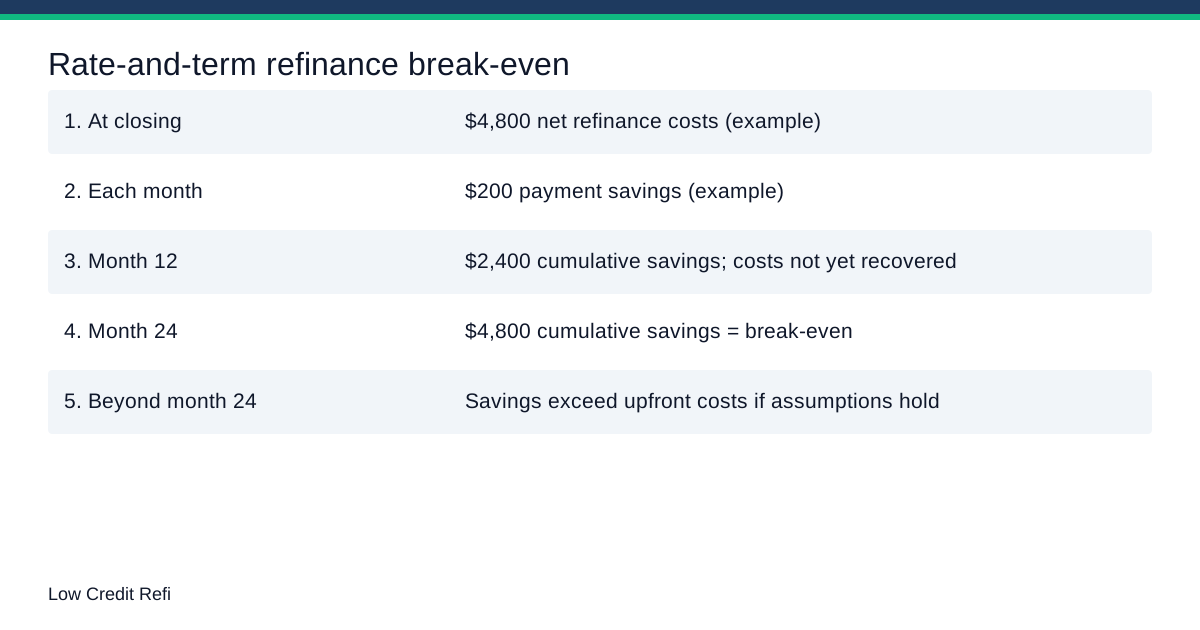
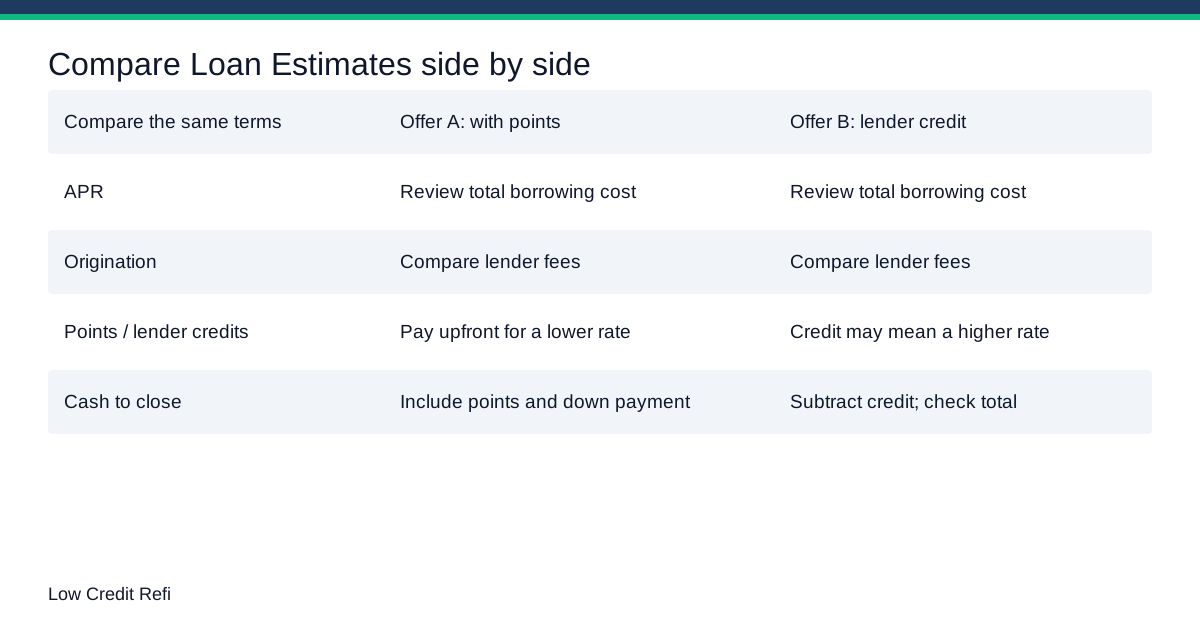
Compare Loan Estimates for the same loan type and term. Include closing costs when calculating whether refinancing saves money.
People looking into dti too high refinance will find this information valuable.
Lenders aren’t solely focused on credit scores or DTI—they also evaluate your overall financial stability. Highlight compensating factors to improve your approval chances, especially when trying to refinance low credit high DTI.
Key Factors to Highlight
- Cash Reserves: Savings for 3–6 months of mortgage payments demonstrates financial preparedness.
- Minimal Payment Increase: If refinancing doesn’t significantly increase your monthly housing costs, lenders may view your application more favorably.
- Residual Income: Show lenders how much cash remains after monthly expenses—it’s a strong indicator of stability.
- Employment Stability: Consistent employment (3+ years at the same job) signals reliability.
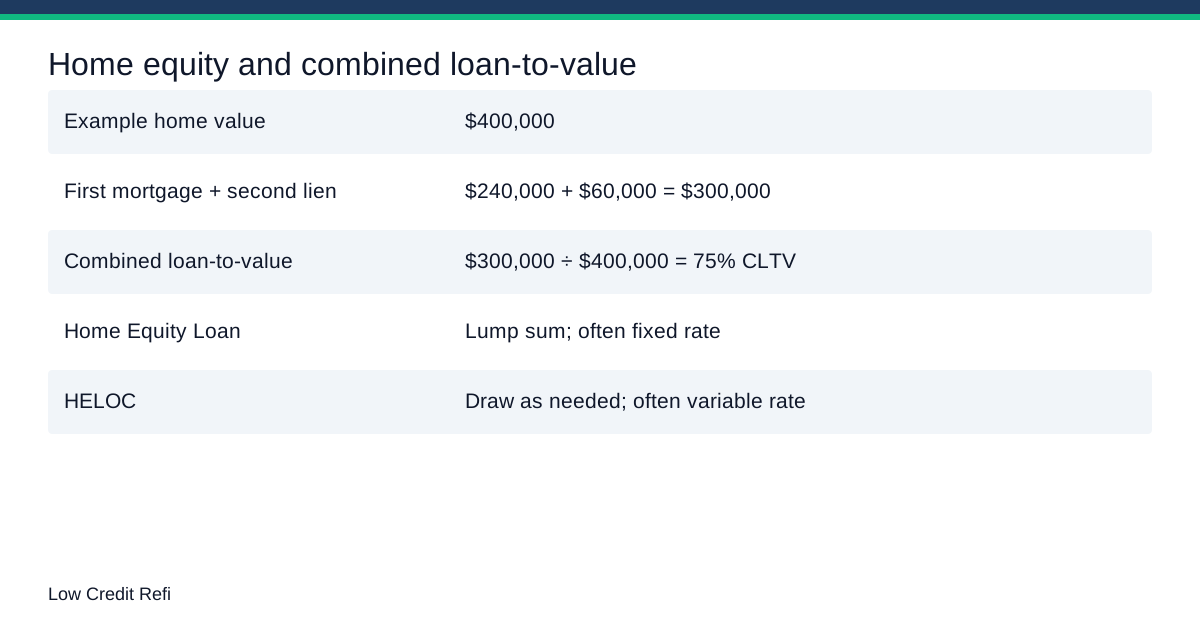
- Equity: A larger equity position (e.g., 20% or more) reduces lender risk, even if your credit and DTI are suboptimal.
Strategies to Improve Your Approval Odds
Being proactive is crucial when refinancing with low credit and a high DTI. Use these strategies to strengthen your application for a refinance low credit high DTI scenario:
Maximize DTI Improvements
Quick Moves:- Pay down small loans or credit card balances to immediately lower your debt obligations.
- Remove yourself from unused
- Earn
Pro-Tip: Add a Co-Borrower If your DTI is too high to refinance, consider adding a co-borrower with:
- Strong credit (ideally above 700).
- Low individual debt obligations.
- Stable income or assets that strengthen your overall profile.
Manual Underwriting: Your Secret Weapon
When automated systems reject your application,
manual underwriting can provide a second chance. This process involves a human review of your financial situation, focusing on compensating factors and unique circumstances relevant to refinance low credit high DTI cases.What’s Manual Underwriting? Manual underwriting replaces automated systems, giving you a personalized evaluation.
When It Helps:
- Low credit and high DTI borrowers with strong compensating factors.
- Applications declined by automated systems for minor issues.
- Additional documentation (e.g., proof of income, savings, and explanations for credit issues).
- Strong compensating factors to offset risks.
Real Scenarios: Challenges Solved
Scenario 1: Credit 600, DTI 48% Solution: Approved through FHA with manual underwriting, supported by cash reserves and job stability. Result: Refinanced with manageable terms. Scenario 2: Credit 590, DTI 52% Solution: Added spouse as co-borrower, reducing combined DTI to 42%. Result: FHA loan approved. Scenario 3: Credit 580, DTI 55%, Home Equity 40% Solution: Non-QM lender prioritized equity over credit concerns, approving the application with slightly higher interest rates. Result: Refinanced successfully.Finding Lenders Who Care
Not all lenders handle
high debt-to-income refinance or low credit challenges equally. Seek out lenders who specialize in:FHA loans and manual underwriting. Evaluating compensating factors. Working with borrowers facing credit or DTI hurdles, particularly those needing to refinance low credit high DTI.
Questions to Ask Lenders:
- Do you offer
Application Tips: Outshine the Competition
Refinancing with
low credit and high DTI requires preparation. Follow these steps to maximize your chances:Ready for Refinancing Success? Turn obstacles into opportunities with creative strategies, prepared documentation, and expert lenders who specialize in refinancing low credit high DTI cases.
Frequently Asked Questions
What is the minimum credit score to refinance with a high DTI?
FHA loans accept credit scores as low as 580 for refinancing, even with high DTI. Some lenders may consider scores down to 500 with larger down payments. Conventional loans typically require higher scores, so FHA is often the best option.
How high can my DTI be for an FHA refinance?
FHA loans allow back-end DTI up to 57%, one of the highest limits. This includes all monthly debts divided by gross income. Lenders may approve higher DTI if you have strong compensating factors like cash reserves or stable employment.
What compensating factors help offset low credit and high DTI?
Key factors include cash reserves (3-6 months of mortgage payments), minimal payment increase from refinancing, high residual income after expenses, long-term employment stability, and significant home equity. These show lenders you can manage the loan despite risk.
Can I refinance with a DTI over 50% and a credit score under 600?
Yes, FHA loans are designed for such scenarios. With a DTI up to 57% and credit scores as low as 580, refinancing is possible. Non-QM loans may also allow DTI above 50% with flexible credit requirements. Lenders will evaluate your overall financial picture.
Key Takeaways
- Understanding your options for refinance low credit high dti is the first step
- Explore related options like high debt to income refinance
- Explore related options like dti too high refinance
- Getting pre-qualified helps you understand your real options

