Compare Live Mortgage & Home Equity Rates
Compare current APRs, points, fees, and estimated monthly payments from participating lenders below.
Mortgage rates
Refinance With 580 Credit Score After Chapter 13 Discharge: Your Complete Guide to Getting Approved
Quick Answer: Yes, you can refinance with a 580 credit score after Chapter 13 discharge, primarily through FHA loans. FHA allows refinancing with scores as low as 580, and waiting periods are typically 12-24 months post-discharge. Lenders will evaluate your payment history, debt-to-income ratio, and income stability. Conventional loans usually require higher scores and longer waiting periods.
If you're searching for ways to refinance with 580 credit score after Chapter 13 discharge, you're in a better position than you might think. Federal Housing Administration (FHA) loans allow refinancing with credit scores as low as 580, and conventional refinance options may be available starting at 620. After completing a Chapter 13 bankruptcy discharge, you can begin rebuilding your financial foundation immediately. Most lenders require a waiting period of just 12-24 months after discharge for FHA refinancing, compared to 2-4 years for conventional loans. The key is demonstrating improved payment history, reduced debt-to-income ratios, and stable income since your bankruptcy discharge.
Understanding Your Options After Chapter 13 Bankruptcy Discharge
Chapter 13 bankruptcy differs significantly from Chapter 7 in ways that actually benefit you when seeking to refinance. Because Chapter 13 involves a court-supervised repayment plan rather than complete debt elimination, lenders view it more favorably. You've demonstrated the discipline to complete a 3-5 year payment plan, which provides concrete evidence of financial rehabilitation.
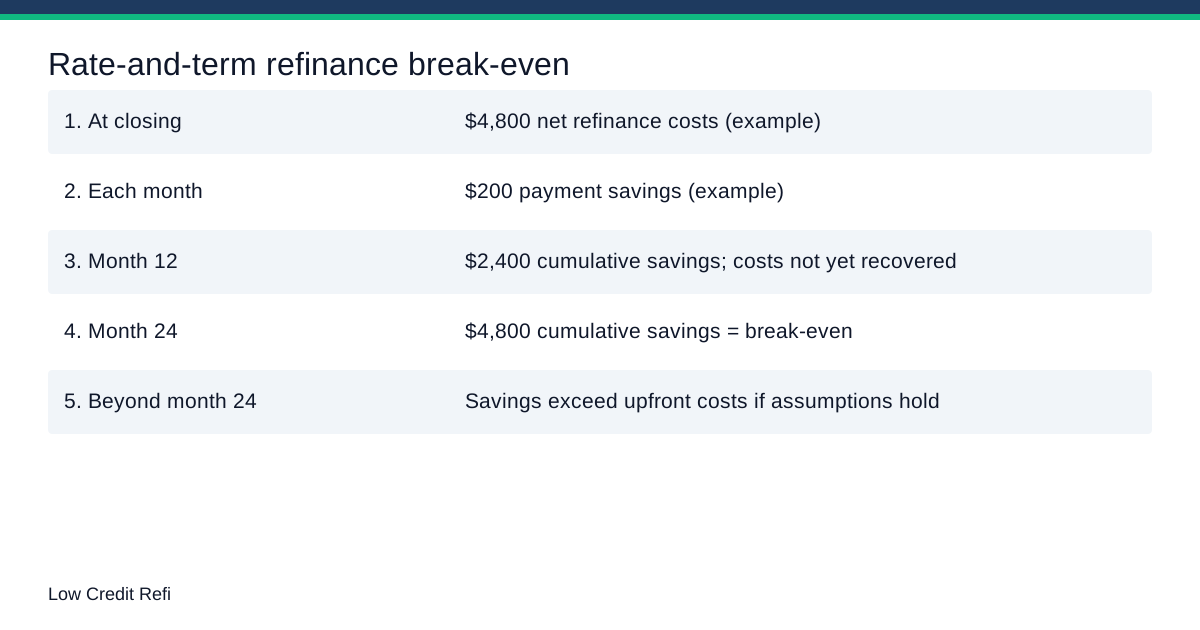
The waiting period to refinance with 580 credit score after Chapter 13 discharge varies by loan type:
- FHA Streamline Refinance: 12 months after discharge with documented on-time mortgage payments
- FHA Cash-Out Refinance: 12-24 months after discharge, depending on lender overlays
- Conventional Refinance: Typically 24-48 months after discharge, usually requiring 620+ credit score
- VA Interest Rate Reduction Refinance Loan (IRRRL): 12 months after discharge for eligible veterans
- USDA Streamline Assist Refinance: 12-24 months after discharge in eligible rural areas
Why FHA Refinancing Works Best for 580-620 Credit Scores
The Federal Housing Administration designed its programs specifically for borrowers who don't qualify for conventional financing. With a 580 credit score, you can access FHA refinancing with as little as 3.5% equity in your home for rate-and-term refinances.
FHA refinancing after Chapter 13 discharge offers several advantages:
Lower credit score requirements: FHA accepts scores down to 580 (some lenders may go to 500 with larger down payments on purchases, though refinancing typically requires 580 minimum).
Flexible debt-to-income ratios: FHA allows DTI ratios up to 43% through automated underwriting, with some lenders approving up to 50% with compensating factors like significant cash reserves or documented income stability.
Streamlined documentation: FHA Streamline Refinances require minimal documentation—no income verification, no appraisal in many cases, and no credit score review if you're current on your mortgage.
Expert Tip
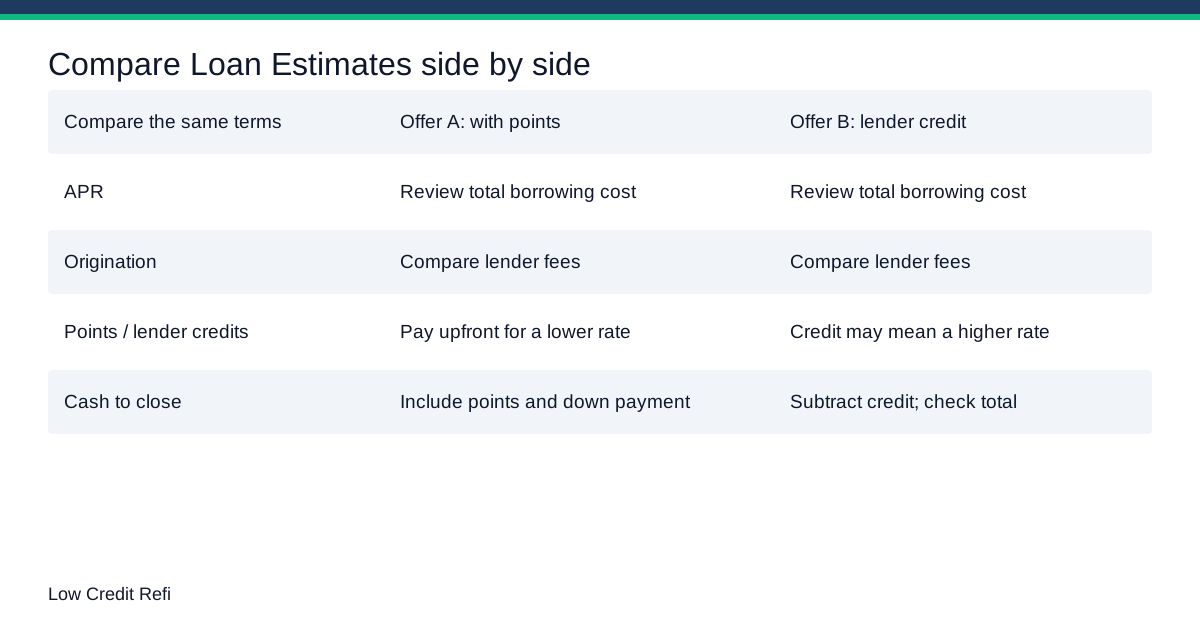
Compare Loan Estimates for the same loan type and term. Include closing costs when calculating whether refinancing saves money.
Mortgage insurance premiums: While FHA requires both upfront (1.75% of loan amount) and annual mortgage insurance premiums (0.55%-0.85% depending on loan amount and term), these costs are predictable and allow you to access refinancing that might otherwise be unavailable.
Expected Costs for FHA Refinancing in 2026
Understanding the complete cost picture helps you determine whether refinancing makes financial sense:
| Cost Component | Typical Range | Notes |
|---|---|---|
| Upfront Mortgage Insurance Premium | 1.75% of loan amount | Can be rolled into loan balance |
| Annual Mortgage Insurance Premium | 0.55%-0.85% annually | Divided into monthly payments |
| Origination Fees | $1,200-$2,500 | Varies by lender and loan complexity |
| Appraisal Fee | $400-$700 | Not required for FHA Streamline if no cash-out |
| Credit Report Fee | $50-$125 | Tri-merge reports from all three bureaus |
| Title Search & Insurance | $800-$2,000 | Depends on loan amount and location |
| Recording Fees | $75-$350 | Government charges for filing new mortgage |
| Flood Certification | $15-$30 | Required for all mortgages |
| Total Estimated Closing Costs | $2,500-$6,700 | Plus 1.75% UFMIP |
On a $200,000 refinance, expect total costs between $6,000-$10,200 including the upfront mortgage insurance premium of $3,500.
Rebuilding Credit After Chapter 13 to Improve Refinancing Terms
Your credit score significantly impacts the interest rate you'll receive. The difference between a 580 score and a 620 score can mean 0.5%-1.0% in interest rate differences, translating to thousands of dollars over the loan term.
Strategic credit rebuilding between your Chapter 13 discharge and refinance application can dramatically improve your terms:
- Monitor your credit reports religiously: Obtain free reports from all three bureaus through the official Annual Credit Report website. Dispute any inaccuracies immediately, particularly accounts showing as unpaid that were included in your Chapter 13 discharge.
- Maintain perfect payment history on your current mortgage: This is the single most important factor. Lenders scrutinize mortgage payment history intensely after bankruptcy. Even one 30-day late payment can derail your refinance application.
- Keep credit utilization below 30%: If you have credit cards, keep balances below 30% of your credit limits. Optimal utilization is under 10% for maximum score benefit.
- Add positive credit accounts strategically: Secured credit cards, credit-builder loans, or becoming an authorized user on a trusted family member's account can accelerate score improvement.
- Avoid new credit inquiries before refinancing: Each hard inquiry can temporarily lower your score by 5-10 points. Avoid applying for new credit 3-6 months before your planned refinance.
- Document income stability: Lenders want to see consistent or increasing income. If you've changed jobs, be prepared to explain career progression and income improvement.
Step-by-Step Process to Refinance With 580 Credit Score After Chapter 13 Discharge
Following a systematic approach increases your approval odds and helps you secure the best possible terms:
Step 1: Verify Seasoning Requirements (Timeline: Immediate)
Contact potential lenders to confirm their specific waiting period requirements after your Chapter 13 discharge. While FHA guidelines allow refinancing 12 months post-discharge, individual lenders may impose "overlays"—additional requirements beyond FHA minimums. Finding lenders without excessive overlays is crucial for 580-620 credit score applicants.
Step 2: Gather Documentation (Timeline: 1-2 weeks)
Compile essential documents before starting applications:
- Chapter 13 discharge papers and full bankruptcy documentation
- 12-24 months of mortgage payment history showing no late payments
- Two years of tax returns
- Recent pay stubs covering 30 days
- Two months of bank statements for all accounts
- Homeowners insurance declarations page
- Current mortgage statement showing outstanding balance
Step 3: Obtain Credit Reports and Scores (Timeline: 1 day)
Pull your credit from all three bureaus. Review for errors and dispute inaccuracies immediately, as corrections can take 30-45 days. Know your mid-score (the middle score of the three bureaus) since lenders use this for qualification.
Step 4: Calculate Your Equity Position (Timeline: 1 week)
For FHA refinancing with a 580 credit score, you'll need at least 3.5% equity (96.5% loan-to-value ratio). Research recent comparable home sales in your area or order a preliminary valuation to estimate your home's current value. If equity is marginal, consider waiting for additional principal paydown or market appreciation.
Step 5: Shop Multiple Lenders (Timeline: 2-3 weeks)
Contact at least 3-5 lenders who specifically advertise experience with post-bankruptcy refinancing and sub-620 credit scores. Inquiries made within a 45-day period count as a single inquiry for credit scoring purposes, so don't worry about score impact when rate shopping.
Ask each lender:
- What is your minimum credit score for FHA refinancing after Chapter 13?
- What is your required waiting period after discharge?
- What are your DTI ratio limits?
- What are your total estimated closing costs and interest rates for my situation?
- Do you offer lender credits or no-closing-cost options?
Step 6: Submit Complete Application (Timeline: 1-2 days)
Once you've selected a lender, submit a complete application package with all documentation. Incomplete applications cause delays and may result in rate lock expirations if market rates increase during processing.
Step 7: Navigate Underwriting (Timeline: 3-6 weeks)
The underwriter will verify all information, order the appraisal (if required), and review your complete financial profile. Respond immediately to any requests for additional documentation. Common requests for post-bankruptcy borrowers include:
- Letters of explanation for the bankruptcy circumstances
- Proof that debts included in bankruptcy are showing correct status
- Documentation of any post-discharge credit establishment
- Verification of rental payment history if applicable
Step 8: Close Your Refinance (Timeline: 1 day)
Review your Closing Disclosure at least three days before closing. Verify that terms match your Loan Estimate and that no unexpected fees appear. Bring required funds and valid identification to the closing appointment.
Alternatives When You Don't Qualify for Traditional Refinancing
If your application gets denied or rates don't offer sufficient savings, consider these alternatives:
Wait and improve your credit: Sometimes the best decision is patience. Six months of additional payment history and strategic credit building can move you from 580 to 620+, opening conventional refinancing options with better rates and no mortgage insurance.
Loan modification: If you're struggling with current payments, contact your servicer about modification programs that can reduce your rate or extend your term without requiring a full refinance.
Partial claim or forbearance: For temporary hardship, these options provide relief without refinancing. They're particularly useful if you're close to meeting refinance requirements but need a few more months of on-time payments.
Non-QM (non-qualified mortgage) lenders: Some portfolio lenders offer refinancing to borrowers immediately after bankruptcy discharge, though rates are typically 2-4% higher than FHA. This might make sense if you expect significant income increases or rapid credit improvement that would allow refinancing to better terms within 1-2 years.
How Much Can You Save by Refinancing After Chapter 13?
Calculate your potential savings to determine if refinancing makes financial sense. Consider both short-term costs and long-term savings.
Example scenario: $250,000 current mortgage balance, 30 years remaining, current rate 6.5%, potential refinance rate 5.75% (reflecting 580-620 credit score pricing)
- Current monthly payment: $1,580
- New monthly payment: $1,459
- Monthly savings: $121
- Total closing costs: $8,000
- Break-even point: 66 months (5.5 years)
Rate reduction threshold: Most financial advisors recommend refinancing only if you can reduce your rate by at least 0.5%-0.75% and you'll stay in the home past the break-even point. With a 580-620 credit score, you may face higher closing costs, making the minimum beneficial rate reduction closer to 0.75%-1.0%.
Common Mistakes That Derail Post-Bankruptcy Refinance Applications
Avoid these pitfalls that frequently cause application denials:
Applying too soon after discharge: Even if you meet the minimum 12-month waiting period, applying at exactly 12 months may not provide enough payment history to demonstrate stability. Lenders prefer seeing 18-24 months of perfect payment history.
Ignoring debt-to-income ratios: Paying off your Chapter 13 plan doesn't automatically improve your DTI if you've accumulated new debt. Keep total monthly debt obligations (mortgage, car payments, student loans, credit cards) below 43% of gross monthly income.
Failing to explain the bankruptcy: Lenders require letters of explanation detailing what caused your bankruptcy and what's changed to prevent recurrence. Generic explanations receive scrutiny; specific details about changed circumstances (completed medical treatment, divorced from financially irresponsible spouse, job loss followed by better employment) carry more weight.
Overlooking tax liens and judgments: All tax liens must be paid or have approved payment plans. Court judgments must be satisfied or subordinated. These issues frequently surface during title searches and can halt closing.
Changing employment during the process: Job changes raise red flags, particularly during the first 12 months. If you must change jobs, ensure it's in the same field with equal or better compensation, and try to time it after closing.
Frequently Asked Questions
A: Yes, but it's significantly more difficult. You'll need court approval to take on new debt, written permission from your bankruptcy trustee, and you must have made at least 12 months of on-time plan payments. Most lenders require at least 24 months of on-time plan payments before considering refinancing. FHA allows this with appropriate court documentation, but finding willing lenders requires extensive shopping.
Q: How much does a Chapter 13 discharge affect my interest rate compared to someone with a 580 credit score but no bankruptcy?
A: The bankruptcy history itself doesn't directly increase your rate if you've met the waiting period requirements—your credit score determines pricing. However, your 580 score reflects the bankruptcy's impact. A borrower with a 580 score from other credit issues faces similar rates. Expect rates 1.5%-2.5% higher than prime borrowers with 740+ scores, translating to approximately 0.5%-1.0% higher than a 680 score borrower.
Q: Will refinancing restart the 7-10 year period before my Chapter 13 bankruptcy falls off my credit report?
A: No. The bankruptcy reporting period is based on the filing date, not your refinancing date. Chapter 13 bankruptcies remain on your credit report for seven years from the filing date. Refinancing doesn't extend this period, though it does establish a new mortgage account with its own reporting history.
Q: Can I do a cash-out refinance with a 580 credit score after Chapter 13 discharge, or only rate-and-term refinancing?
A: FHA allows cash-out refinancing with a 580 credit score after Chapter 13 discharge, but lenders impose stricter requirements. You'll typically need 24 months post-discharge (versus 12 months for rate-and-term), maximum 80% loan-to-value ratio (leaving 20% equity), and potentially higher interest rates. Cash-out proceeds above $500 often trigger additional scrutiny regarding how you'll use the funds.
Q: What if I have a co-borrower with a 680 credit score—will that help me refinance with my 580 score after Chapter 13?
A: Lenders use the lowest mid-score among all borrowers for qualification purposes. Your 580 score determines the credit score tier for pricing, even if your co-borrower has a 680. However, the co-borrower's income and credit can help with debt-to-income ratios and overall application strength, potentially offsetting some concerns about your recent bankruptcy discharge.
Take the Next Step Toward Better Mortgage Terms
You've completed the hardest part—successfully discharging your Chapter 13 bankruptcy and rebuilding your financial stability. Now it's time to capitalize on that progress by securing better mortgage terms through refinancing.
The market for post-bankruptcy refinancing is more competitive than ever, with multiple lenders competing for your business. Interest rates, closing costs, and qualification requirements vary significantly between lenders, making professional guidance invaluable.
Ready to explore your refinancing options? Our network of specialized lenders understands the unique challenges of refinancing with a 580-620 credit score after Chapter 13 discharge. We'll match you with lenders who:
- Work regularly with post-bankruptcy borrowers
- Offer competitive rates for your credit profile
- Maintain reasonable waiting periods and overlays
- Provide transparent pricing with no hidden fees
- Close loans on time with minimal hassle
Your fresh financial start deserves a mortgage that supports your goals. Let us help you find it.
[Get Your Free Refinancing Quote Now]
Frequently Asked Questions
What is the waiting period to refinance after Chapter 13 discharge with a 580 credit score?
For FHA refinancing, the waiting period is typically 12-24 months after discharge, depending on the loan type and lender overlays. Conventional loans may require 24-48 months. Lenders look for consistent on-time payments and financial stability since discharge.
Can I refinance with a 580 credit score after Chapter 13 discharge without an appraisal?
Yes, FHA Streamline Refinance often requires no appraisal if you are current on your mortgage and the refinance results in a net tangible benefit. This option is available 12 months after discharge with documented on-time mortgage payments.
What debt-to-income ratio do I need to refinance with a 580 credit score after Chapter 13?
FHA typically allows debt-to-income ratios up to 43% through automated underwriting, and some lenders may approve up to 50% with compensating factors like significant cash reserves or stable income. Lower ratios improve approval chances.
Are there mortgage insurance requirements for FHA refinancing after Chapter 13 discharge?
Yes, FHA loans require an upfront mortgage insurance premium of 1.75% of the loan amount and annual premiums ranging from 0.55% to 0.85% depending on loan amount and term. These costs are standard and help offset lender risk.
Key Takeaways
- Understanding your options for refinance with 580 credit score after chapter 13 discharge is the first step
- Getting pre-qualified helps you understand your real options