Compare Live Mortgage & Home Equity Rates
Compare current APRs, points, fees, and estimated monthly payments from participating lenders below.
Mortgage rates
Struggling With Low Credit? Master the Art of Mortgage Refinancing!
Quick Answer: Refinance closing costs for low credit borrowers include standard fees like appraisal, title search, and recording fees, plus higher costs for FHA mortgage insurance, origination fees, and interest rates. Understanding these can help you budget and explore options like rolling costs into the loan.
Refinancing your home loan with low credit can feel overwhelming — but you're not alone! By understanding refinance closing costs, low credit borrowers can better navigate the process and even uncover opportunities to save. Whether your credit score is 580 or 620, refinancing is possible with the right strategies. Let’s dive into how closing costs work, what to expect, and how to make refinancing work for you, especially when dealing with refinance closing costs low credit situations.
Costs That Stay the Same—No Matter Your Credit
Not all refinance fees are affected by your credit score. Some costs remain consistent across all borrowers, regardless of whether you have excellent or poor credit. Here's an overview of fixed fees, which can be especially helpful for those looking to refinance closing costs low credit scenarios:
Third-Party Fees (Standard Costs)
These costs are set by third-party service providers and remain standard for all borrowers:- Appraisal: $400–$700
- Title Search: $150–$400
- Title Insurance: $500–$2,000
- Recording Fees: $50–$200
- Survey (if needed): $300–$500
Prepaid Essentials
These costs are unavoidable and tied to property ownership:- Homeowners Insurance: Rates are based on your policy, not your credit.
- Property Taxes: Calculated based on your local property tax rate.
- Prepaid Interest: While the rate is credit-dependent, the process of prepaying interest remains consistent.
What Costs More for Low Credit Borrowers?
For borrowers with lower credit scores, some closing costs and fees may be higher due to increased risk for lenders. Here's a breakdown of the primary expenses that can rise, particularly for those refinancing closing costs low credit situations:
FHA Mortgage Insurance (A Must for Most Low-Credit Borrowers)
FHA loans are a lifeline for borrowers with poor credit, but they come with mandatory mortgage insurance premiums (MIP).- 1 Upfront MIP: 1.75% of the loan amount
- Monthly MIP: 0.55% annually (spread across your monthly payments).
Origination Fees
Lenders often charge higher origination fees for borrowers with poor credit.- Typical Range: 0.5%–1.5% of the loan amount.
- At the High End (Low Credit): Fees may rise to 2% or more due to the additional work involved in underwriting riskier loans.
Higher Interest Rates
Low credit scores often result in higher interest rates, which directly impact:- Prepaid Interest: You’ll pay more per day at closing.
- Monthly Payments: A higher rate increases your overall loan costs over time.
Sample Cost Comparison (Who’s Really Paying More?)
To illustrate the difference refinance closing costs low credit borrowers face, here’s a side-by-side example:
FHA Refinance (600 Credit Score)
| Cost Type | Amount |
|---|---|
| Upfront MIP | $5,250 |
| Origination | $3,000 |
| Appraisal | $550 |
| Title Fees | $1,450 |
| Taxes/Prepaids | ~$2,363 |
| TOTAL | $12,928 |
Conventional Loan (720 Credit Score)
| Cost Type | Amount |
|---|---|
| Upfront MI | $0 |
| Origination | $2,250 |
| Appraisal | $550 |
| Title Fees | $1,450 |
| Taxes/Prepaids | ~$2,020 |
| TOTAL | $6,835 |
Difference: ~$6,000
Borrowers with lower credit scores typically face higher upfront costs due to FHA insurance requirements and lender fees, particularly when considering refinance closing costs low credit options.Expert Tips for Reducing Your Closing Costs
Even if you’re working with poor credit, there are actionable ways to minimize closing costs, including those associated with refinance closing costs low credit scenarios.
This is especially relevant for those interested in closing costs bad credit.
1 Roll Your Upfront MIP Into the Loan
- Avoid paying the upfront mortgage insurance premium out of pocket.
- This strategy keeps more cash in your wallet for other financial needs.
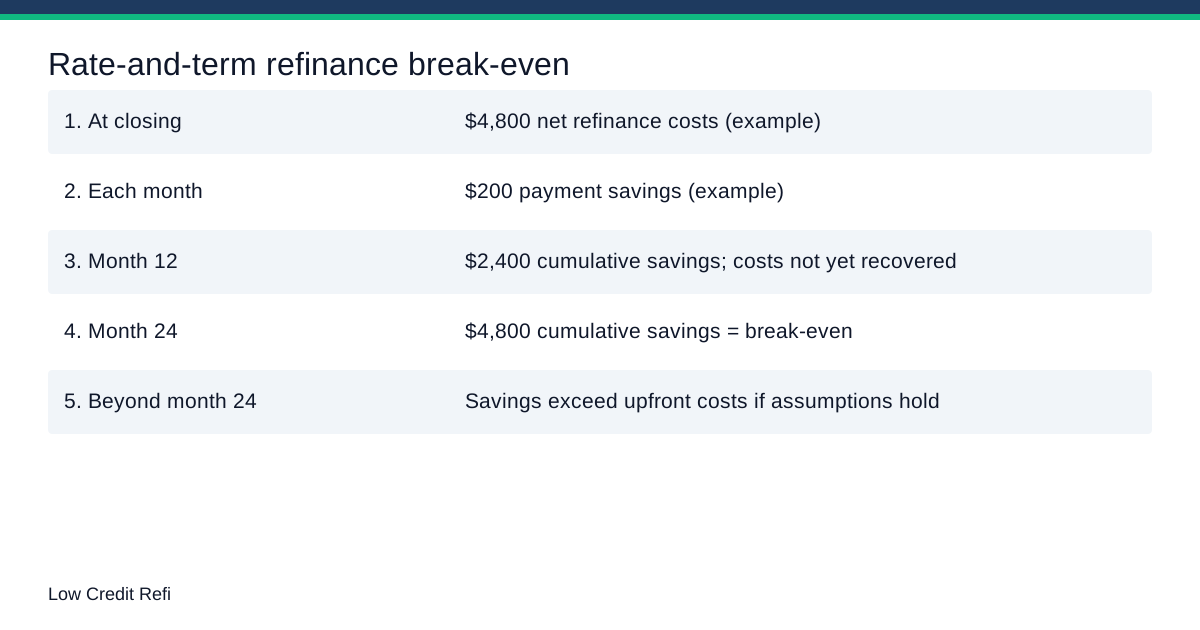
2 Explore No-Closing-Cost Refinance Options
- Some lenders allow borrowers to skip upfront costs by accepting a slightly higher interest rate (typically +0.25%–0.50%).
- Ideal for borrowers planning to move or refinance again within a few years.
3 Negotiate Fees
- Request a reduction in origination or processing fees.
- Compare quotes from at least three lenders — competition can drive costs down!
4 Use Streamline Refinancing
If you already have an FHA loan, streamline refinancing offers:- No appraisal requirement (saving $400–$700).
- Minimal paperwork.
- Potential eligibility for a partial MIP refund if you refinance within three years.
How to Pay for Closing Costs
Understanding how to cover closing costs is crucial, especially if you’re short on cash. Here are your options:
Option 1: Pay Out of Pocket
- Best if you have savings and plan to stay in your home long-term.
- Reduces the total cost of your loan.
Option 2: Roll Into Loan Balance
- Add closing costs to your loan amount to avoid upfront expenses.
- Increases your monthly payment slightly but keeps more cash available now.
Option 3: Get Seller Credits
- If refinancing as part of a home purchase, negotiate for seller-paid closing costs.
- Works best when the home’s loan-to-value (LTV) ratio is low.
Option 4: Use Gift Funds
- FHA loans allow family members to contribute toward closing costs.
- You’ll need to provide a signed gift letter to satisfy lender requirements.
Video Guide: Mastering Refinance Closing Costs
Navigating refinance costs can be daunting, but these expert videos simplify the process:
Key Takeaways
- Refinancing with low credit is possible!
- Compare lenders, negotiate fees, and explore FHA options to reduce costs, especially refinance closing costs low credit options.
- Look into creative solutions like gift funds or rolling costs into your loan balance.
- FHA loans may cost more upfront but offer a critical opportunity for credit-challenged borrowers to refinance.
Frequently Asked Questions
What are typical refinance closing costs for borrowers with credit scores between 580 and 620?
Typical closing costs include third-party fees such as appraisal ($400–$700), title search ($150–$400), title insurance ($500–$2,000), and recording fees ($50–$200). For low credit borrowers, additional costs like FHA upfront MIP (1.75% of loan amount) and higher origination fees (up to 2% or more) may apply.
Can I roll closing costs into my refinance loan if I have low credit?
Yes, many lenders allow you to roll certain closing costs into the loan balance, reducing out-of-pocket expenses. This is common with FHA loans, where upfront MIP can be financed. However, rolling costs increases your loan amount and monthly payments, so consider the long-term impact.
How do FHA loans affect closing costs for low credit borrowers?
FHA loans require mandatory mortgage insurance: an upfront MIP of 1.75% of the loan amount and monthly MIP of 0.55% annually. These costs are added to closing costs and can be financed. FHA loans are popular for borrowers with credit scores as low as 580, but the insurance premiums increase total costs.
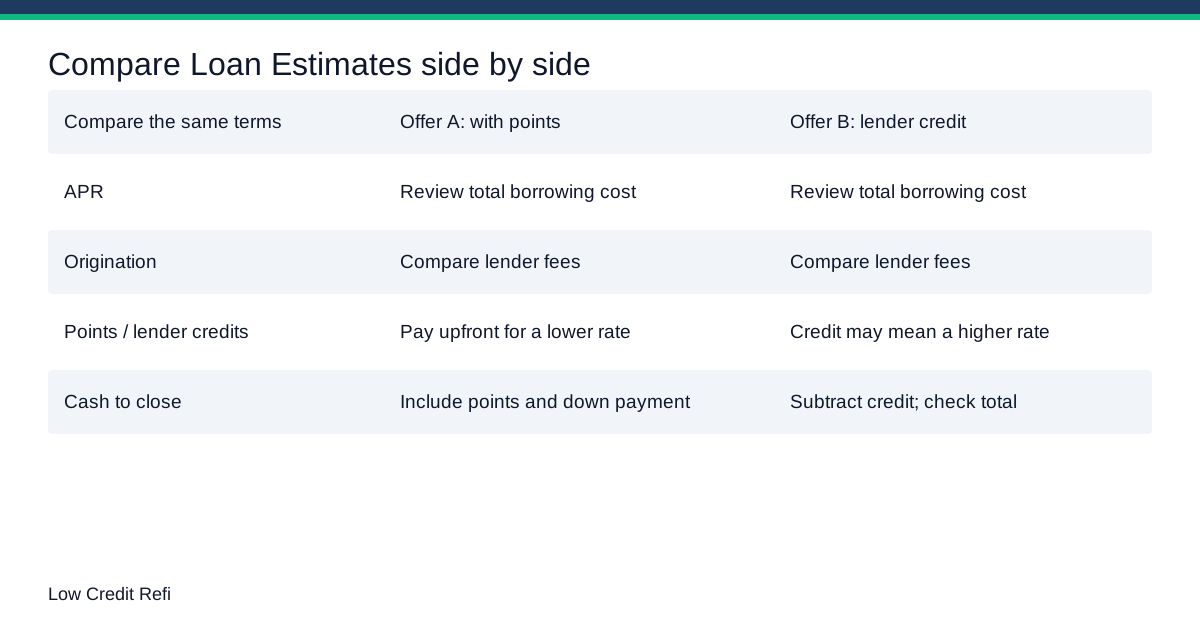
Are there ways to reduce refinance closing costs with a low credit score?
You can reduce closing costs by shopping around for lenders, negotiating fees, or asking about lender credits in exchange for a higher interest rate. Some lenders offer low- or no-closing-cost refinances, but these typically result in higher rates. Also, consider rolling costs into the loan to lower upfront expenses.
Key Takeaways
- Understanding your options for refinance closing costs low credit is the first step
- Explore related options like closing costs bad credit
- Explore related options like fha refinance fees
- Getting pre-qualified helps you understand your real options

