Compare Live Mortgage & Home Equity Rates
Compare current APRs, points, fees, and estimated monthly payments from participating lenders below.
Mortgage rates
How Self-Employment Income Affects Refinance With Low Credit
Quick Answer: Self-employment income is assessed differently than W-2 income for refinancing, requiring extensive documentation like tax returns, profit and loss statements, and bank statements. For borrowers with credit scores between 580 and 620, lenders view this as higher risk, often leading to stricter requirements, higher interest rates, and longer underwriting. However, programs like FHA and VA loans may still be accessible with proper preparation.
If you're self-employed with a credit score between 580 and 620, you face unique challenges when pursuing mortgage refinancing. Lenders scrutinize self-employment income more heavily than traditional W-2 income, requiring extensive documentation of your earnings history and business stability. When combined with a lower credit score, you'll typically need to provide at least two years of tax returns, profit and loss statements, and bank statements showing consistent income. Expect higher interest rates—often 1.5-3.5% above prime rates—and potentially larger down payment requirements. However, refinancing remains possible through FHA, VA (for veterans), and certain portfolio lenders who specialize in non-traditional borrowers. Understanding how lenders evaluate your self-employment income alongside your credit profile is essential for successfully navigating How Self-Employment Income Affects Refinance With Low Credit scenarios.
Why Self-Employment Makes Low-Credit Refinancing More Complex
Traditional employees receive W-2 forms that clearly document their annual income, making verification straightforward for mortgage lenders. Self-employed borrowers, however, must prove income stability through tax returns, which often show lower taxable income due to legitimate business deductions. This creates a paradox: the same tax strategies that reduce your tax burden also reduce your qualifying income for refinancing purposes.
Understanding how self-employment income affects refinance with low credit can help you compare your options and make a confident, informed decision.
When you combine self-employment with a credit score in the 580-620 range, lenders perceive heightened risk. They're essentially evaluating two significant risk factors simultaneously: income consistency and past credit management. This dual concern typically results in:
- More stringent documentation requirements
- Extended underwriting timelines (often 45-60 days versus 30 days for W-2 employees)
- Higher interest rates reflecting the additional risk
- Potentially higher origination fees (typically 1-3% of loan amount)
- Reduced loan-to-value ratios, meaning you'll need more equity in your home
Documentation Requirements for Self-Employed Refinance Applicants
Lenders evaluating How Self-Employment Income Affects Refinance With Low Credit situations require comprehensive documentation that demonstrates both income stability and business viability. The standard documentation package includes:
Primary Income Verification Documents:
- Two years of complete personal tax returns (Form 1040) with all schedules
- Two years of business tax returns (Schedule C, Form 1065, Form 1120, or Form 1120S)
- Year-to-date profit and loss statement (prepared by a CPA for best results)
- Year-to-date balance sheet showing business assets and liabilities
- Business license and articles of incorporation or DBA registration
- Two months of business bank statements
- Two months of personal bank statements
- Written explanations for any derogatory credit marks
- Documentation of payment arrangements for outstanding collections
- Proof of on-time housing payments for the past 12 months (critical)
- Letters of explanation for income variations between tax years
- CPA letters verifying business continuity and income trends
How Lenders Calculate Your Qualifying Income
Understanding the income calculation methodology helps you set realistic expectations for your refinancing amount. Lenders don't simply accept the income you report; they perform detailed calculations that often result in a lower qualifying income than you might expect.
The Two-Year Average Method
Most lenders average your net self-employment income over the most recent two years of tax returns. They start with your adjusted gross income, then add back certain expenses:
Income Calculation Example:
Expert Tip
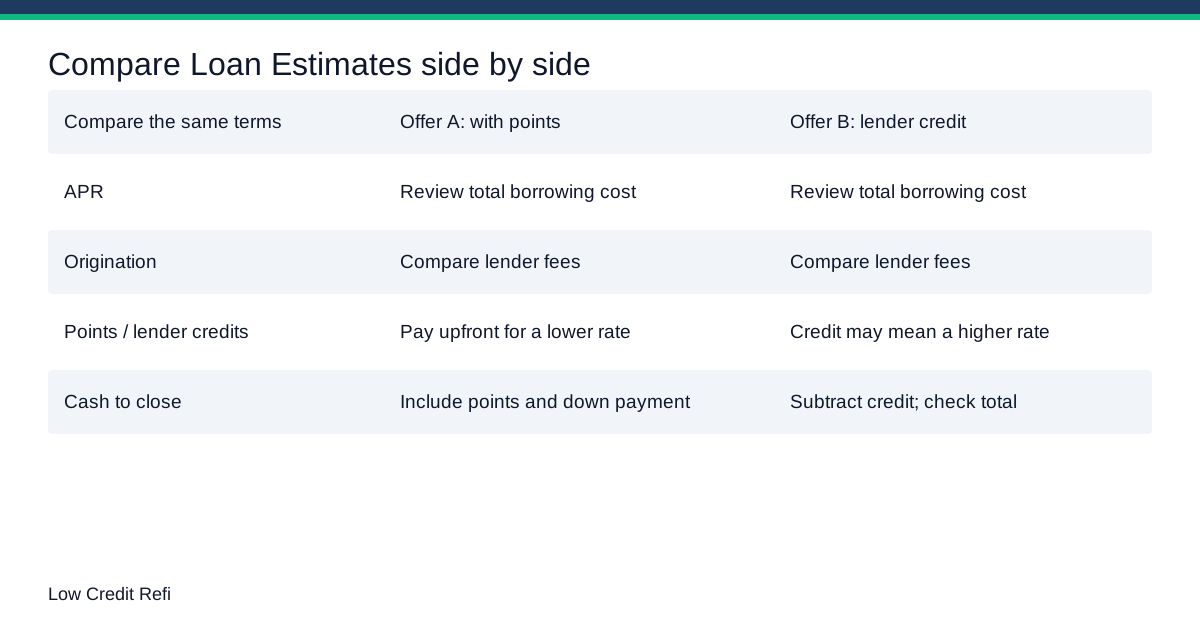
Compare Loan Estimates for the same loan type and term. Include closing costs when calculating whether refinancing saves money.
- Year 1 net profit: $65,000
- Year 2 net profit: $72,000
- Two-year total: $137,000
- Average annual income: $68,500
- Monthly qualifying income: $5,708
Non-Recurring Expenses Added Back
Lenders may add back certain one-time or non-cash expenses to increase your qualifying income:
- Depreciation
- Depletion
- One-time business losses
- Casualty losses
- Amortization
Income Trending Analysis
Lenders also analyze whether your income is stable, increasing, or declining. A declining income trend raises red flags, especially when combined with lower credit scores. If your most recent year shows significantly lower income than previous years, you may face:
- Loan denial
- Qualification based solely on the most recent (lower) year
- Requirements for additional cash reserves
- Higher interest rate pricing
Loan Program Options for Self-Employed Borrowers With 580-620 Credit
Not all refinance programs treat self-employment income and lower credit scores the same way. Understanding your options helps you target the right loan product.
FHA Streamline Refinance
If you currently have an FHA loan, the FHA Streamline Refinance program offers the most accessible path forward. Key advantages include:
- Minimum credit score: 580 (some lenders accept 560)
- Reduced documentation requirements (no income verification for standard streamline)
- No appraisal required in many cases
- Lower closing costs: typically $3,500-$6,500
- Cannot take cash out, but can refinance into a lower rate
FHA Standard Refinance (Cash-Out)
For homeowners seeking to tap equity or who don't currently have an FHA loan, the standard FHA cash-out refinance requires full documentation:
- Minimum credit score: 580
- Maximum loan-to-value: 80% (580-599 credit) or 85% (600-620 credit)
- Full self-employment income documentation required
- Mortgage insurance premiums: 1.75% upfront + 0.55-0.85% annually
- Closing costs typically range from $6,000-$12,000 depending on loan amount
- Current interest rates for this profile: approximately 6.5-8.5% (2026 estimates)
VA Interest Rate Reduction Refinance Loan (IRRRL)
Veterans with existing VA loans benefit from the streamlined IRRRL program:
- No minimum credit score requirement (lender overlays typically 580-600)
- No income verification required
- No appraisal required
- Funding fee: 0.5% (can be financed into loan)
- Typically the lowest rates available for this credit profile
Portfolio Lenders and Non-QM Loans
Some lenders hold loans in their own portfolios rather than selling them, allowing more flexibility:
- Credit scores as low as 580 accepted by select lenders
- Alternative income documentation methods (bank statement loans)
- Higher interest rates: typically 8.5-11% in current market
- Larger down payments required: often 20-25% equity needed
- Origination fees: 2-4% of loan amount
Strategic Steps to Improve Your Refinancing Prospects
If you're not facing an immediate refinancing deadline, strategic preparation significantly improves your approval odds and terms.
Credit Score Improvement Strategies (580 to 640+)
Increasing your credit score even 20-40 points dramatically improves your interest rate and options:
- Pay down revolving credit balances below 30% of limits (ideally under 10%)
- Establish perfect payment history for 6-12 months before applying
- Address collections strategically—sometimes paying old collections can temporarily lower scores
- Become an authorized user on a family member's account with perfect payment history
- Dispute any inaccurate information on credit reports
- Avoid new credit applications for 6 months before refinancing
Income Documentation Optimization
Work with your CPA to present your income optimally:
- Prepare detailed profit and loss statements that clearly show income trends
- Minimize unusual one-time deductions in the year before applying
- Maintain clear separation between personal and business expenses
- Document any add-backs (depreciation, etc.) with clear explanations
- If you have multiple income sources, document all of them thoroughly
Reserve Requirements
Lenders feel more comfortable approving borrowers with cash reserves—funds remaining after closing:
- Minimum reserves typically required: 2-6 months of housing payments
- Higher reserves can offset credit concerns
- Retirement accounts (with 30% deduction for taxes/penalties) often count
- Document all asset accounts, even smaller ones—they add up
Cost Analysis: What to Expect for Your Refinance
Understanding the complete cost picture helps you determine if refinancing makes financial sense. Here's a comprehensive breakdown for a self-employed borrower with 580-620 credit refinancing a $250,000 mortgage in 2026:
| Cost Category | Low Range | High Range | Notes |
|---|---|---|---|
| Origination Fees | $2,500 | $7,500 | 1-3% of loan amount; higher for portfolio lenders |
| Appraisal | $450 | $800 | Not required for some streamline programs |
| Credit Report | $75 | $150 | Covers all three bureaus |
| Title Search & Insurance | $1,000 | $2,500 | Varies by property value and location |
| Recording Fees | $150 | $400 | Government fees for filing |
| Attorney/Settlement Fees | $500 | $1,500 | Not required in all areas |
| Survey | $350 | $600 | Sometimes required |
| Prepaid Interest | $500 | $1,500 | Depends on closing date |
| Property Tax Escrow | $2,000 | $6,000 | 3-6 months typically collected |
| Homeowners Insurance | $800 | $2,400 | Annual premium prepaid |
| FHA/VA Funding Fees | $0 | $4,375 | FHA: 1.75%; VA IRRRL: 0.5% |
| TOTAL ESTIMATED COSTS | $8,325 | $27,725 | Higher costs reflect cash-out and portfolio loans |
Break-Even Analysis:
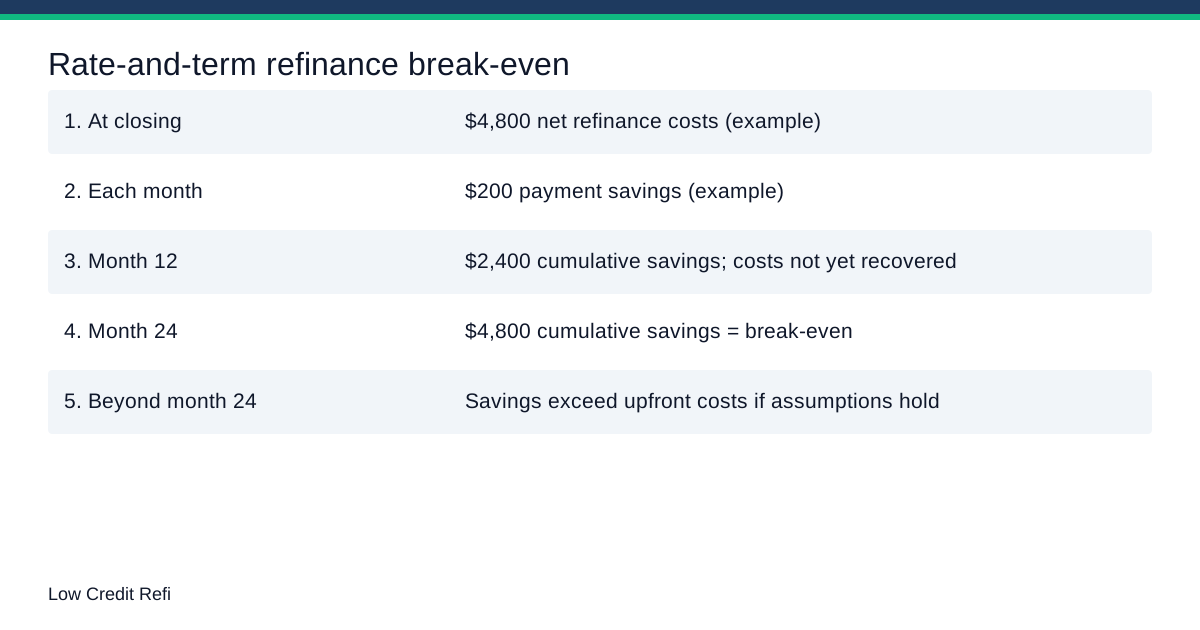
If refinancing saves you $200/month but costs $8,000 in closing costs, your break-even point is 40 months (3.3 years). Ensure you plan to keep the property at least this long to benefit from refinancing.
Common Mistakes Self-Employed Borrowers Make
Avoiding these pitfalls increases your success probability:
Mistake #1: Applying During a Down Revenue Year
If your business experienced a revenue decline in the most recent tax year, lenders may qualify you based only on the lower year or deny the application. Wait until you file taxes showing recovery if possible.
Mistake #2: Paying Off Business Debt Immediately Before Applying
While reducing debt seems prudent, depleting your cash reserves to pay off business debt can disqualify you. Lenders want to see reserves remaining after closing.
Mistake #3: Switching Business Structure Mid-Application
Converting from sole proprietor to LLC or corporation during the underwriting process creates confusion and may restart the documentation clock. Complete any business structure changes well before applying.
Mistake #4: Writing Off Everything Possible
Aggressive tax deductions reduce your qualifying income. In the year before refinancing, consider claiming fewer deductions to show higher income, even though you'll pay more taxes.
Mistake #5: Applying With Only One Lender
Different lenders have vastly different appetite for self-employed borrowers with credit challenges. Shop multiple lenders—each pulls credit only once within a 45-day window with minimal score impact.
Frequently Asked Questions
Most conventional refinance programs require two years of self-employment history. However, if you have at least one year of self-employment in the same field where you previously worked as a W-2 employee, some lenders will consider your application. FHA streamline refinances may not verify income at all, making them viable regardless of employment duration. Bank statement loan programs sometimes accept just 12 months of self-employment history but charge higher rates.
Do both spouses' credit scores matter if only one is self-employed?
When applying jointly, lenders typically use the lower middle credit score between both applicants. However, if the self-employed spouse has lower credit, you might explore applying with only the spouse who has W-2 income and higher credit (if they have sufficient income alone). This strategy only works if the higher-credit spouse can qualify independently. Note that in community property considerations and refinancing jointly-owned property, both parties usually must be on the loan.
How much does self-employment reduce my borrowing power compared to W-2 income?
Self-employed borrowers typically qualify for 15-30% less home financing than W-2 employees with identical gross income due to how lenders calculate qualifying income from tax returns. A W-2 employee earning $80,000 gross might qualify for that full amount, while a self-employed person showing $80,000 revenue but $55,000 net after deductions qualifies based on the $55,000 figure (or potentially the two-year average with that year). Strategic tax planning in the years before refinancing can minimize this gap.
Will my interest rate be significantly higher because of self-employment income with a 600 credit score?
The credit score impacts your rate more than self-employment status itself. A 600 credit score typically adds 1.5-2.5% to interest rates compared to 740+ scores. Self-employment primarily affects qualification difficulty and documentation requirements rather than rate pricing, though portfolio lenders serving self-employed borrowers do charge premium rates (often 2-4% above conventional rates) due to their specialized risk tolerance. Shopping multiple lenders reveals significant rate variations.
Can I use projected income or contracts to show future earnings for refinance approval?
Standard residential refinance programs do not consider projected future income or signed contracts—they base qualification strictly on historical income documentation from filed tax returns. However, specialized non-QM lenders and some portfolio lenders will consider verified contracts, particularly for self-employed professionals with long-term agreements. These programs charge higher rates but provide options when recent tax returns don't reflect current income. A CPA-prepared projection paired with signed contracts strengthens these applications.
Take the Next Step Toward Your Refinance
Understanding How Self-Employment Income Affects Refinance With Low Credit empowers you to approach the process strategically rather than hoping for the best. While self-employment combined with credit scores in the 580-620 range creates refinancing challenges, thousands of borrowers in similar situations successfully refinance every month through proper preparation and working with experienced lenders.
The key is connecting with mortgage professionals who specialize in non-traditional borrowers rather than approaching mainstream lenders who primarily serve W-2 employees with strong credit. These specialists understand the nuances of self-employment documentation, know which underwriting guidelines offer the most flexibility, and can guide you through preparation steps that maximize approval probability.
Ready to explore your refinancing options? Request a free, no-obligation refinance consultation with specialists who work specifically with self-employed borrowers facing credit challenges. You'll receive a personalized analysis of your situation, clear guidance on documentation requirements, and accurate rate quotes from multiple loan programs suited to your unique profile.
Our consultation includes:
- Comprehensive review of your credit and income documentation
- Comparison of FHA, VA, and portfolio loan options specific to your situation
- Honest assessment of your current refinancing prospects
- Strategic recommendations for improving terms if waiting would benefit you
- Connection with lenders who actively approve self-employed borrowers with 580-620 credit scores
Frequently Asked Questions
What documentation do I need as a self-employed borrower with low credit for refinancing?
You typically need two years of personal and business tax returns, year-to-date profit and loss statements, balance sheets, business licenses, and bank statements. For low credit, also provide explanations for derogatory marks and proof of on-time housing payments.
How do lenders calculate self-employment income for refinancing?
Lenders average your net income from the most recent two years of tax returns. They may add back certain non-cash deductions like depreciation. Consistent or increasing income is viewed favorably, while large fluctuations can be a red flag.
Can I refinance with a credit score of 580 if I'm self-employed?
Yes, it is possible through FHA loans, VA loans (if eligible), or portfolio lenders. However, you will likely face higher interest rates, lower loan-to-value ratios, and more stringent documentation requirements compared to borrowers with higher scores.
How does self-employment affect the interest rate on a low-credit refinance?
Self-employed borrowers with low credit often receive interest rates 1.5-3.5% above prime rates due to perceived higher risk. The exact rate depends on your income stability, debt-to-income ratio, and the lender's specific guidelines.
Key Takeaways
- Understanding your options for how self-employment income affects refinance with low credit is the first step
- Getting pre-qualified helps you understand your real options