Compare Live Mortgage & Home Equity Rates
Compare current APRs, points, fees, and estimated monthly payments from participating lenders below.
Mortgage rates
How Medical Collections Affect Mortgage Refinance Approval
Quick Answer: Medical collections can lower your credit score by 50-100 points, making refinance approval harder for borrowers with scores between 580-620. However, recent credit bureau changes exclude paid collections and unpaid collections under $500 from reports. Unpaid medical collections over $500 still hurt your score, but lenders may view them more leniently than other debt, especially if you show a payment plan or dispute errors.
Medical collections can significantly impact your ability to refinance your mortgage, but understanding exactly how medical collections affect mortgage refinance approval gives you the power to take corrective action. If you have a credit score between 580 and 620, medical debt in collections may be one of the primary factors holding your score down and blocking your path to better refinance terms. The good news is that recent policy changes by major credit bureaus and evolving lender standards mean medical collections now carry less weight than other types of debt—particularly if you know how to position your application correctly. This comprehensive guide explains the relationship between medical collections and mortgage refinancing, helping you understand your options and improve your approval odds even with challenged credit.
Understanding the Impact of Medical Collections on Your Credit Score
Medical collections appear on your credit report when healthcare providers or medical facilities turn over unpaid bills to collection agencies. Unlike other forms of debt, medical collections often arise unexpectedly from insurance disputes, billing errors, or emergency situations beyond your control—factors that lenders increasingly recognize.
When considering how medical collections affect mortgage refinance approval, you should understand all available options.
As of 2023, the three major credit bureaus implemented significant changes to how they report medical debt. Paid medical collections no longer appear on credit reports at all, and unpaid medical collections under $500 are excluded entirely. Additionally, medical debt now has a one-year waiting period before appearing on your report, giving you time to resolve insurance issues or payment disputes.
Despite these improvements, medical collections above $500 that remain unpaid will still damage your credit score. For borrowers in the 580-620 range, even one or two medical collections can represent the difference between approval and denial. FICO scores typically drop 50-100 points when collections first appear, though the impact diminishes over time as the accounts age.
The VantageScore 4.0 model, used by some lenders, treats medical collections even more leniently than FICO, essentially ignoring them in many cases. However, conventional mortgage refinancing typically relies on FICO scoring models, so you cannot count on this more favorable treatment.
How Lenders Evaluate Medical Debt During Refinancing
Mortgage lenders examine your entire financial picture when considering refinance applications, and medical collections factor into multiple evaluation criteria beyond just your credit score.
Debt-to-Income Ratio Considerations
Lenders calculate your debt-to-income (DTI) ratio by comparing your monthly debt obligations to your gross monthly income. Most refinance programs require a DTI below 43-50%, though some government-backed programs allow higher ratios for borrowers with compensating factors.
Medical collections in active payment plans count toward your DTI calculation. If you're paying $200 monthly on a medical payment plan, that amount reduces your borrowing capacity. However, collections not in formal payment arrangements typically don't factor into DTI calculations—though the presence of unpaid collections will still damage your credit score and raise red flags about financial management.
Expert Tip
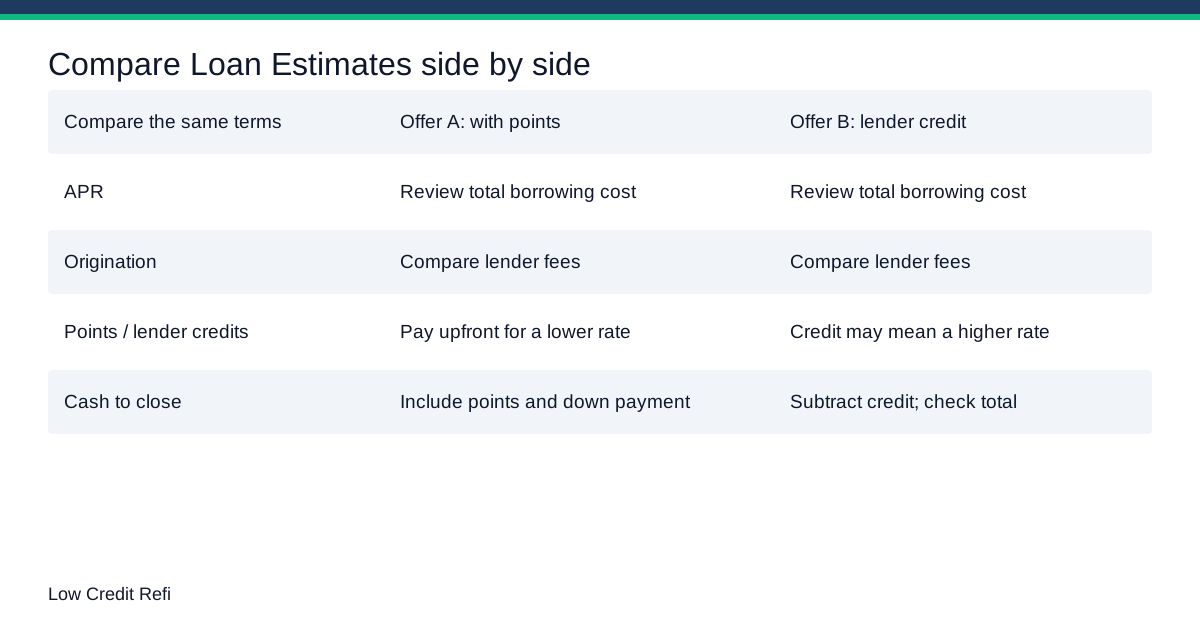
Compare Loan Estimates for the same loan type and term. Include closing costs when calculating whether refinancing saves money.
Manual Underwriting Exceptions
Borrowers with credit scores in the 580-620 range often undergo manual underwriting, where a human examiner reviews your complete financial situation rather than relying solely on automated approval systems. This process can actually work in your favor when medical collections are involved.
During manual underwriting, you can provide documentation explaining medical collections: emergency room visits, surgeries, insurance denial letters, or billing disputes. Underwriters have discretion to overlook medical collections that resulted from circumstances beyond your control, especially if you've maintained timely payments on your mortgage and other major obligations.
Lenders view medical debt more favorably than credit card collections, repossessions, or other voluntary debt that went unpaid. A pattern showing responsible payment on all obligations except unexpected medical bills tells a different story than across-the-board financial mismanagement.
Refinance Program Options for Borrowers with Medical Collections
Different refinance programs have varying tolerance levels for medical collections and credit challenges. Understanding which programs align with your situation maximizes your approval odds.
FHA Streamline Refinance
FHA streamline refinancing offers one of the most accessible paths for borrowers with credit scores in the 580-620 range. This program requires:
- Current FHA mortgage in good standing
- Minimum credit score of 580 (some lenders require 600+)
- No cash-out (rate-and-term refinance only)
- Demonstrated payment history
Closing costs for FHA streamline refinances typically range from $2,500 to $5,000 in 2026, depending on loan size and whether you include the upfront mortgage insurance premium.
VA Interest Rate Reduction Refinance Loan (IRRRL)
Military service members and veterans with existing VA loans can access IRRRL refinancing with minimal credit requirements. The VA doesn't impose a minimum credit score requirement, though individual lenders typically want scores above 580-600.
Medical collections have minimal impact on VA IRRRL approval since these streamlined refinances focus primarily on payment history and loan performance. If you've made your mortgage payments on time for the past 12 months, medical collections rarely cause denial.
Expected closing costs range from $2,000 to $4,500, which can be rolled into the new loan amount.
Conventional Refinancing Options
Conventional refinancing through Fannie Mae or Freddie Mac typically requires minimum credit scores of 620, placing these options at the upper edge of accessibility for borrowers with medical collections. However, if you're near the 620 threshold, addressing medical collections might provide the score boost needed to qualify.
Conventional refinancing offers better interest rates and the possibility of removing mortgage insurance if you've reached 20% equity. Closing costs generally range from $3,000 to $6,500 depending on loan amount, property value, and location-based fees.
Step-by-Step Strategy to Improve Refinance Approval Odds
Taking strategic action on medical collections before applying for refinancing can dramatically improve your approval chances and the terms you receive.
Step 1: Obtain Your Complete Credit Reports
Request free credit reports from all three bureaus (Experian, Equifax, and TransUnion) through AnnualCreditReport.com. Review each report carefully to identify all medical collections, noting:
- Collection agency name and contact information
- Original creditor (medical provider)
- Date of service and date reported
- Amount owed
- Whether the collection is paid or unpaid
Step 2: Verify and Dispute Inaccuracies
Medical billing errors are extremely common. Before paying any collection, verify its accuracy:
- Contact the original healthcare provider to confirm the debt
- Request itemized billing statements
- Review insurance explanation of benefits
- Check whether insurance should have covered charges
- Verify the statute of limitations hasn't expired
Step 3: Negotiate Pay-for-Delete Agreements
While credit bureaus officially discourage the practice, many collection agencies will agree to delete medical collections in exchange for payment. This negotiation strategy works as follows:
- Contact the collection agency in writing
- Offer to pay the debt in full in exchange for complete removal from your credit reports
- Request written confirmation before making payment
- Keep all documentation
- Follow up to ensure deletion occurs within 30-45 days
Step 4: Consider Strategic Payment Timing
If you have multiple medical collections, prioritize paying those most likely to impact your refinance application:
- Collections under $500 (which will be removed once paid)
- Recent collections (less than 2 years old, causing maximum score damage)
- Collections reported to all three bureaus (creating the broadest negative impact)
Step 5: Build Compensating Positive Factors
While addressing medical collections, simultaneously strengthen other approval factors:
- Make all mortgage payments on time for at least 12 months before applying
- Reduce credit card balances below 30% of limits (ideally below 10%)
- Avoid new credit applications that generate hard inquiries
- Increase savings to show cash reserves
- Document stable employment and income
Cost-Benefit Analysis: Addressing Medical Collections Before Refinancing
Understanding the financial trade-offs helps you make informed decisions about whether to pay medical collections before refinancing.
| Scenario | Cost to Resolve | Potential Credit Score Increase | Refinance Rate Improvement | Long-Term Savings |
|---|---|---|---|---|
| Single collection under $500 | $0-500 | 20-40 points | 0.125-0.25% | $1,500-$3,000 over loan life |
| Multiple collections under $500 each | $500-2,000 | 40-70 points | 0.25-0.50% | $3,000-$6,000 over loan life |
| Collections totaling $500-2,500 | $500-2,500 | 30-60 points | 0.125-0.375% | $2,000-$4,500 over loan life |
| Large collections over $2,500 | $2,500-10,000+ | 40-80 points | 0.25-0.75% | $3,000-$9,000 over loan life |
Note: Estimates based on $250,000 mortgage refinance with 25-year remaining term. Actual results vary based on individual circumstances.
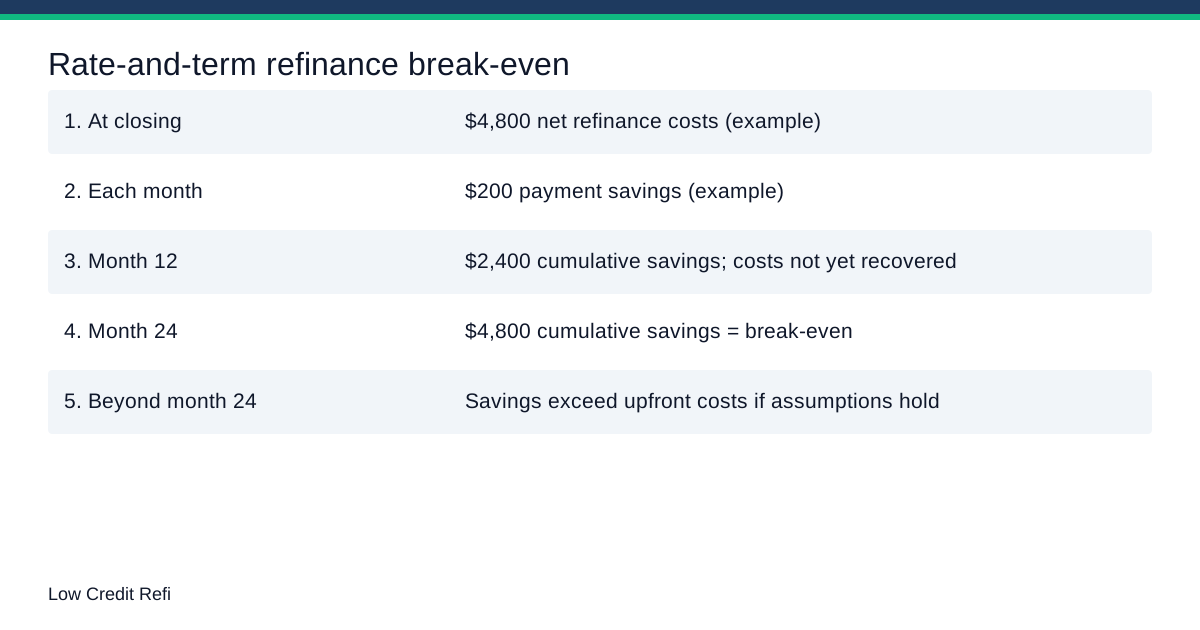
The decision becomes clearer when you calculate potential savings. For example, if paying $1,200 in medical collections increases your credit score from 595 to 625, you might qualify for an interest rate 0.375% lower. On a $250,000 refinance, that rate reduction saves approximately $4,500 over the loan's life—a strong return on your $1,200 investment.
Timeline Expectations: From Collections to Refinance Approval
Understanding realistic timelines helps you plan your refinance strategy effectively.
Immediate to 30 days: Obtain credit reports, verify medical collections, initiate disputes for inaccurate items, and begin pay-for-delete negotiations.
30 to 60 days: Credit bureaus must respond to disputes within 30 days. Successfully disputed items are removed, and your credit score updates accordingly. Paid collections under $500 are removed from reports.
60 to 90 days: Allow time for paid collections to be deleted and for your credit score to reflect all positive changes. Credit scores typically update monthly as new information is reported.
90 to 120 days: Begin mortgage refinance shopping with improved credit. This timing ensures all positive changes have fully processed and appear consistently across all three credit bureaus.
Rushing the process often results in applications being evaluated before all improvements have registered with credit bureaus. Patience during this 3-4 month period typically yields better outcomes than applying immediately.
Working with Specialized Refinance Lenders
Not all mortgage lenders have equal experience or flexibility with borrowers in the 580-620 credit score range facing medical collections. Choosing the right lender significantly impacts your approval odds.
Credit Unions and Community Banks
Smaller financial institutions often provide more flexible underwriting for borrowers with medical collections. These lenders:
- More frequently use manual underwriting processes
- Have greater discretion to consider individual circumstances
- May offer relationship-based lending to existing customers
- Typically provide more personalized service
FHA and VA Specialist Lenders
Lenders who specialize in government-backed loans understand these programs' flexibility regarding medical debt and lower credit scores. They're experienced in positioning applications for maximum approval likelihood and know which underwriting guidelines allow medical collection exceptions.
Mortgage Brokers
Working with a mortgage broker gives you access to multiple lenders through a single application. Brokers can match your specific situation—including medical collections and credit score range—with lenders most likely to approve your application. This approach is particularly valuable when you've faced previous denials.
Broker fees typically range from $1,500 to $3,500 or 0.5-1.0% of the loan amount, though many brokers receive lender compensation and charge borrowers nothing directly.
Frequently Asked Questions
A: Paying medical collections under $500 will remove them from your credit report entirely under current reporting standards, typically improving your score within 30-60 days. Collections over $500 won't be removed when paid, but if they were reported before recent policy changes, paying them may provide a modest score boost. The impact varies by individual credit profile, but most borrowers see 20-60 point improvements after resolving multiple medical collections. Allow 2-3 months for changes to fully reflect in your credit score before applying for refinancing.
Q: Can I refinance my mortgage with unpaid medical collections on my credit report?
A: Yes, unpaid medical collections don't automatically disqualify you from refinancing, especially with FHA or VA programs. Lenders evaluate your complete financial picture, including payment history on your current mortgage, debt-to-income ratio, and overall credit profile. Medical collections are viewed more leniently than other collection types. However, resolving collections typically improves your interest rate and approval odds, potentially saving thousands of dollars over your loan term.
Q: How long do medical collections stay on my credit report?
A: Under current regulations, paid medical collections are removed immediately, and unpaid collections under $500 don't appear at all. Unpaid medical collections over $500 remain on your credit report for seven years from the original delinquency date. However, their negative impact diminishes significantly after two years. Recent collections (under 12 months old) cause the most damage to your credit score and refinance prospects.
Q: Do all three credit bureaus treat medical collections the same way for mortgage refinancing?
A: The three major credit bureaus (Experian, Equifax, and TransUnion) now follow the same reporting standards for medical debt, excluding paid collections and unpaid collections under $500. However, lenders may pull reports from one, two, or all three bureaus. Most mortgage refinance applications use the middle credit score from all three bureaus, so a medical collection appearing on just one report can still impact your application. Always review all three reports before applying.
Q: Should I use a credit repair company to remove medical collections before refinancing?
A: Credit repair companies can assist with disputing inaccurate collections and negotiating with creditors, but you can perform these same tasks yourself for free. If you choose to hire a credit repair service, expect to pay $75-150 monthly for 3-6 months ($450-900 total). These companies cannot legally remove accurate information from your credit report. For straightforward medical collections, the do-it-yourself approach typically works as well as paid services. However, if you have complex credit issues or lack time to manage the process, reputable credit repair assistance may provide value.
Take the Next Step Toward Refinancing Your Mortgage
Medical collections don't have to permanently block your path to better mortgage terms. Understanding how medical collections affect mortgage refinance approval empowers you to take strategic action, improve your credit profile, and access refinancing options that reduce your monthly payments and long-term interest costs.
Whether you're dealing with one small medical collection or multiple larger debts, specialized refinance lenders work with borrowers in your situation every day. The difference between approval and denial often comes down to choosing the right loan program, properly timing your application, and working with lenders who understand the unique nature of medical debt.
Ready to explore your refinance options with medical collections? Request your free, no-obligation refinance consultation today. Our specialists work with borrowers in the 580-620 credit score range and have extensive experience helping people with medical debt secure approved refinancing. We'll review your complete situation, explain your realistic options across FHA, VA, and conventional programs, and create a personalized action plan to improve your approval odds and secure the best possible terms.
Get your free refinance analysis now—discover exactly how medical collections are impacting your refinance potential and what steps will move you closer to approval and better rates. There's no cost for the consultation, no obligation to proceed, and no impact on your credit score. Take control of your refinancing journey today.
Frequently Asked Questions
Do medical collections affect my debt-to-income ratio for refinancing?
Medical collections in active payment plans count toward your DTI ratio, reducing borrowing capacity. Unpaid collections not in a payment plan typically don't factor into DTI, but they still lower your credit score and may raise concerns during manual underwriting.
Can I refinance with medical collections on my credit report?
Yes, it's possible. Lenders may approve refinancing with medical collections if you have compensating factors like stable income, low overall debt, or a payment plan. Government-backed loans like FHA may be more flexible for borrowers with scores between 580-620.
How long do medical collections stay on my credit report?
Medical collections can remain on your credit report for up to seven years from the date of first delinquency. However, paid medical collections are now removed from reports, and unpaid collections under $500 are excluded. After seven years, they must be removed automatically.
Should I pay off medical collections before applying for a mortgage refinance?
Paying off medical collections can improve your credit score, especially if they are recent. However, paying old collections may not boost your score significantly. Consider negotiating a pay-for-delete agreement or setting up a payment plan to show responsible management.
Key Takeaways
- Understanding your options for how medical collections affect mortgage refinance approval is the first step
- Getting pre-qualified helps you understand your real options