Compare Live Mortgage & Home Equity Rates
Compare current APRs, points, fees, and estimated monthly payments from participating lenders below.
Mortgage rates
How Long After Foreclosure Can You Refinance With Bad Credit
Quick Answer: After a foreclosure, the waiting period to refinance with bad credit (scores 580-620) depends on loan type: FHA loans require 3 years (1 year with extenuating circumstances), conventional loans 4-7 years, VA loans 2 years, and USDA loans 3 years. Your exact timeline depends on your credit profile and lender requirements.
If you've experienced a foreclosure and are now wondering about your refinancing options, you're not alone. The waiting period after foreclosure varies depending on the type of loan you're seeking, but for borrowers asking "how long after foreclosure can you refinance with bad credit," the answer typically ranges from 2 to 7 years. With a credit score between 580-620, you'll generally need to wait at least 3 years for an FHA refinance, 4-7 years for a conventional loan, and 2-3 years for a VA loan (if you're eligible). The exact timeline depends on your current credit profile, the circumstances surrounding your foreclosure, and the specific lender's requirements. While these waiting periods may seem lengthy, there are concrete steps you can take during this time to improve your chances of approval and secure better terms when you're ready to refinance.
Understanding Foreclosure Waiting Periods for Different Loan Types
The type of refinance loan you're pursuing significantly impacts how long you'll need to wait after a foreclosure. Lenders categorize loans differently based on their backing and risk assessment criteria.
FHA Refinance Waiting Periods
Federal Housing Administration (FHA) loans are often the most accessible option for borrowers with credit scores in the 580-620 range. The standard waiting period after foreclosure is 3 years from the completion date. However, if you can demonstrate extenuating circumstances—such as job loss, medical emergency, or death of a primary wage earner—this period may be reduced to just 1 year. To qualify for the shorter waiting period, you'll need to provide extensive documentation proving that the foreclosure was due to factors beyond your control and that your financial situation has since stabilized.
Conventional Loan Requirements
Conventional loans, which aren't backed by government agencies, impose stricter requirements. The typical waiting period after foreclosure is 7 years, though some lenders may consider applications after 4 years if you've significantly rebuilt your credit and can make a larger down payment (typically 20% or more). With a credit score between 580-620, you'll face additional scrutiny and will likely need compensating factors such as stable employment history, low debt-to-income ratio, and substantial cash reserves.
VA and USDA Loan Options
Veterans Affairs (VA) loans offer more forgiving terms for eligible military members and veterans. The waiting period is generally 2 years from the foreclosure completion date. USDA loans, designed for rural property owners, typically require a 3-year waiting period, similar to FHA loans.
The Impact of Bad Credit on Your Refinancing Timeline
Your credit score between 580-620 places you in the "fair" to "poor" credit category, which affects not only whether you can refinance but also the terms you'll receive. Understanding how lenders view your credit profile is essential for setting realistic expectations.
Minimum Credit Score Requirements
While some programs technically allow credit scores as low as 580, most lenders prefer to see scores above 600 for post-foreclosure refinancing. Each 20-point increase in your score can make a substantial difference in your interest rate—potentially saving you thousands of dollars over the life of your loan. For borrowers asking how long after foreclosure can you refinance with bad credit, the answer isn't just about waiting but also about actively improving your credit during that waiting period.
How Credit Scores Affect Interest Rates
With a credit score in the 580-620 range, you can expect to pay interest rates that are 1.5% to 3.5% higher than borrowers with excellent credit. As of 2026, this means rates typically ranging from 7.5% to 9.5% for refinance loans, depending on market conditions and your specific profile. On a $250,000 mortgage, this difference could mean paying an additional $200-$450 per month compared to prime borrowers.
Expert Tip
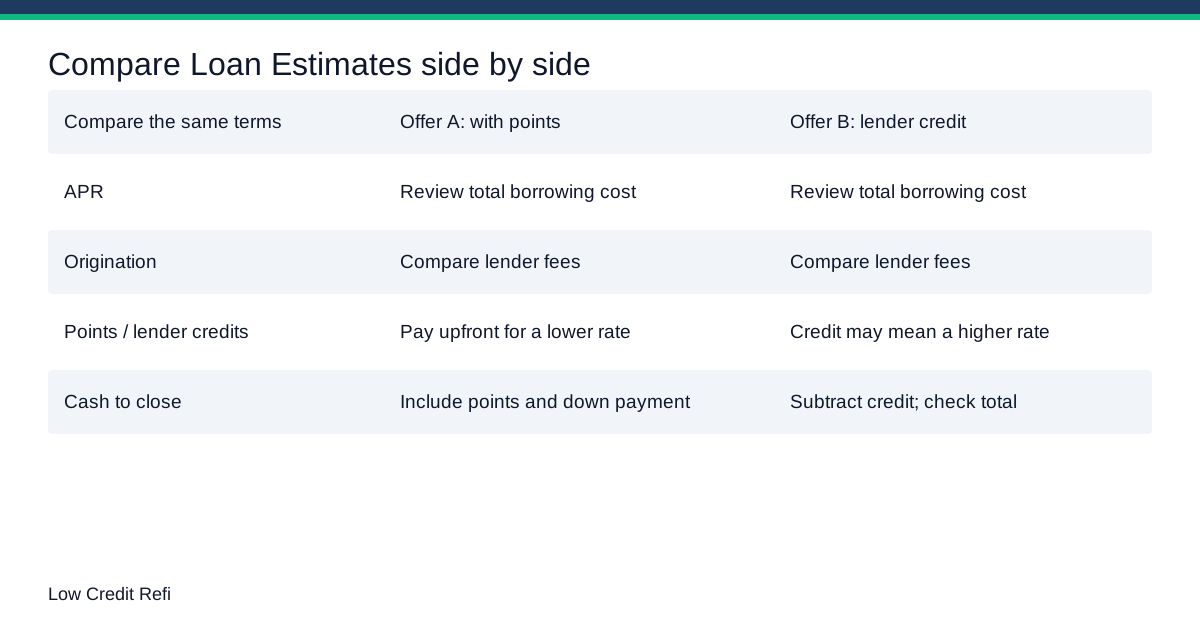
Compare Loan Estimates for the same loan type and term. Include closing costs when calculating whether refinancing saves money.
Steps to Prepare for Refinancing After Foreclosure
The waiting period after foreclosure doesn't have to be passive. Taking strategic actions now can position you for better terms when you're eligible to refinance.
Rebuilding Your Credit Score
Secured Credit Cards: Opening a secured credit card and making consistent, on-time payments is one of the fastest ways to rebuild credit. Aim for a utilization rate below 30% of your credit limit, and pay balances in full monthly if possible.
Credit Builder Loans: Many credit unions offer credit builder loans specifically designed to help people rebuild after financial setbacks. These typically range from $300 to $1,500 and report to all three credit bureaus.
Disputing Errors: Review your credit reports from all three bureaus and dispute any inaccuracies. Studies show that approximately 20% of credit reports contain errors that could be negatively impacting your score.
Payment History: Since payment history accounts for 35% of your credit score, establishing a perfect track record is crucial. Set up automatic payments for all bills to ensure you never miss a due date.
Establishing Financial Stability
Lenders want to see that the circumstances leading to your foreclosure won't recur. Maintain steady employment for at least two years in the same field, build emergency savings equivalent to 3-6 months of expenses, and reduce your debt-to-income ratio to below 43% (ideally below 36%).
Documenting Extenuating Circumstances
If your foreclosure resulted from circumstances beyond your control, gather documentation now. This includes termination letters, medical bills, death certificates, or other proof that can support an extenuating circumstances claim. Having this documentation organized can accelerate your application when the time comes.
Refinancing Costs and What to Expect
Understanding the financial requirements for refinancing after foreclosure helps you set savings goals during your waiting period.
Typical Refinancing Costs in 2026
| Cost Category | Typical Range | Notes |
|---|---|---|
| Application Fee | $300 - $500 | Sometimes waived by lenders |
| Origination Fee | 0.5% - 1.5% of loan amount | On $250,000 loan: $1,250 - $3,750 |
| Appraisal | $450 - $750 | Required for most refinances |
| Credit Report | $30 - $75 | Covers all three bureaus |
| Title Search & Insurance | $700 - $1,200 | Varies by property value |
| Attorney/Settlement Fees | $500 - $1,500 | Required in some states |
| Recording Fees | $125 - $450 | County-dependent |
| Discount Points (optional) | 1% per point | Can lower your interest rate |
| Total Closing Costs | $4,000 - $8,500 | Typically 2% - 5% of loan amount |
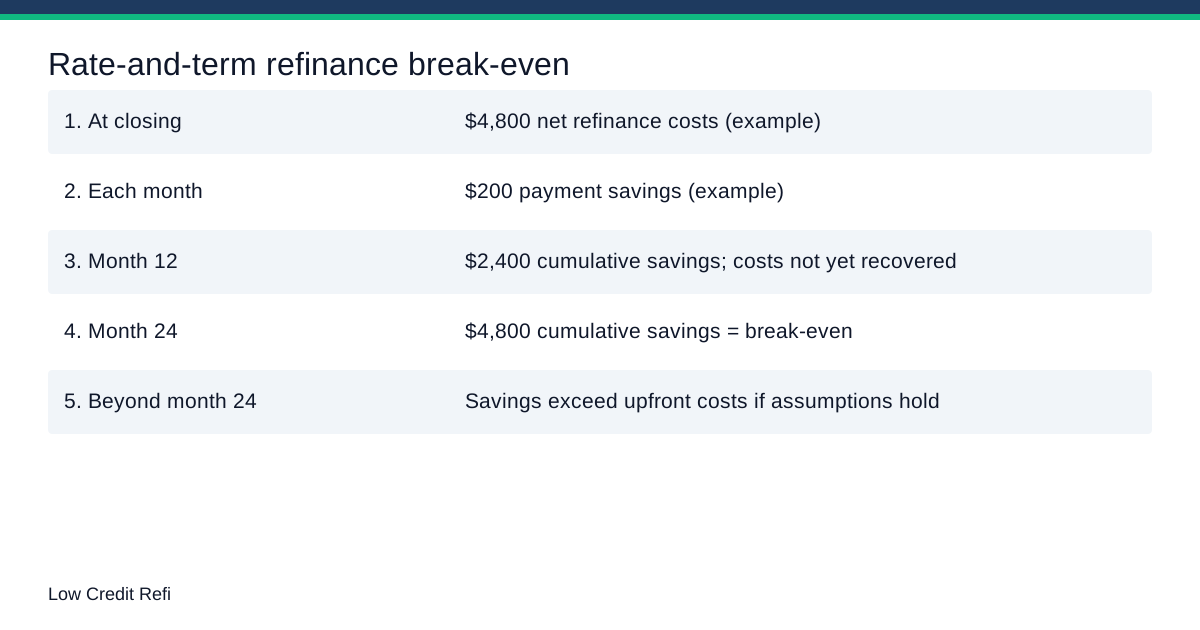
With bad credit, you may face higher fees and fewer opportunities to have costs waived. Some lenders offer "no closing cost" refinances where they roll costs into your loan amount or charge a higher interest rate in exchange.
Down Payment and Equity Requirements
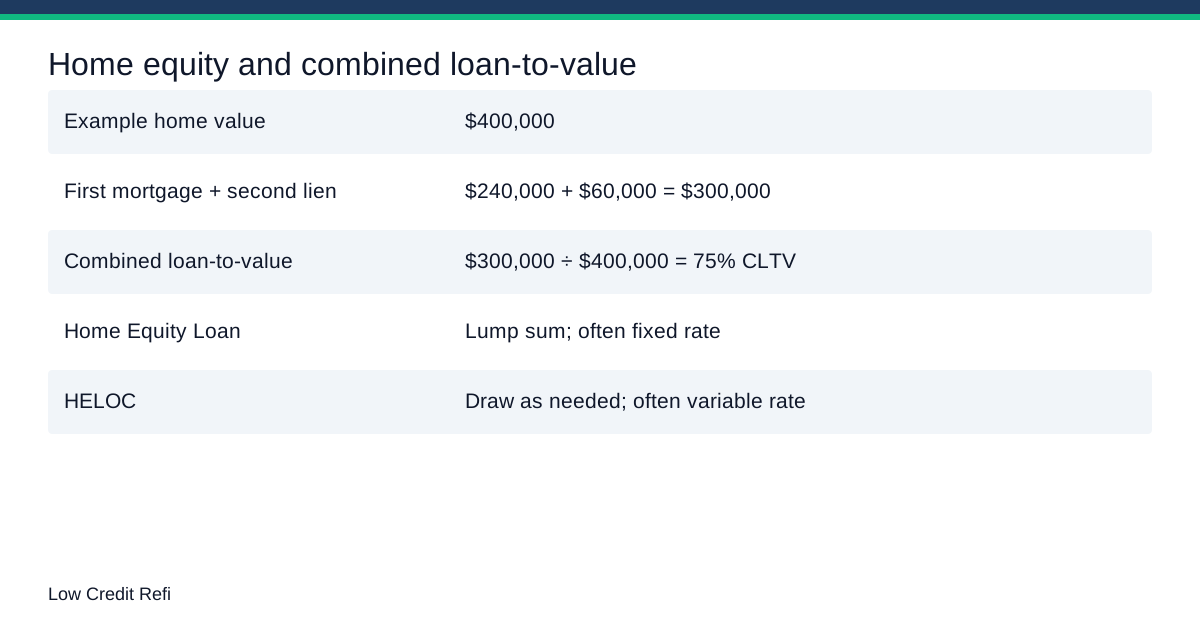
For a rate-and-term refinance (changing your interest rate or loan term without taking cash out), you'll typically need at least 3-5% equity in your home for FHA loans and 20% for conventional loans. Cash-out refinances, where you borrow against your equity, require even more—typically 20-30% equity remaining after the refinance.
Lender Options for Post-Foreclosure Refinancing
Not all lenders treat post-foreclosure borrowers with bad credit the same way. Knowing where to look can save you time and frustration.
Government-Backed Loan Programs
FHA, VA, and USDA loans offer the most flexible options for borrowers rebuilding after foreclosure. These programs have standardized guidelines, but individual lenders can impose their own overlays—additional requirements beyond the minimum program standards.
Portfolio Lenders and Credit Unions
Portfolio lenders keep loans on their own books rather than selling them to investors, giving them more flexibility in underwriting decisions. Credit unions, which are member-owned, often take a more holistic approach to evaluating applications and may be more willing to work with borrowers who have past foreclosures but can demonstrate financial recovery.
Specialized Bad Credit Refinance Lenders
Some lenders specialize in working with borrowers who have credit challenges. While these lenders may charge higher rates and fees, they understand that past foreclosure doesn't necessarily predict future performance. When comparing lenders, look at the Annual Percentage Rate (APR) rather than just the interest rate, as this includes fees and gives you a more accurate cost comparison.
Alternative Strategies If You Don't Qualify Yet
If you haven't reached the minimum waiting period or your credit score needs more work, consider these interim strategies.
Loan Modification
If you already have a mortgage on your current home, you might qualify for a loan modification rather than a refinance. Modifications change the terms of your existing loan and don't have the same waiting period requirements as refinancing. However, they typically require you to be experiencing financial hardship.
Co-Signer or Co-Borrower Options
Adding a co-borrower with strong credit can help you qualify for refinancing sooner and with better terms. However, this person becomes equally responsible for the loan, so it's typically only viable with a spouse or family member who trusts your financial recovery.
Manual Underwriting
Some lenders offer manual underwriting, where a human underwriter reviews your entire financial picture rather than relying solely on automated systems. This process takes longer but can result in approval for borrowers who fall just outside standard guidelines. You'll need to provide extensive documentation of income, assets, and your financial recovery since the foreclosure.
Frequently Asked Questions
A: No, the waiting periods after foreclosure apply regardless of whether you have a co-signer. The foreclosure remains on your credit report and in your application history, and lenders must adhere to the minimum waiting periods established by loan program guidelines. However, a co-signer with strong credit may help you qualify for better terms once you've met the minimum waiting period.
Q: Will paying off collections and charge-offs shorten the waiting period after foreclosure?
A: Paying off collections and charge-offs won't shorten the mandatory waiting period, but it will significantly improve your chances of approval once you're eligible and may help you qualify for better interest rates. Focus on addressing any collections from the foreclosure itself first, as these are most likely to prevent approval.
Q: How does bankruptcy combined with foreclosure affect refinancing timelines?
A: If you had both a bankruptcy and foreclosure, the longer waiting period typically applies. For Chapter 7 bankruptcy with foreclosure, you'll generally need to wait 4 years for FHA loans and 7 years for conventional loans from the bankruptcy discharge date. Chapter 13 bankruptcy may allow you to refinance sooner—potentially after 2 years with court approval and a history of on-time payments.
Q: Can I get a cash-out refinance after foreclosure with a 600 credit score?
A: Cash-out refinancing after foreclosure is more difficult than rate-and-term refinancing. You'll need to meet the same waiting periods, but you'll also need more equity in your home (typically at least 20-30% remaining after the refinance), a lower debt-to-income ratio, and may face higher interest rates than with a standard refinance. Most lenders require credit scores of at least 620 for cash-out refinances, though some FHA lenders may work with scores as low as 580.
Q: Does a deed in lieu of foreclosure have the same refinancing waiting period as a foreclosure?
A: A deed in lieu of foreclosure is generally treated the same as a foreclosure for refinancing purposes, with the same waiting periods applying. However, some lenders view it slightly more favorably since it shows you proactively worked with your lender rather than fighting the process. This may give you more negotiating room on interest rates once you're past the waiting period, but it won't shorten the mandatory timeline.
Take the Next Step Toward Refinancing
Understanding how long after foreclosure can you refinance with bad credit is just the first step. The waiting period ranges from 2-7 years depending on your loan type, but what you do during that time determines whether you'll qualify for competitive terms or struggle to find approval even after you're technically eligible.
Your credit score between 580-620 doesn't disqualify you from refinancing, but it does mean you'll need to approach the process strategically. Every month you spend rebuilding your credit, stabilizing your employment, and saving for closing costs puts you in a stronger position.
Ready to explore your refinancing options? Our lending specialists work with borrowers who have experienced foreclosure and understand the unique challenges you face. We can review your current situation, provide a realistic timeline for when you'll qualify, and create a personalized action plan to maximize your approval chances and minimize your costs.
Request your free, no-obligation consultation today. We'll review your credit report, evaluate your eligibility across multiple loan programs, and show you exactly what steps to take between now and your refinance date. Don't wait until you think you're ready—discover what's possible now and start building your path to better mortgage terms.
Frequently Asked Questions
What is the waiting period for an FHA refinance after foreclosure?
For FHA loans, the standard waiting period is 3 years from the foreclosure completion date. However, if you can document extenuating circumstances like job loss or medical emergency, the period may be reduced to 1 year. You'll need to show your financial situation has stabilized.
Can I refinance with a credit score of 580 after foreclosure?
Yes, some loan programs like FHA allow credit scores as low as 580 after a 3-year waiting period. However, most lenders prefer scores above 600. Improving your score by even 20 points can significantly affect your interest rate and approval chances.
How does a foreclosure affect my ability to get a conventional loan?
Conventional loans typically require a 7-year waiting period after foreclosure, though some lenders may consider you after 4 years with a larger down payment (20% or more) and strong compensating factors like stable employment and low debt-to-income ratio.
Are there any loan options with a shorter waiting period after foreclosure?
VA loans offer a 2-year waiting period for eligible veterans and military members. USDA loans require 3 years, similar to FHA. Extenuating circumstances can reduce FHA's waiting period to 1 year. Always verify with lenders for current requirements.
Key Takeaways
- Understanding your options for how long after foreclosure can you refinance with bad credit is the first step
- Getting pre-qualified helps you understand your real options