Compare Live Mortgage & Home Equity Rates
Compare current APRs, points, fees, and estimated monthly payments from participating lenders below.
Mortgage rates
Uncover the Power of Your Credit Score in Refinancing
Quick Answer: Your credit score directly affects refinance pricing through loan-level price adjustments (LLPAs). Lower scores trigger higher LLPAs, increasing your interest rate and closing costs. For borrowers with scores between 580 and 620, expect significant adjustments, but improving your score even modestly can reduce costs. Lenders also consider loan-to-value ratio and loan type.
Why Refinancing is Your Golden Opportunity
Saving thousands of dollars on your mortgage sounds like a dream, right? Your credit score is the VIP pass to the best refinancing deals, and understanding credit score refinance pricing can significantly impact your savings. Whether your score sits at 600 or 740, this guide arms you with everything needed to take charge of your financial future.Don’t Miss This!: by MortgageMasterClass
- In just 4 minutes, discover key insights to master your mortgage journey.
Loan-Level Pricing Adjustments Simplified
How LLPAs Impact You
What are LLPAs? Think of them as puzzle pieces that combine to form your rate. Credit score and loan-to-value (LTV) are vital pieces affecting credit score refinance pricing. Here’s what you need to know:- High Credit Score = Fewer Adjustments
- Low Credit Score = More Significant Pricing Hurdles
LLPA Adjustments Simplified: A Quick Reference
| Credit Score | 60% LTV | 75% LTV | 85% LTV |
|---|---|---|---|
| 740+ | 0.250% | 0.375% | 0.500% |
| 620-639 | 2.000% | 2.500% | 3.250% |
Expert Insight: Ensure lenders confirm the latest adjustment figures because periodic changes affect LLPAs and can influence your credit score refinance pricing.
Expert Comparison Video: by YourMortgageAdvisor
- Learn what loan type works best for your unique profile in just 5 minutes.
Actionable Wins: Boost Credit FAST & Save
Short-Term Credit Hacks (1-2 Months)
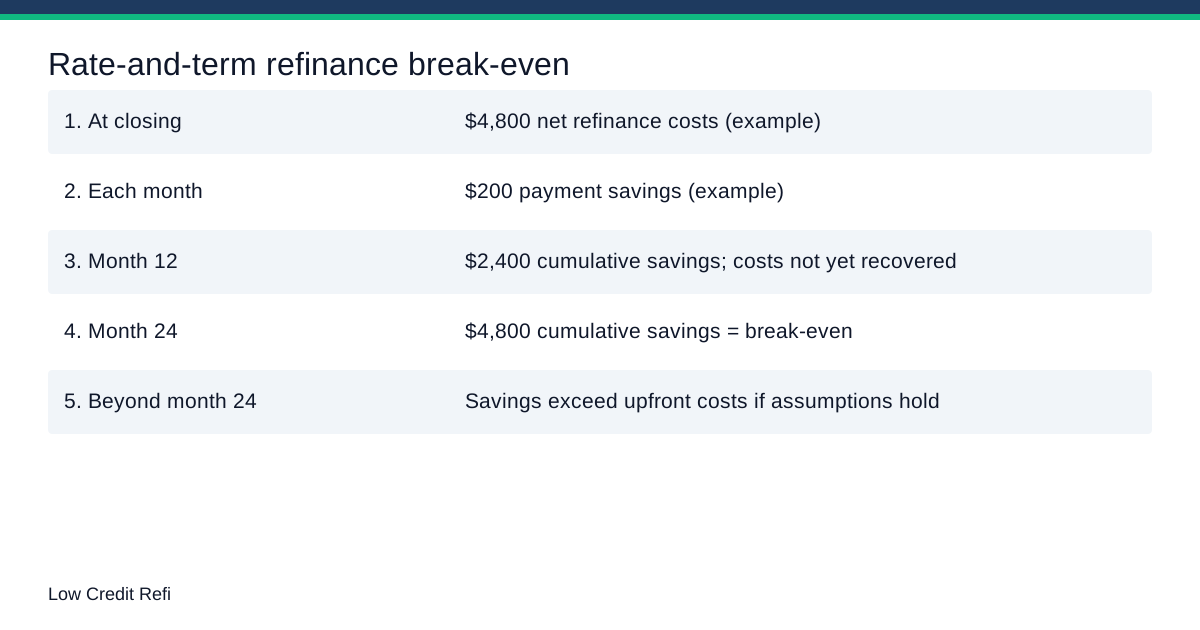
Lower utilization below 30% (balances vs. card limits) Spot and fix credit report errors immediately Leverage goodwill adjustments and authorized user accountsCost Savings: Jumping from 600 640 on a $300,000 loan unlocks a potential annual savings of $840-$1,080 and can enhance your credit score refinance pricing.
Medium-Term Strategies (3-6 Months)
Religious on-time payments = a golden credit bump Strategically pay off high-balance debts Pause any new credit inquiries (discipline pays off!)Equation for Refinancing Success
Your credit score is just one part of the puzzle. Combine it with other factors to find your ideal personalized mortgage rate and favorable credit score refinance pricing.Example Scenarios:
- Scenario 1: Low score & high risk
- Scenario 2: Mid-range credit
Your 5-Step Roadmap to Acing Refinancing
1 Discover Your Score: Use tools like CreditKarma to start your journey. 2 Work on Upgrading: Just one score tier jump can make thousands' worth of difference and improve your credit score refinance pricing. 3 Compare Loan Programs: FHA vs. Conventional—know your options. 4 Shop Around for Rates: Never settle for the first offer. 5 Be Patient & Strategic: Every fractional score improvement has real monetary benefits.Final Takeaway: Your credit score isn’t just a number—it’s leverage. Use it wisely, shop strategically, and save like a pro! Understanding credit score refinance pricing can empower you to make informed decisions that maximize your savings.
Frequently Asked Questions
How does my credit score affect refinance rates?
Lenders use credit score to assess risk and apply loan-level price adjustments (LLPAs). A lower score results in higher LLPAs, which increase your interest rate and upfront fees. For example, a score of 620 may incur a 2% adjustment at 60% LTV, while a 740 score might have only 0.25%. Improving your score reduces these costs.
What credit score do I need to refinance a mortgage?
Minimum credit score requirements vary by loan type. FHA loans may accept scores as low as 580, while conventional loans typically require 620 or higher. USDA and VA loans have their own thresholds. Even with a lower score, refinancing is possible, but you may face higher rates and fees due to LLPAs.
Can I refinance with a credit score of 580?
Yes, refinancing with a 580 credit score is possible, primarily through FHA loans. However, expect higher interest rates and closing costs due to risk-based pricing. Improving your score to 620 or above can unlock more favorable terms and lower LLPAs. Shopping around and comparing lenders is essential.
Expert Tip
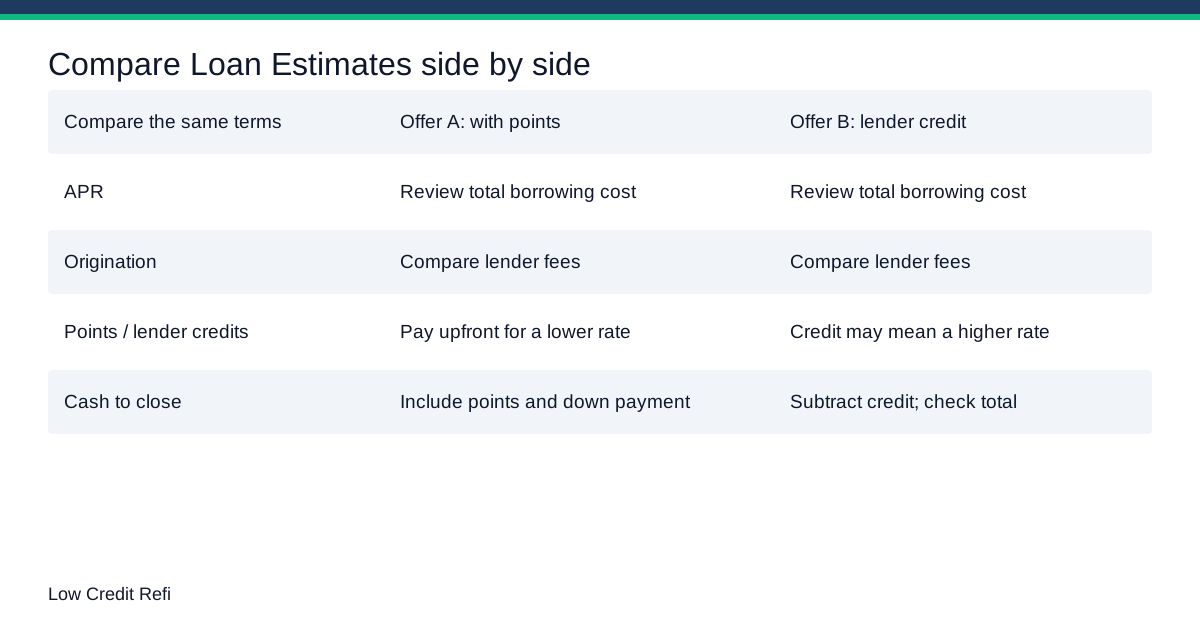
Compare Loan Estimates for the same loan type and term. Include closing costs when calculating whether refinancing saves money.
How can I lower my refinance costs with a low credit score?
To lower costs, focus on improving your credit score before applying. Pay down credit card balances to under 30% utilization, correct errors on your credit report, and make all payments on time. Also, consider an FHA loan, which may have more lenient credit requirements. Comparing multiple lender quotes can help you find better pricing.
Key Takeaways
- Understanding your options for credit score refinance pricing is the first step
- Explore related options like credit score rate impact
- Explore related options like LLPA refinance
- Getting pre-qualified helps you understand your real options


