Compare Live Mortgage & Home Equity Rates
Compare current APRs, points, fees, and estimated monthly payments from participating lenders below.
Mortgage rates
Low Credit? Finding Your Best Refinance Route
Quick Answer: For borrowers with credit scores between 580 and 620, FHA refinancing is often more accessible because it accepts scores as low as 580, while conventional loans typically require a minimum of 620. FHA also allows higher debt-to-income ratios and lower equity requirements, making it a viable option for those rebuilding credit.
Deciding whether to go with an FHA vs conventional refinance low credit option can feel overwhelming, especially with a less-than-perfect credit score. But don’t worry — we’ve created the ULTIMATE guide to demystify your options! Let’s map out which loan works for YOU.
FHA vs Conventional: Side-by-Side Comparison
| Feature | FHA | Conventional |
|---|---|---|
| Minimum Credit Score | _580_ | _620_ |
| Max DTI (Debt-to-Income) | 50–57% | Typically 43–45% |
| Minimum Equity | Starts at LOW 3.5% | Needs 5%–20% |
| Mortgage Insurance (PMI) | Lifetime Requirement | Automatically cancels |
| Upfront Cost | 1.75% upfront MIP | None |
| Cash-Out Refinance Limit | Up to 80% LTV | Up to 80% LTV |
| Manual Underwriting | Available | Limited |
Key Takeaway: FHA shines for credit-challenged borrowers, while conventional works better for higher credit scores or bigger equity! When considering FHA vs conventional refinance low credit, it's essential to weigh your options carefully.
When Should You Choose FHA?
1 If Your Credit Is Below 620
With a credit score of 580–619, FHA often becomes a lifeline.- Why? Conventional loans require a 620 minimum.
- Flexibility: FHA loans cater to borrowers with past credit struggles, making them a viable choice in the FHA vs conventional refinance low credit discussion.
2 If You Have a High Debt-to-Income Ratio (DTI)
FHA’s _generous DTI thresholds_ work in your favor:- FHA: 50–57% DTI, possible with "compensating factors."
- Conventional: 43–45% is more rigid and restrictive.
3 If You Lack Home Equity
FHA loans work for homeowners with _minimal equity_, requiring only 3.5% down. Conventional loans can require 5%-20% down depending on factors like credit and PMI, making FHA a more attractive option in the FHA vs conventional refinance low credit scenario.> _Strapped for equity? FHA makes refinancing within reach for low-credit borrowers._
4 If You Have Recent Credit Woes
- FHA Forgiveness Timeline:
- Conventional Requirements: 4–7 years for the same events.
When Conventional Steals the Spotlight
1 Higher Home Equity (> 20%)
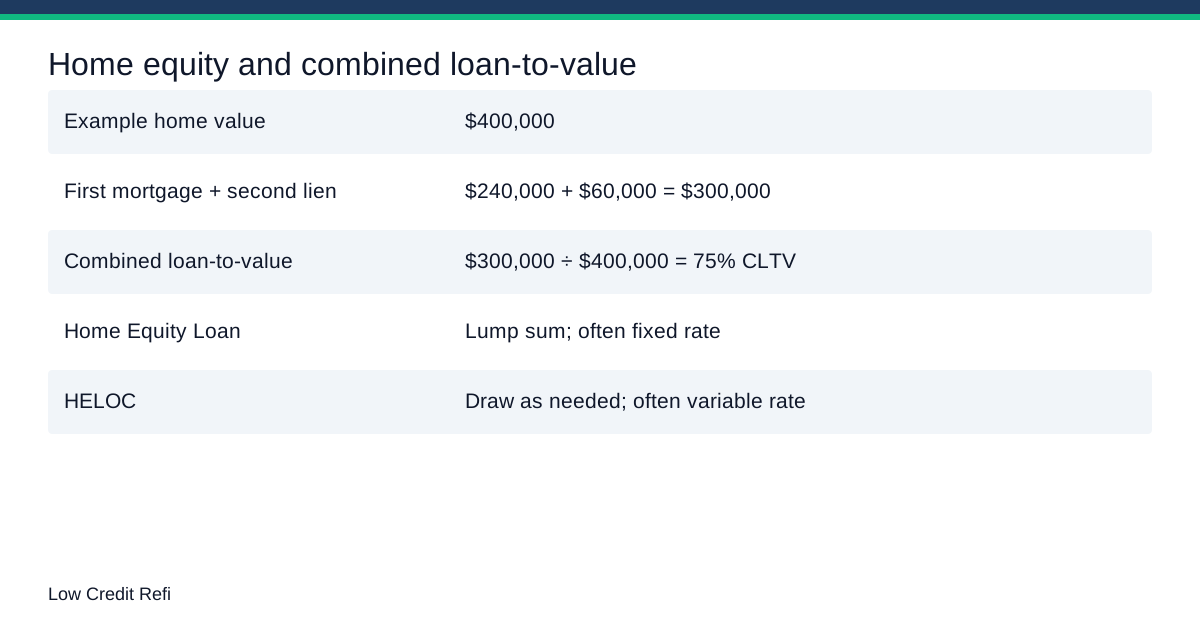
- Enjoy no PMI with conventional loans once your equity reaches 20%.
- FHA’s mortgage insurance sticks around for the life of the loan without at least a 10% down payment.
2 Credit Score of 620+
- After hitting the magical 620 threshold, conventional loans offer:
3 If You Plan to Stay Long-Term
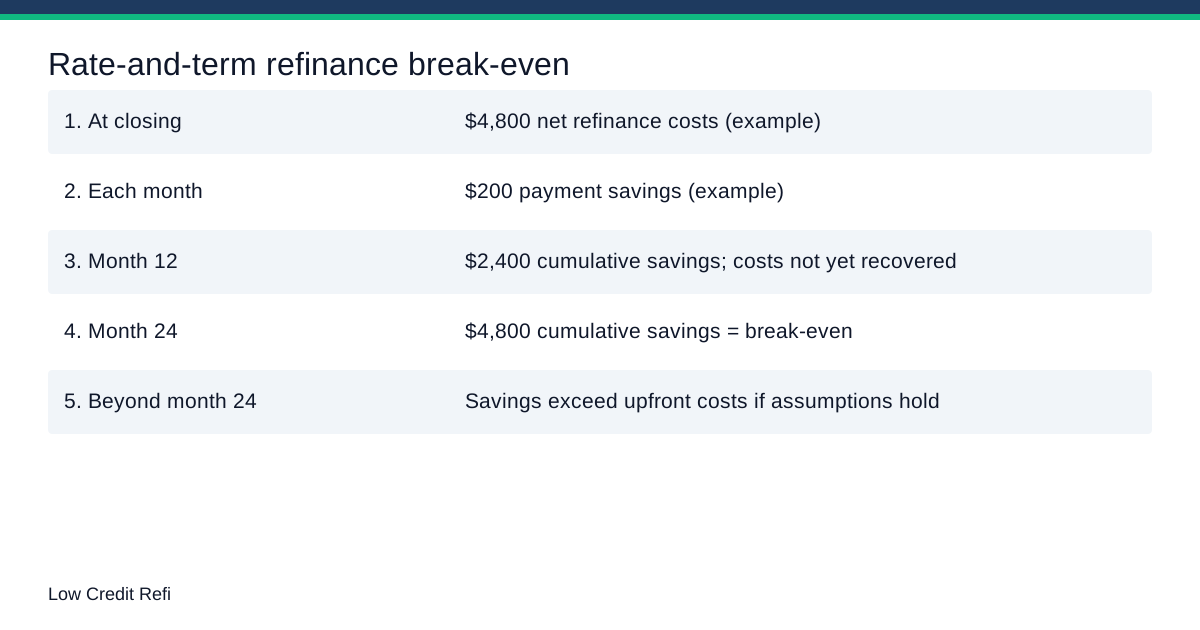
For a loan lasting 5+ years, ditch FHA’s permanent mortgage insurance:- Conventional loan MI ends automatically at 80% LTV!
FHA vs Conventional: Cost Breakdown
Let’s crunch numbers:
| Loan Type | FHA Refinance | Conventional Refinance |
|---|---|---|
| Loan Amount | $300,000 | $300,000 |
| Upfront Cost | $5,250 (1.75% MIP) | None |
| Monthly PMI | ~$138 | ~$175 |
| Interest Rate | ~6.75% | ~7.00% |
5-Year Comparison:
- FHA Total: $130,350 (MIP continues beyond 5 years).
- Conventional Total: $130,200 (PMI cancels at 80% LTV).
Your Hybrid Approach
> "Can’t meet conventional standards yet? No worries! Use FHA for now, then refinance to conventional as your credit improves!"
This is especially relevant for those interested in fha or conventional bad credit.
The Game Plan:
- Start with FHA .
- Follow a credit improvement plan over the next 1–2 years.
- Refinance to a conventional loan once you’re eligible!
- You get lower rates NOW, while improving financial flexibility for the future, especially when transitioning from FHA vs conventional refinance low credit options.
Watch and Learn!
Video 1: FHA Loan Basics
! > Perfect for understanding how FHA loans work for credit scores below 620.Video 2: Conventional Loan Insights
! > Explains how conventional refinancing compares to FHA, based on equity and credit strength.Quick Tips from the Experts:
- Prioritize improving your credit: Even small score gains can qualify you for better loans.
- Work towards higher equity for lower fees and flexibility.
- Refinance again if your financial picture improves.
Frequently Asked Questions
What credit score do I need for an FHA vs conventional refinance?
FHA refinancing requires a minimum credit score of 580, while conventional loans generally require at least 620. If your score is between 580 and 619, FHA is likely your only option. For scores of 620 or higher, conventional loans may offer better long-term savings, especially if you have significant home equity.
Can I refinance with a low credit score and high debt-to-income ratio?
Yes, FHA loans allow debt-to-income ratios up to 50–57% with compensating factors, making them more flexible for borrowers with high DTI. Conventional loans typically cap DTI at 43–45%. If your DTI is high, FHA may be the better choice when refinancing with low credit.
How does mortgage insurance differ between FHA and conventional refinances?
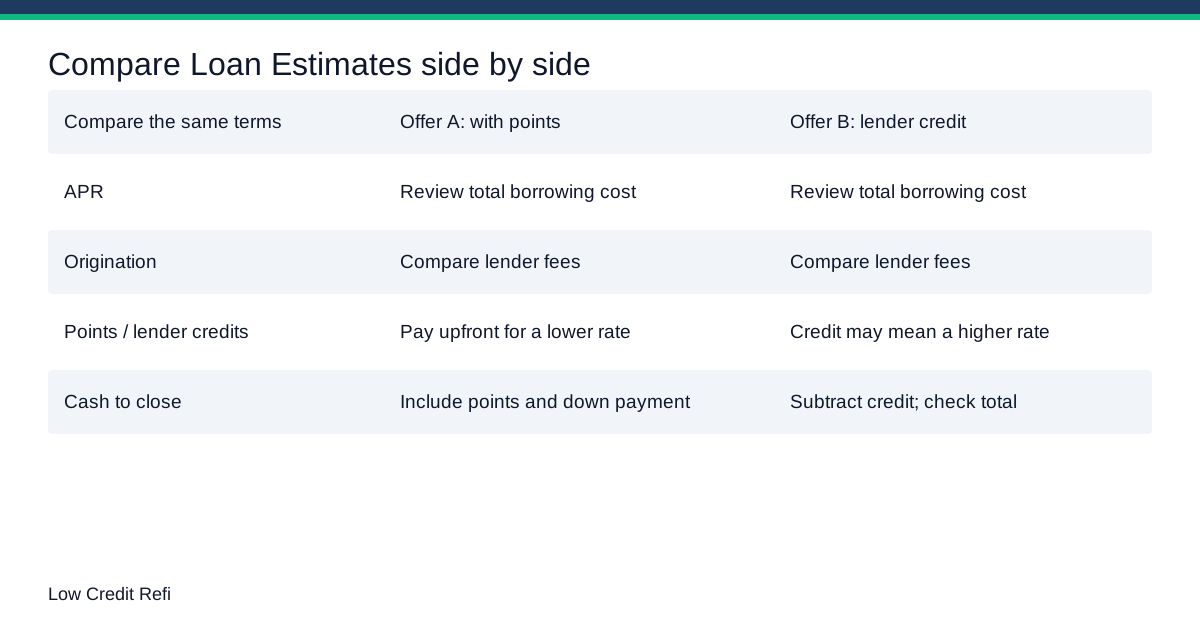
FHA loans require an upfront mortgage insurance premium of 1.75% and annual premiums for the life of the loan if you put less than 10% down. Conventional loans require private mortgage insurance (PMI) only until you reach 20% equity, after which it cancels automatically. For borrowers with low equity, FHA may have lower initial costs, but conventional can save money over time.
What are the equity requirements for an FHA vs conventional refinance?
FHA cash-out refinancing requires at least 15% equity (85% LTV), while rate-and-term refinancing can go up to 97.75% LTV. Conventional loans typically require at least 5% equity for rate-and-term and 20% for cash-out to avoid PMI. If you have minimal equity, FHA is often more accessible.
Key Takeaways
- Understanding your options for fha vs conventional refinance low credit is the first step
- Explore related options like fha or conventional bad credit
- Explore related options like refinance comparison low score
- Getting pre-qualified helps you understand your real options


