Compare Live Mortgage & Home Equity Rates
Compare current APRs, points, fees, and estimated monthly payments from participating lenders below.
Mortgage rates
Conventional Refinance vs FHA for 605 Credit Score Borrowers: Your Complete Guide to Getting Approved
Quick Answer: For a 605 credit score, FHA refinancing is typically more accessible than conventional, with minimum scores as low as 580 for streamline refinances. Conventional loans usually require 620 or higher, though some portfolio lenders may consider 605 with compensating factors. Your choice depends on equity, current loan type, and goals.
If you're researching Conventional Refinance vs FHA for 605 Credit Score Borrowers, you're likely seeking a refinancing path that accommodates your current credit situation while offering competitive rates and terms. The good news: both conventional and FHA refinance options remain accessible to borrowers in the 580-620 credit score range, though each comes with distinct advantages and requirements. FHA refinancing typically offers more flexibility for credit scores around 605, with minimum scores as low as 580 for streamline refinances and 500-580 for cash-out refinances (with higher down payment requirements). Conventional refinancing becomes available at 620+ for most lenders, though some portfolio lenders may work with scores as low as 580 with compensating factors. Your choice between these two paths will depend on your equity position, current loan type, monthly payment goals, and long-term homeownership plans.
Understanding Your Credit Score Position at 605
A 605 credit score places you in what lenders categorize as the "fair" credit range—below the national average but well within the acceptable threshold for government-backed refinancing programs. This positioning creates unique opportunities and challenges in the refinancing landscape.
When considering conventional refinance vs fha for 605 credit score borrowers, you should understand all available options.
At this credit level, you've demonstrated creditworthiness despite past difficulties. Perhaps you've recovered from medical debt, navigated a period of unemployment, or rebuilt after credit card troubles. Whatever the history, a 605 score signals to lenders that while some risk exists, you're actively managing your obligations.
Why This Credit Range Creates Different Options
The distinction between conventional and FHA refinancing becomes particularly important at 605 because you sit just below the typical conventional lending threshold. Most conventional lenders establish a 620 minimum for standard refinancing products, though this varies by institution. FHA programs, conversely, were specifically designed to accommodate borrowers in your exact situation—those with credit scores between 580-620 who need refinancing solutions.
This positioning means you'll likely receive more competitive offers through FHA channels, though conventional options may become available if you can raise your score just 15 points to the 620 threshold, or if you have substantial compensating factors like significant equity or low debt-to-income ratios.
FHA Refinancing Options for 605 Credit Scores
The Federal Housing Administration backs several refinancing products specifically designed for borrowers with credit scores in the 580-620 range. Understanding each option helps you identify which path aligns with your financial goals.
FHA Streamline Refinance
If your current mortgage is already an FHA loan, the FHA Streamline Refinance represents your most accessible option. This product requires minimal documentation, no home appraisal in most cases, and accepts credit scores as low as 580. The primary objective is reducing your monthly payment or switching from an adjustable-rate to a fixed-rate mortgage.
Key advantages for 605 credit borrowers:
- No minimum credit score with current lender in some cases
- No income verification required for many borrowers
- No appraisal means current home value doesn't matter
- Can refinance even if underwater on your mortgage
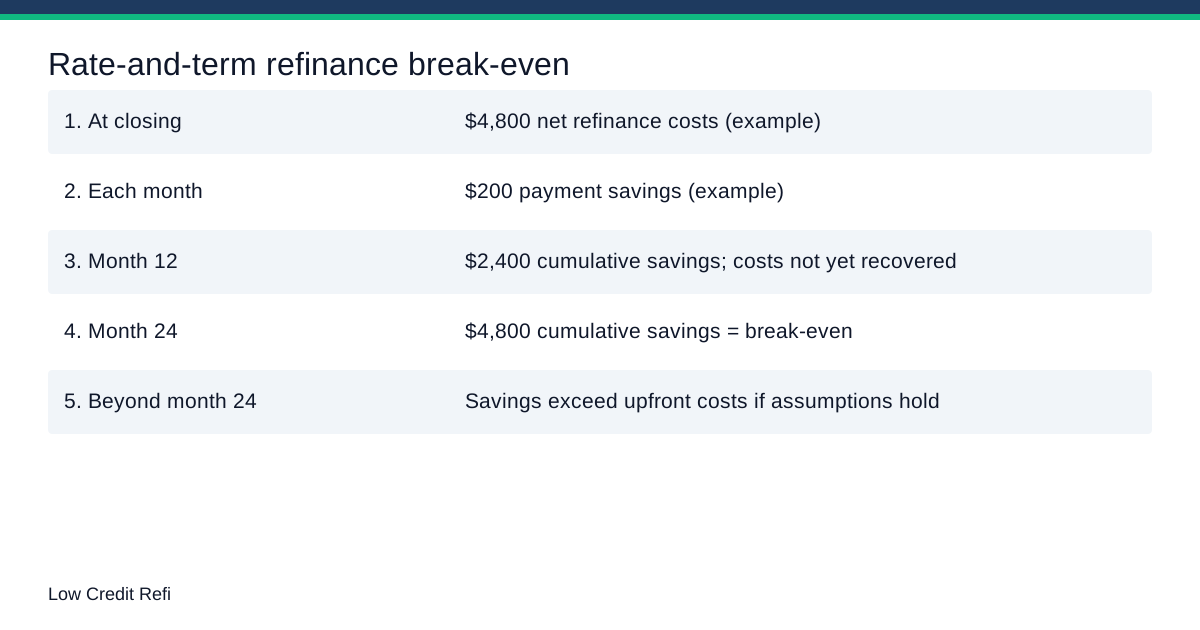
- Closing costs typically range from $2,500-$5,000 nationally
Expert Tip
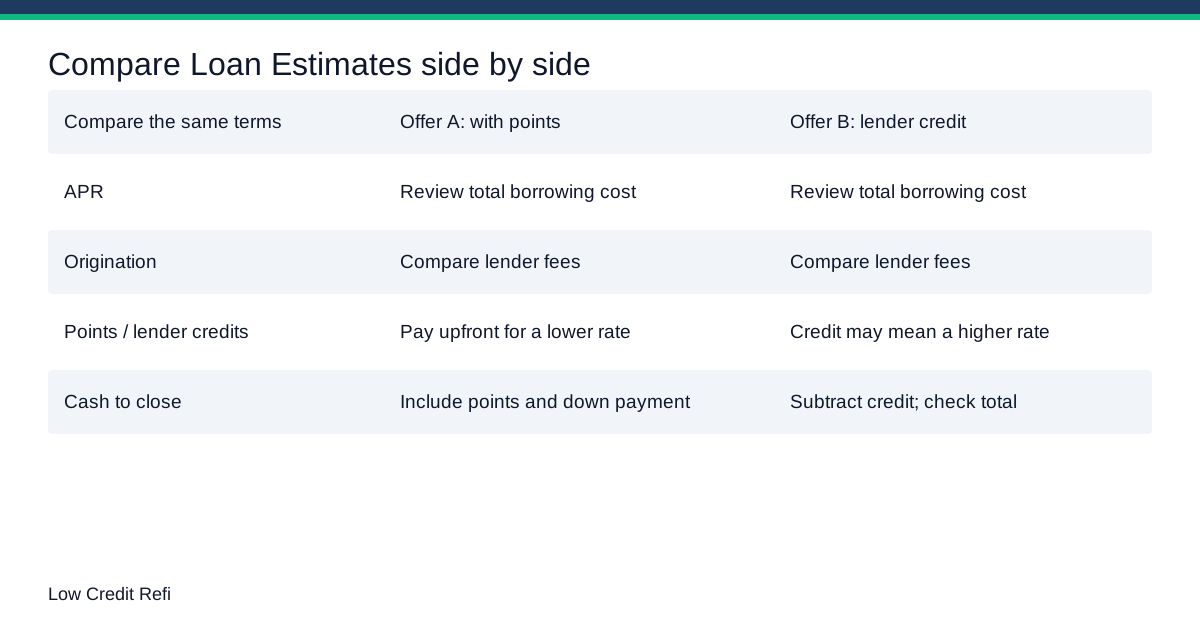
Compare Loan Estimates for the same loan type and term. Include closing costs when calculating whether refinancing saves money.
FHA Cash-Out Refinance
For borrowers needing to access home equity, the FHA Cash-Out Refinance allows you to refinance for more than you owe and receive the difference in cash. With a 605 credit score, you'll need:
- Minimum 580 credit score (you exceed this requirement)
- Maximum 80% loan-to-value ratio (meaning at least 20% equity)
- Debt-to-income ratio typically below 50%
- Twelve months of on-time mortgage payments
- Property appraisal confirming sufficient value
FHA Simple Refinance
This lesser-known FHA option serves borrowers transitioning from non-FHA loans to FHA products. If your current mortgage is conventional, VA, or USDA, the FHA Simple Refinance provides a pathway to FHA's more lenient terms. Requirements mirror the cash-out refinance, though you cannot extract equity—the new loan amount must reflect your current balance plus closing costs.
Conventional Refinancing Possibilities at 605
While conventional refinancing presents more challenges at a 605 credit score, opportunities exist for borrowers with compensating factors.
The 620 Threshold Reality
Most conventional lenders establish 620 as their minimum credit score for refinancing, placing you 15 points below this standard. However, this doesn't completely eliminate conventional options:
Portfolio lenders occasionally offer conventional refinancing to borrowers with 580-619 scores when strong compensating factors exist, including:
- Substantial home equity (30%+ in some cases)
- Low debt-to-income ratios (below 36%)
- Significant cash reserves (6+ months of payments)
- Long employment history with stable income
- Relationship banking (existing accounts with the lender)
Conventional Refinance Cost Comparison
When you do qualify for conventional refinancing at 605, expect rate adjustments for your credit tier:
| Credit Score Range | Typical Rate Adjustment | Impact on $300,000 Loan |
|---|---|---|
| 740+ | Base rate (0.00%) | $0 additional |
| 680-739 | +0.25% to 0.50% | $45-$90/month |
| 620-679 | +0.75% to 1.25% | $135-$225/month |
| 580-619 | +1.25% to 2.00%+ | $225-$360+/month |
These adjustments significantly impact long-term costs. On a $300,000 30-year mortgage, a 1.5% rate difference creates approximately $90,000 in additional interest over the loan's lifetime.
When Conventional Makes Sense Despite Credit Score
Even at 605, conventional refinancing might be preferable if:
- You're close to removing PMI: Conventional loans allow PMI cancellation at 80% LTV, while FHA mortgage insurance premiums continue for the loan's life on loans with less than 10% down
- You have 20%+ equity: Higher equity positions offset credit score concerns
- You're refinancing a multi-unit property: FHA limits apply to 1-4 unit properties but with stricter requirements; conventional may offer better terms for 2-4 unit buildings
- You can wait to improve your score: Delaying 3-6 months to reach 620 might save substantially more than the immediate refinance benefit
Step-by-Step Refinancing Process for 605 Credit Borrowers
Regardless of which path you choose, the refinancing process follows a predictable sequence. Understanding each stage helps you prepare appropriately and avoid delays.
1. Document Preparation Phase (Week 1)
Gather essential documentation before approaching lenders:
- Last two years of tax returns with all schedules
- Two most recent pay stubs showing year-to-date income
- Two months of bank statements for all accounts
- Current mortgage statement showing balance and payment
- Homeowners insurance policy declarations page
- Credit report from all three bureaus (for your review)
- Documentation of any non-employment income
- Recent retirement account statements if applicable
2. Lender Shopping and Rate Quotes (Week 1-2)
Contact multiple lenders specializing in your credit tier. For 605 credit scores, prioritize:
- FHA-approved lenders with high volume (they're most efficient with these loans)
- Credit unions where you have membership
- Portfolio lenders who keep loans in-house
- Online lenders specializing in less-than-perfect credit
3. Application and Underwriting (Week 2-5)
Once you select a lender, formal underwriting begins. The underwriter examines:
- Credit history patterns, not just the score
- Employment stability and income verification
- Debt-to-income ratio calculations
- Property value through appraisal (if required)
- Title search results
- Down payment source verification (for cash-out refinances)
4. Appraisal Process (Week 3-4)
FHA refinances typically require property appraisals unless you qualify for streamline refinancing. The appraisal serves two purposes:
Value confirmation: Ensuring sufficient equity for your refinance type Property condition assessment: Identifying health and safety issues requiring repair
FHA appraisals prove more stringent than conventional appraisals, noting peeling paint, safety hazards, and structural concerns. Appraisals cost $400-$700 nationally, with prices varying by property type and location.
5. Clear to Close and Funding (Week 5-7)
After satisfying all underwriting conditions, you receive "clear to close" status. Your lender schedules closing, typically 3-7 days after this clearance. At closing, you'll sign final documents and pay closing costs not covered by the new loan.
Federal law provides a three-day right of rescission for most refinances, meaning your new loan doesn't fund until three business days after signing, allowing you to cancel if circumstances change.
Cost Analysis: FHA vs Conventional at 605 Credit Score
Understanding the complete cost picture requires examining both upfront and long-term expenses.
Upfront Costs Comparison
| Cost Category | FHA Refinance | Conventional Refinance |
|---|---|---|
| Application Fee | $0-$500 | $0-$500 |
| Origination Fee | 0.5%-1.0% of loan | 0.5%-1.5% of loan |
| Appraisal | $400-$700 | $450-$800 |
| Credit Report | $30-$75 | $30-$75 |
| Title Search | $200-$400 | $200-$400 |
| Title Insurance | $1,000-$2,500 | $1,000-$2,500 |
| Recording Fees | $125-$350 | $125-$350 |
| Upfront MIP/PMI | 1.75% of loan (FHA) | Varies by LTV |
| Total (on $250,000 loan) | $6,700-$9,400 | $5,800-$9,200 |
Long-Term Cost Considerations
FHA loans require two mortgage insurance components:
Upfront Mortgage Insurance Premium (UFMIP): 1.75% of the loan amount, typically rolled into the loan balance Annual Mortgage Insurance Premium (MIP): 0.55%-0.85% annually, paid monthly, for the life of the loan on most refinances
On a $250,000 FHA refinance:
- UFMIP: $4,375 (added to loan balance)
- Annual MIP: $1,375-$2,125/year ($115-$177/month)
This creates an important inflection point: If you have less than 20% equity, FHA often costs less monthly despite lifetime MIP. With 20%+ equity, conventional eliminates mortgage insurance entirely, typically becoming the more affordable option long-term.
Improving Approval Odds with a 605 Credit Score
Your credit score doesn't tell the whole story. Lenders examine comprehensive financial profiles, and borrowers can leverage several strategies to improve approval odds and secure better terms.
Compensating Factors That Matter
Low debt-to-income ratio: Keeping total monthly debt payments below 36% of gross income demonstrates financial capacity despite credit history. At 605, a 30% DTI carries significantly more weight than a 45% DTI.
Significant cash reserves: Maintaining 6-12 months of mortgage payments in savings accounts shows financial stability and reduces lender risk perception.
Employment stability: Two or more years with the same employer (or in the same field if self-employed) indicates reliable income streams.
Payment history trends: A 605 score with 24 months of perfect payment history looks vastly different than a 605 with recent 30-day lates. Upward trends matter.
Quick Credit Score Improvement Tactics
While comprehensive credit rebuilding takes time, several strategies can boost scores within 30-90 days:
- Pay down credit card balances below 30% of limits: Credit utilization accounts for 30% of your score, and reducing balances provides quick improvements
- Request higher credit limits: If you can't pay balances down, increasing limits reduces utilization ratios
- Become an authorized user: Family members with excellent credit can add you to their accounts, potentially boosting your score
- Dispute inaccuracies: Review all three credit reports for errors and dispute through official channels
- Pay all bills on time: Even one 30-day late payment can drop a 605 score by 60-80 points
The 15-Point Strategy to Reach 620
If conventional refinancing offers superior terms in your situation, delaying 90-180 days to reach 620 might maximize savings. A targeted approach includes:
- Setting up automatic payments for all credit obligations
- Reducing credit utilization to below 10% on all cards
- Avoiding new credit applications during the improvement period
- Paying down installment loans to below 50% of original balances
- Allowing recent negative items to age (each month of distance helps)
Special Situations and Considerations
Certain borrower circumstances create unique refinancing considerations within the Conventional Refinance vs FHA for 605 Credit Score Borrowers decision.
Recent Bankruptcy or Foreclosure
FHA establishes specific waiting periods after credit events:
- Chapter 7 Bankruptcy: Two years with extenuating circumstances, three years typically
- Chapter 13 Bankruptcy: One year into repayment plan with court approval
- Foreclosure: Three years with extenuating circumstances
- Short Sale/Deed-in-Lieu: Three years typically
If you're within these waiting periods and have achieved a 605 score, FHA provides your only realistic refinancing path.
Investment Properties
Both FHA and conventional programs primarily serve primary residences. FHA explicitly prohibits refinancing investment properties, while conventional lenders impose stricter requirements for non-owner-occupied refinancing, including:
- Higher credit score minimums (often 660-680 for investment properties)
- Lower LTV limits (typically 70-75% maximum)
- Higher interest rates (0.5%-0.75% above owner-occupied rates)
- Larger cash reserve requirements (6-12 months of payments)
Self-Employment Income
Self-employed borrowers face additional documentation requirements but can successfully refinance with 605 credit scores. Both FHA and conventional lenders typically require:
- Two years of business tax returns with all schedules
- Two years of personal tax returns
- Profit and loss statement for current year
- Business license and proof of continuity
- CPA letter verifying income in some cases
Frequently Asked Questions
Yes, but recent late payments significantly impact approval odds. FHA streamline refinancing requires no late payments in the past 12 months, while FHA cash-out refinancing requires no late payments in the past 12 months and no more than one 30-day late payment in the previous 12 months. Conventional refinancing at 605 typically requires 12-24 months of perfect payment history. If you have recent lates, focus on establishing a consistent on-time payment pattern for at least 12 months before applying, as this demonstrates changed behavior and significantly improves approval odds.
How much equity do I need to refinance with a 605 credit score?
Equity requirements vary by refinance type and loan program. FHA streamline refinancing requires no specific equity amount—you can even refinance underwater mortgages. FHA cash-out refin
Frequently Asked Questions
What is the minimum credit score for an FHA streamline refinance?
The FHA streamline refinance generally accepts credit scores as low as 580, making it a viable option for borrowers with a 605 score. If you already have an FHA loan, some lenders may not require a minimum credit score for this product.
Can I get a conventional refinance with a 605 credit score?
Most conventional lenders require a minimum credit score of 620 for refinancing. However, some portfolio lenders may consider scores as low as 580 if you have compensating factors like significant equity or a low debt-to-income ratio.
What are the main differences between FHA and conventional refinancing for fair credit?
FHA refinancing offers more flexible credit requirements, with scores as low as 580 for streamline and 500 for cash-out (with higher down payment). Conventional loans typically require 620+ and may have stricter debt-to-income limits. FHA also requires mortgage insurance for the life of the loan if you put less than 10% down.
How can I improve my chances of refinancing with a 605 credit score?
To improve your chances, focus on lowering your debt-to-income ratio, increasing your home equity through payments or appreciation, and ensuring a stable employment history. Shopping around with multiple lenders, including those specializing in fair credit, can also help you find options.
Key Takeaways
- Understanding your options for conventional refinance vs fha for 605 credit score borrowers is the first step
- Getting pre-qualified helps you understand your real options