Compare Live Mortgage & Home Equity Rates
Compare current APRs, points, fees, and estimated monthly payments from participating lenders below.
Mortgage rates
Average Refinance Closing Costs for Borrowers With 590 Score: Your Complete 2026 Guide
Quick Answer: For borrowers with a 590 credit score, average refinance closing costs in 2026 typically range from $3,500 to $7,200 nationally, or 2% to 5% of the loan amount. Costs are often higher due to risk-based pricing, but programs like FHA refinancing may offer options. Actual costs vary by lender, location, and loan size.
If you're exploring refinance options with a 590 credit score, understanding closing costs is essential for making informed decisions. The average refinance closing costs for borrowers with 590 score typically range from $3,500 to $7,200 nationally in 2026, representing approximately 2% to 5% of your total loan amount. Borrowers with credit scores in the 580-620 range often face slightly higher costs than those with excellent credit, but refinancing can still deliver substantial long-term savings when structured correctly. This guide breaks down exactly what you'll pay, how to reduce these expenses, and strategies to successfully refinance despite credit challenges.
Understanding these costs upfront empowers you to budget accurately and identify lenders offering competitive programs for credit-challenged borrowers. While your 590 score places you in a specialized lending category, numerous refinance programs exist specifically designed for your situation.
When considering average refinance closing costs for borrowers with 590 score, you should understand all available options.
Why Credit Scores Between 580-620 Impact Your Refinance Closing Costs
Your credit score directly influences both your interest rate and the fees lenders charge during refinancing. Borrowers with scores between 580 and 620 are generally categorized as subprime or near-prime borrowers, which means lenders perceive higher risk when extending credit.
This elevated risk translates into specific cost implications:
Lender Risk-Based Pricing: Mortgage lenders adjust their fees based on credit risk tiers. A 590 score typically places you in a category where loan-level price adjustments (LLPAs) add between 1.5% and 3% to your closing costs compared to borrowers with 740+ scores.
Limited Program Availability: While FHA loans accept credit scores as low as 580 for refinancing, conventional loans typically require 620 minimum. This limited access means fewer competitive options, which can result in higher fees as lenders have less pressure to offer aggressive pricing.
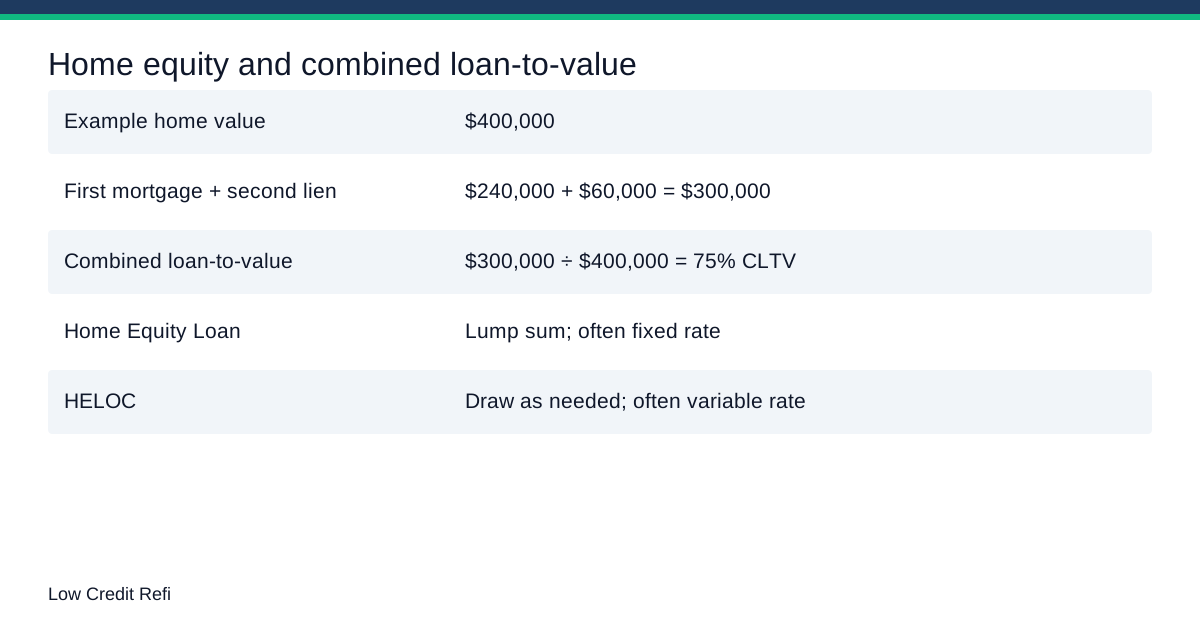
Compensating Factors Matter: Lenders evaluate your complete financial profile. Strong compensating factors like substantial home equity (25%+), stable employment history exceeding two years, or low debt-to-income ratios below 36% can help offset credit score concerns and potentially reduce certain discretionary fees.
The relationship between your 590 credit score and closing costs isn't purely punitive—it reflects actuarial risk calculations. Understanding this helps you negotiate more effectively and identify which fees have flexibility.
Expert Tip
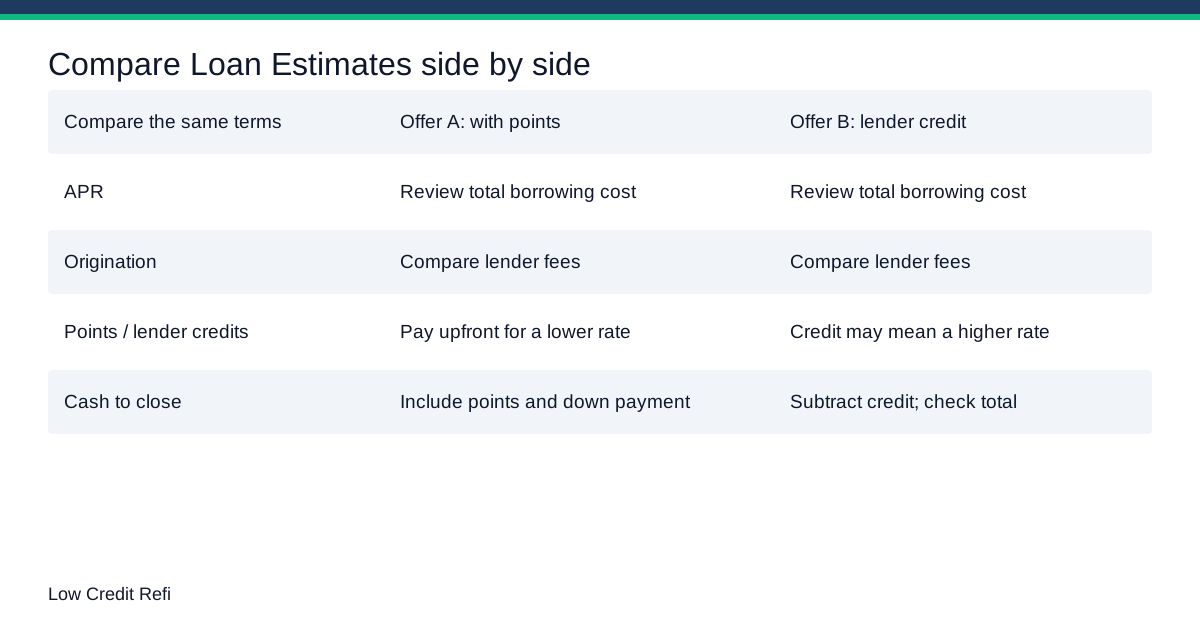
Compare Loan Estimates for the same loan type and term. Include closing costs when calculating whether refinancing saves money.
Detailed Breakdown of Refinance Closing Costs With a 590 Credit Score
Let's examine the specific costs you'll encounter when refinancing with a 590 credit score. These figures reflect 2026 national averages for a $250,000 refinance loan:
| Cost Category | Typical Range | What It Covers |
|---|---|---|
| Origination Fees | $1,250 - $2,500 | Lender's processing and underwriting costs |
| Appraisal Fee | $450 - $750 | Professional home valuation |
| Credit Report Fee | $35 - $95 | Tri-merge credit reports for all borrowers |
| Title Search & Insurance | $800 - $1,600 | Title examination and insurance policy |
| Settlement/Closing Fee | $400 - $850 | Closing agent or attorney services |
| Recording Fees | $75 - $250 | Government recording of new mortgage |
| Survey Fee | $350 - $600 | Property boundary verification (if required) |
| Tax Service Fee | $80 - $120 | Monitoring property tax payments |
| Flood Certification | $15 - $35 | Determining flood zone status |
| Prepaid Interest | $200 - $800 | Interest from closing to first payment |
| Property Taxes (Escrow) | $500 - $2,000 | 2-6 months prepaid taxes |
| Homeowners Insurance (Escrow) | $300 - $1,200 | Annual premium prepaid |
Total Expected Range: $4,455 - $11,800
For borrowers with 590 credit scores specifically, expect costs toward the middle-to-higher end of these ranges. Your actual costs depend on loan amount, property location, lender pricing, and whether you choose to pay points for rate reduction.
Fees You Can Shop Around For
Several closing costs remain negotiable or vary significantly between providers. These represent your best opportunities for savings:
- Origination fees: Different lenders charge vastly different amounts
- Title insurance: Rates vary between title companies
- Settlement services: Attorney or closing agent fees differ regionally
- Appraisal management: Some lenders charge administrative markups
- Discount points: Entirely optional for rate reduction
Non-Negotiable Costs
Certain expenses remain relatively fixed regardless of lender:
- Government recording fees
- Credit report charges
- Flood certification
- Tax service fees
FHA Streamline Refinance: The Best Option for 580-620 Credit Scores
If your current mortgage is FHA-insured, the FHA Streamline Refinance program offers the most accessible path for borrowers with 590 credit scores. This specialized program provides substantial advantages:
Reduced Documentation Requirements: FHA Streamline refinances require minimal paperwork compared to traditional refinances. Many lenders don't require income verification, employment confirmation, or even home appraisals if you meet specific criteria.
No Minimum Credit Score: While individual lenders may impose credit overlays, FHA guidelines don't establish a minimum credit score for streamline refinances. Borrowers with 590 scores regularly qualify when they demonstrate 12 months of on-time mortgage payments.
Lower Closing Costs: FHA Streamline refinances typically cost $2,800 to $5,500, substantially less than conventional refinances. The reduced appraisal and documentation requirements eliminate several expensive line items.
Net Tangible Benefit Requirement: You must demonstrate clear financial improvement—typically a minimum 0.5% interest rate reduction for term reductions or 5% monthly payment reduction for term increases.
The primary disadvantage involves ongoing mortgage insurance premiums (MIP). FHA loans require both upfront MIP (1.75% of loan amount) and annual MIP (0.55%-0.85% depending on loan details) for most borrowers. However, for those with 590 credit scores facing limited alternatives, these costs often prove worthwhile compared to higher interest rates on other loan products.
Conventional Refinance Options: Navigating the 620 Credit Barrier
Conventional loans typically require 620 minimum credit scores, placing 590-score borrowers just outside standard eligibility. However, several pathways exist:
Credit Score Improvement Strategy: Raising your score from 590 to 620 may take only 3-6 months with targeted efforts. Paying down credit card balances below 30% utilization, disputing credit report errors, and maintaining perfect payment history can yield rapid improvements.
Portfolio Lenders: Some banks and credit unions hold loans in their own portfolios rather than selling to Fannie Mae or Freddie Mac. These institutions set their own guidelines and may consider borrowers with 590 scores, though expect higher costs:
- Origination fees: 1.5% - 3% of loan amount
- Interest rates: 0.75% - 1.5% above standard rates
- Additional reserves required: 6-12 months PITI
Conventional refinances offer the advantage of no ongoing mortgage insurance once you reach 20% equity, unlike FHA loans with permanent MIP. This creates long-term savings that may justify the extra effort to qualify.
Step-by-Step Process: Refinancing With a 590 Credit Score
Successfully navigating the refinance process with credit challenges requires strategic preparation:
- Review Your Credit Reports (30-60 days before applying): Obtain free reports from all three bureaus. Identify errors, dispute inaccuracies, and understand which factors most impact your score. Consider whether rapid rescoring through your lender might quickly address recent positive changes.
- Calculate Your Home Equity: Determine your current home value using online estimators and recent neighborhood sales. Calculate equity percentage by dividing current equity by home value. Target 20%+ equity for best terms, though FHA programs accept lower amounts.
- Gather Financial Documentation: Compile 2 years of tax returns, 60 days of pay stubs, 2 months of bank statements, current mortgage statement, homeowners insurance policy, and photo identification. Complete documentation prevents delays that could jeopardize rate locks.
- Research Specialized Lenders: Not all mortgage companies actively serve the 580-620 credit range. Research lenders advertising FHA refinance programs, credit-challenged borrower services, or non-QM (non-qualified mortgage) products. Request Loan Estimates from at least 3-5 lenders.
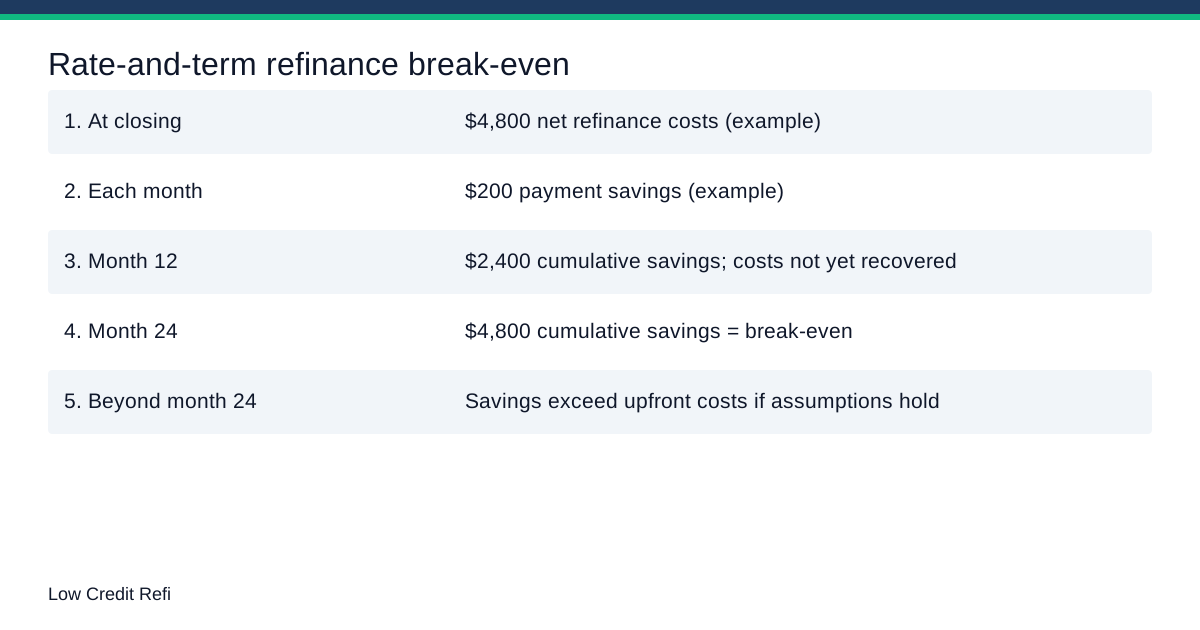
- Compare Total Costs, Not Just Rates: Evaluate the Annual Percentage Rate (APR), which reflects both interest rate and fees, rather than focusing solely on note rate. A slightly higher rate with $2,000 lower closing costs may save money over your intended holding period.
- Negotiate Fees and Explore Credits: Ask each lender about lender credits (higher rate in exchange for reduced closing costs), origination fee waivers for certain programs, or pricing adjustments if you're borderline for better tiers. Every $500 saved on closing costs improves your break-even timeline.
- Lock Your Rate Strategically: Once you've selected a lender, choose a rate lock period matching your likely closing timeline—typically 30-45 days. Longer locks cost more but provide protection in rising rate environments. Confirm lock details in writing.
- Respond Promptly to Underwriting Requests: Quick responses to documentation requests prevent rate lock expirations and closing delays. Underwriters for credit-challenged borrowers scrutinize files more carefully, so provide complete explanations for any credit issues.
Strategies to Reduce Your Refinance Closing Costs
Even with a 590 credit score, you can substantially reduce closing expenses:
No-Closing-Cost Refinances: Some lenders offer programs where they cover closing costs in exchange for slightly higher interest rates (typically 0.25%-0.5% higher). This makes sense if you plan to refinance again within 3-5 years once your credit improves, as you avoid upfront expenses.
Negotiate Origination Fees: Lender origination fees represent pure profit and remain highly negotiable. Request fee reductions or waivers, especially if you have competing offers. Some lenders waive origination fees entirely for existing customers with strong payment history.
Close at Month-End: Closing on the final days of the month minimizes prepaid interest charges. You'll pay daily interest from closing until month-end, so fewer days means lower costs.
Question Junk Fees: Scrutinize your Loan Estimate for questionable charges like "processing fees," "administrative fees," or "document preparation fees" beyond standard origination charges. These often represent padding that you can negotiate away.
Shop Title Insurance: Title insurance rates vary between providers despite covering identical risk. Request quotes from 2-3 title companies and present competing quotes to secure better pricing.
Consider Increasing Down Payment or Principal: If you're conducting a cash-out refinance, reducing the cash-out amount may move you into a lower-cost tier. Similarly, paying down principal before refinancing could improve your loan-to-value ratio enough to access better pricing.
Frequently Asked Questions
The minimum credit score varies by loan type. FHA refinances accept scores as low as 580 for rate-and-term refinances (500-579 with 10% down for purchases, though refinances differ). VA refinances have no official minimum, though most lenders require 580-620. Conventional refinances typically require 620 minimum, though portfolio lenders may accept 590+ with compensating factors. Your existing payment history, equity position, and debt-to-income ratio influence eligibility as much as your credit score alone.
Can I get a no-closing-cost refinance with a 590 credit score?
Yes, no-closing-cost refinances remain available for borrowers with 590 credit scores, though you'll pay higher interest rates than borrowers with excellent credit. Lenders typically increase your rate by 0.375%-0.625% to cover closing costs for credit-challenged borrowers (versus 0.25%-0.375% for those with 740+ scores). This option makes financial sense if you plan to sell or refinance again within five years, avoiding upfront expenses while accepting slightly higher monthly payments.
How much can I save by improving my credit score before refinancing?
Improving from 590 to 640 could reduce your interest rate by 0.5%-1.0%, saving approximately $80-$160 monthly on a $250,000 loan. Over 30 years, this represents $28,800-$57,600 in interest savings. Additionally, better credit reduces closing costs by $800-$1,500 through lower loan-level price adjustments. If you can delay refinancing 3-6 months for credit improvement, the savings typically justify the wait unless rates are rising rapidly.
What's the difference between FHA and conventional refinance closing costs?
FHA refinances typically cost $2,800-$5,500 in closing fees but include a 1.75% upfront mortgage insurance premium ($4,375 on a $250,000 loan) that can be financed. Conventional refinances cost $3,500-$7,200 in closing fees with no upfront insurance premium, but they require 620+ credit scores. For borrowers with 590 scores and existing FHA loans, FHA Streamline refinances almost always cost less initially. However, conventional loans eliminate mortgage insurance at 20% equity, creating long-term savings that may total $15,000-$40,000 over the loan life.
Are closing costs tax-deductible when refinancing?
Closing costs are generally not tax-deductible when refinancing, with specific exceptions. Discount points paid to reduce your interest rate are deductible, but must be amortized over the loan term rather than deducted entirely in the refinance year. Property taxes and mortgage interest paid at closing qualify for standard mortgage interest and property tax deductions. Origination fees, appraisal costs, title insurance, and other closing expenses are not deductible. Consult a tax professional about your specific situation, as rules differ for rental properties versus primary residences.
Take the Next Step Toward Lower Mortgage Payments
Understanding the average refinance closing costs for borrowers with 590 score empowers you to make confident decisions about your financial future. While your credit score presents challenges, numerous lenders specialize in helping borrowers in the 580-620 range achieve their refinancing goals.
The difference between paying $5,200 and $7,800 in closing costs often comes down to comparing multiple lenders and understanding which fees you can negotiate. Similarly, choosing between FHA and conventional programs, or deciding whether to improve your credit before applying, can save tens of thousands over your loan term.
Ready to explore your refinance options? Request your free, no-obligation refinance consultation today. Our network of specialized lenders works exclusively with borrowers in your credit range, offering competitive programs you won't find at traditional banks. Within 24 hours, you'll receive personalized Loan Estimates showing exactly what you'll pay, with no impact to your credit score. Discover whether refinancing makes sense for your situation and how much you could save monthly—request your free quote now.
Frequently Asked Questions
What are typical refinance closing costs for a 590 credit score?
Typical closing costs for a borrower with a 590 credit score range from $3,500 to $7,200 for a $250,000 loan, including origination fees, appraisal, title insurance, and recording fees. Costs can be higher due to lender risk adjustments.
Can I refinance with a 590 credit score?
Yes, refinancing with a 590 credit score is possible, especially through FHA loans which accept scores as low as 580. Conventional loans typically require a 620 minimum. Lenders may also consider compensating factors like equity and stable income.
How does a 590 credit score affect closing costs?
A 590 credit score increases closing costs due to loan-level price adjustments (LLPAs) that add 1.5% to 3% compared to higher scores. Limited program availability and perceived risk lead to higher origination fees and interest rates.
How can I reduce refinance closing costs with a 590 score?
To reduce closing costs, compare multiple lenders, ask about lender credits in exchange for a higher rate, negotiate fees, and consider no-closing-cost refinancing. Strong compensating factors like low debt-to-income ratio or high equity may help lower fees.
Key Takeaways
- Understanding your options for average refinance closing costs for borrowers with 590 score is the first step
- Getting pre-qualified helps you understand your real options